U.S. Utility Launches 800MW Energy Storage Procurement in One Go


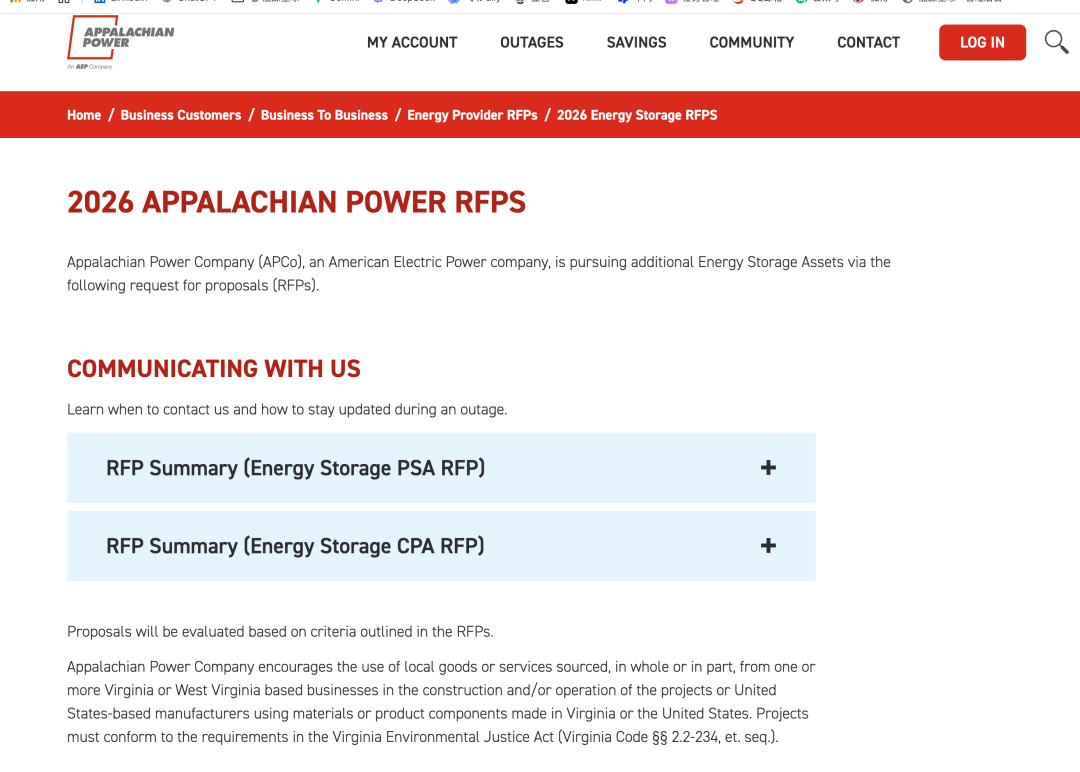
Another major energy storage procurement round is underway in the United States. Recently, Appalachian Power (APCo) officially launched two energy storage solicitations, seeking to procure a combined up to approximately 800MW of energy storage resources. However, this 800MW does not represent a single 800 MW standalone storage project, nor does it simply mean that APCo is purchasing 800MW of storage power plants all at once. According to the latest information published on its official website, this procurement has actually been divided into two parts:
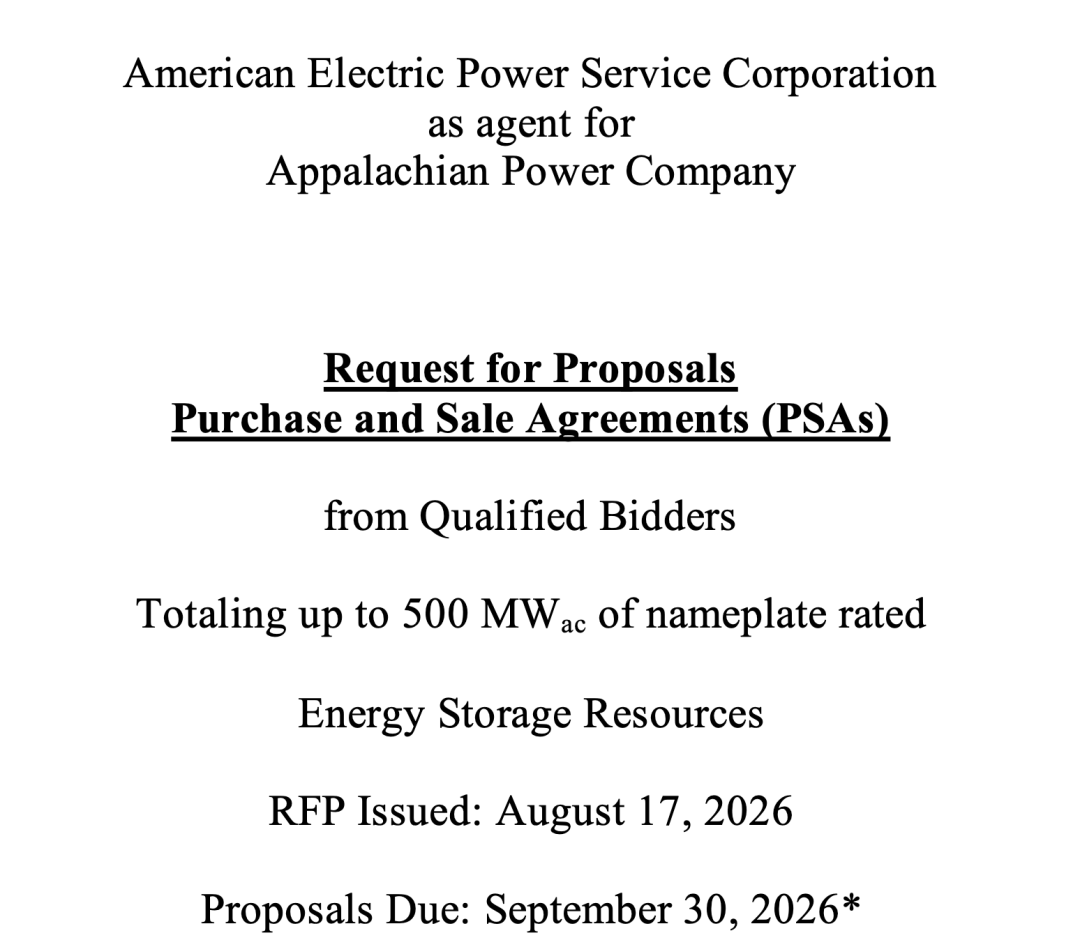
- Up to 500MW of energy storage through a PSA (Purchase and Sale Agreement)
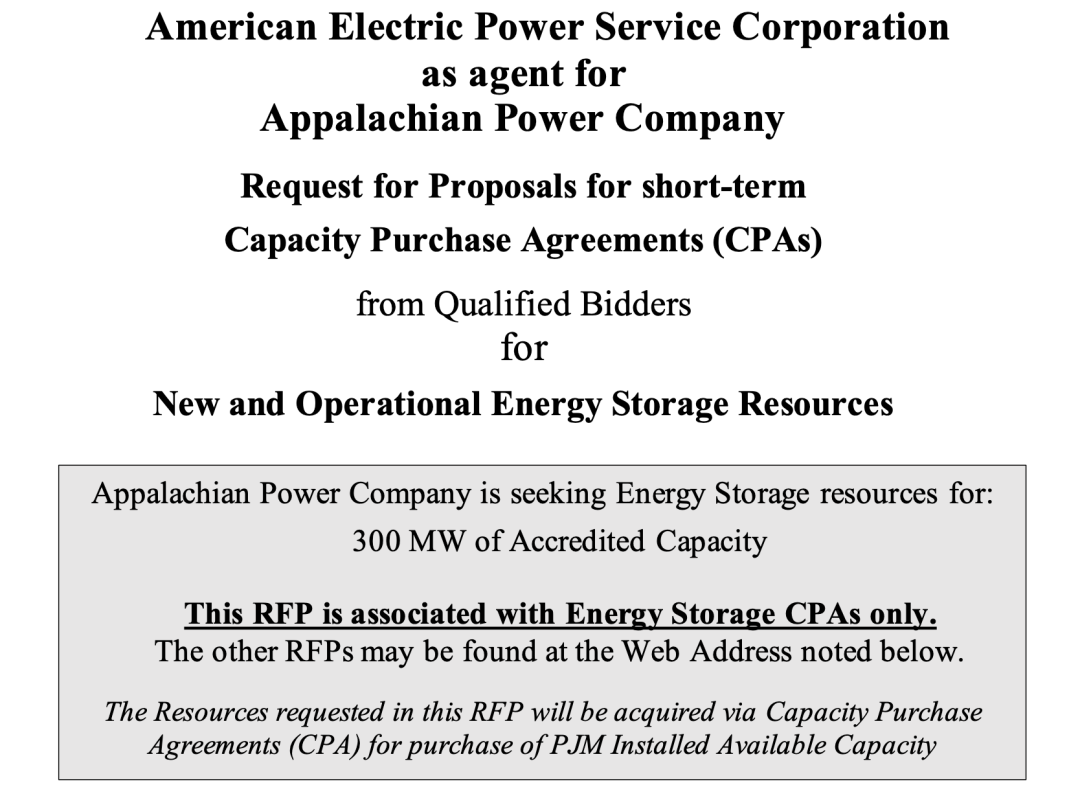
- Up to 300MW of energy storage through a CPA (Capacity Purchase Agreement)
The 500MW PSA explicitly accepts both new-build projects and existing energy storage facilities, while the 300MW CPA is open to eligible energy storage resources in the PJM region that meet the relevant capacity qualification requirements. The bid deadline for both solicitations is September 30, 2026. What Appalachian Power is doing this time is not simply "buying energy storage," but simultaneously testing two different energy storage procurement models.
500MW to Buy Assets, 300MW to Buy Capacity
Let's first look at the 500MW portion. Appalachian Power plans to procure up to 500MW of energy storage resources through one or more PSAs. Such agreements typically involve the acquisition of project assets, with the core structure being the purchase of 100% of the equity interests in a project company. Both new-build projects and existing energy storage facilities are eligible to participate. Therefore, the 500MW portion is closer to a model of "buying projects and assets."
The other 300MW is completely different. This portion uses a Capacity Purchase Agreement, meaning APCo does not necessarily need to acquire the storage facility itself. Instead, it obtains the capacity that the energy storage project can provide through a contractual arrangement.
Therefore, from a commercial-model perspective, this 800MW procurement is actually divided into two different routes: one involves acquiring the energy storage asset itself, while the other involves purchasing the capacity provided by the energy storage resource.
For a utility, directly owning an energy storage asset versus purchasing storage capacity involves different levels of investment, asset risk, operational responsibility, and cost recovery. And Virginia's latest policy framework specifically requires utilities to evaluate both approaches.
Why Procure Through "Both Models"?
According to the latest Virginia Code, relevant electric utilities are required to use a competitive procurement process for energy storage. More importantly, the law explicitly requires utilities, during the procurement process, to solicit both proposals for purchasing energy storage capacity and proposals for purchasing the energy storage facilities themselves.
Utilities must then compare different proposals based on factors including cost, risk allocation, asset ownership, and impacts on customers. Therefore, the 500MW PSA + 300MW CPA structure actually corresponds to two different asset and commercial models.
One asks, Who will own the storage project?" The other asks, "If I do not own the project, can I purchase the capacity it provides?" Energy storage is increasingly being treated like a conventional power resource and is being incorporated into a more mature utility procurement framework.
780MW of Short-Duration Storage, Followed by Another 520MW of Long-Duration Storage
Under Virginia's latest energy storage policy, Appalachian Power, as a Phase I Utility, will need to further expand its energy storage resources.
▍The first category is short-duration energy storage
By December 31, 2040, the utility must seek the necessary approval from the SCC to construct, acquire, or procure 780MW of short-duration energy storage capacity. Under the regulatory definition, short-duration storage refers to energy storage resources with a duration of less than 10 hours at rated power.
▍The second category is long-duration energy storage
By the end of 2045, the utility must seek the necessary approval from the SCC to construct, acquire, or procure 520MW of long-duration energy storage capacity. Half of this capacity must have the relevant regulatory application submitted by the end of 2035.
The 520MW is further divided. Half of the storage capacity must have a duration of 10–24 hours, while the other half must have a duration of more than 24 hours.
In other words, based solely on the targets explicitly set out in the current legislation, the short-duration and long-duration energy storage requirements applicable to Appalachian Power already add up to 1.3GW.
If the long-duration storage targets are formally implemented, Appalachian Power will need to move beyond conventional 2-hour and 4-hour storage, extending its procurement requirements to 10–24-hour and even more-than-24-hour long-duration storage.
Conclusion
Some may wonder: Virginia requires Appalachian Power to advance 780MW of short-duration energy storage resources by the end of 2040, and the utility has now launched solicitations totaling roughly 800 MW. Does that mean the target is essentially being completed in a single procurement round?
Not exactly. The roughly 800MW figure is simply the combined target capacity currently announced under the two RFPs. The final amount of projects selected and the total MW ultimately contracted will depend on the bid results and subsequent regulatory approvals.
At the same time, 800MW refers only to power capacity. The final MWh capacity of each project, its storage duration, and how much of it ultimately qualifies toward Virginia's short-duration energy storage target will depend on the specific project proposals and subsequent regulatory determinations.
The questions facing large U.S. utilities are now moving one step further. Who should own an energy storage asset? Should the utility purchase and own it directly, or should it purchase only the capacity? How should the costs and risks of different models be compared? And for storage lasting more than 10 hours, or even more than 24 hours, how should these resources be procured?
This solicitation has put these questions squarely on the table. Energy storage procurement by U.S. utilities is gradually moving beyond simply "building a batch of storage" and toward a broader power-resource procurement framework centered on asset ownership, capacity value, and long-duration storage capabilities.
🔗 Full RFP documents: https://energyplanet.global/post/84?v=20260818-nuxt-og-v1
Featured News
All News →
UL Opens New Certification Pathway for Modular DC BESS and Compatible PCS
UL Solutions will evaluate modular DC energy storage systems with identified subsystems under applicable UL 9540 requirements and record compatible models in Product iQ. The pathway is intended to clarify certification and installation reviews, but it does not allow separately certified batteries and PCS to be combined without system-level evaluation.
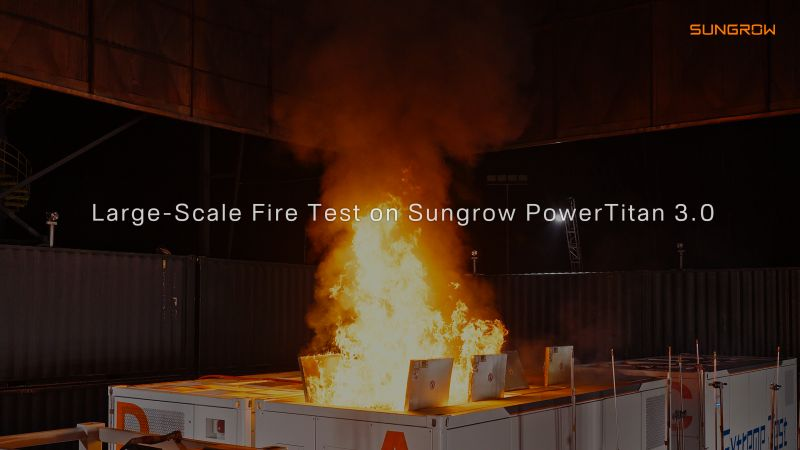
Sungrow's 28.56 MWh PowerTitan 3.0 Fire Test Contains Thermal Runaway Within a Single Unit
Sungrow's PowerTitan 3.0 has completed a large-scale fire test at 100% state of charge, with active fire suppression and thermal management systems disabled. During the 7.5-hour test, the internal temperature of the initiating unit peaked at 1,259.8°C, while thermal runaway did not propagate to adjacent battery units or the medium-voltage system.
Beyond GPUs: AI Data Centers Are Bringing Liquid Cooling to Optical Transceivers
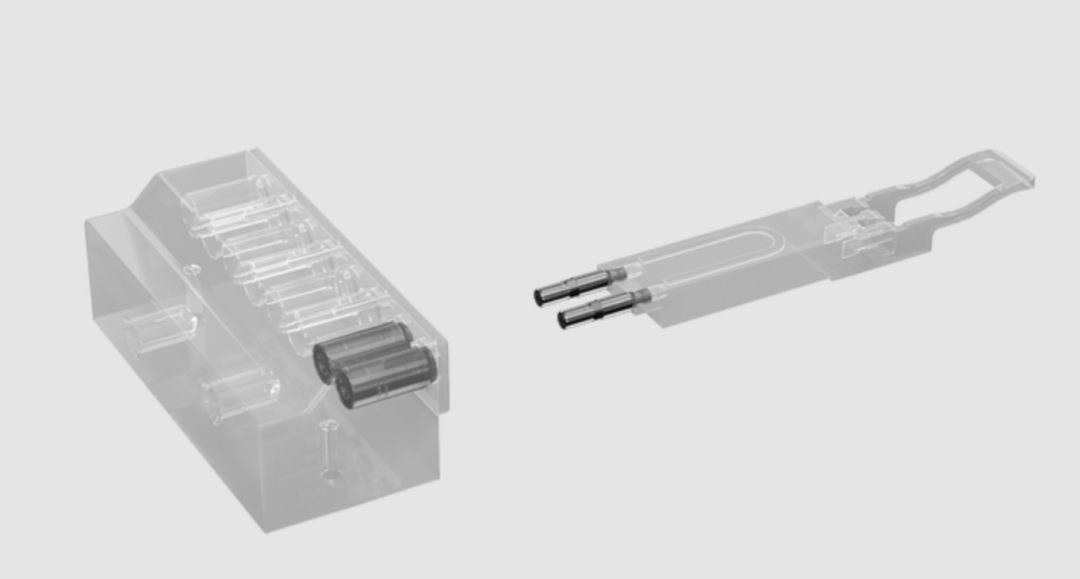
CoolIT Systems, Stäubli and Ciena have collaborated on a direct-to-plug liquid cooling architecture for next-generation pluggable optical transceivers, combining miniature quick-disconnect couplings with a dedicated OSFP cold plate to support the thermal demands of 3.2T-and-beyond optics in AI data centers.
Australia Adds 276,000 Home Batteries as Uptake Outpaces AEMO Planning Assumptions
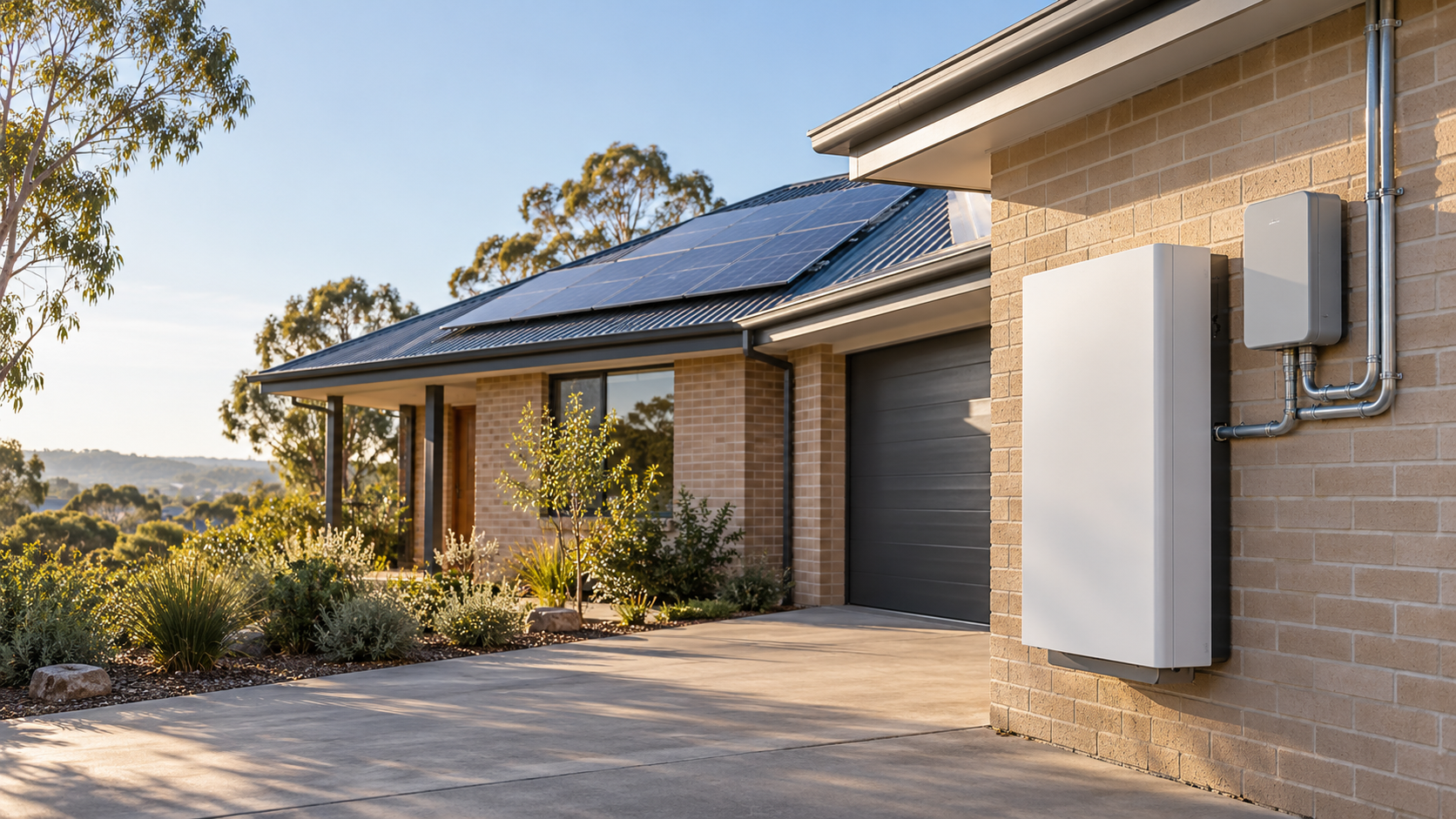
Australia added 8.7 GWh of home battery capacity in the first half of 2026. As installations accelerate, product portfolios, sales channels and subsidy rules are also reshaping access to the market.
Sungrow's EnerNeo SST Reaches Commercial Deployment, Appears in NVIDIA's OCP Showcase
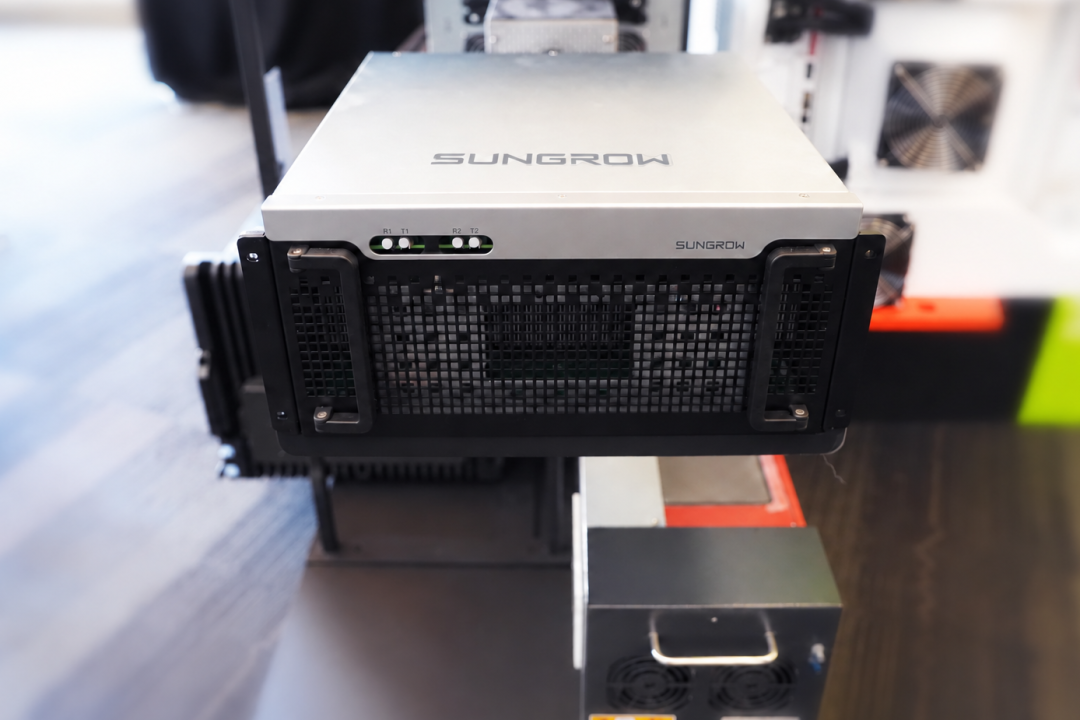
Sungrow's EnerNeo SST has moved from product launch to commercial delivery and operation under real computing loads in under 100 days. At the 2026 OCP Global Summit, its core modules appeared in the NVIDIA MGX AI Factory Ecosystem zone, while new TÜV Rheinland certifications marked another step towards deploying its 800 VDC power architecture across European and North American markets.
Europe's New Sodium-Ion Home Battery: 30,000 Cycles and Discharge Down to -40°C
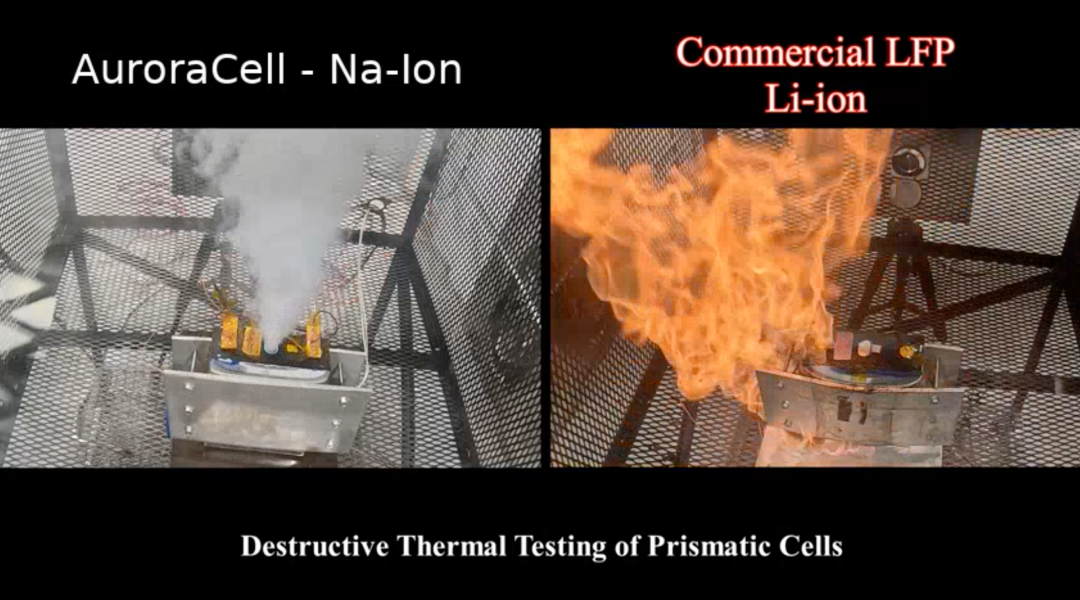
Bulgarian company AuroraCell has introduced a 9.3 kWh low-voltage sodium-ion home battery for the European market, offering up to 30,000 cell-level cycles, discharge operation down to -40°C and expansion to 139.5 kWh through parallel installation. While its NCO chemistry shows potential advantages in cycle life, thermal stability and cold-weather operation, the headline claims remain subject to specified test conditions and require further third-party and system-level validation.
CATL TENER Sodium Moves Deeper into Europe with Intilion and Merus Power
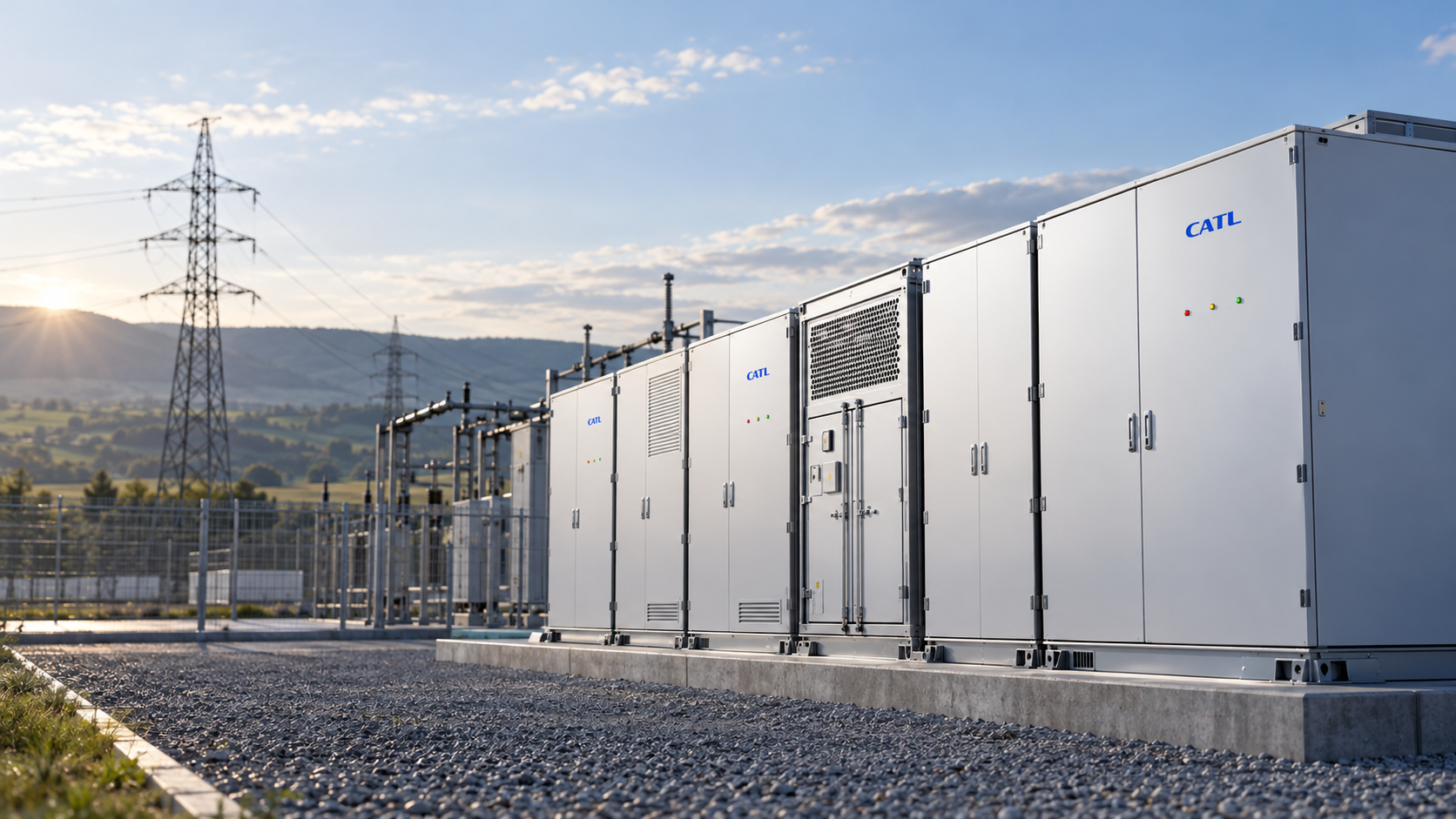
Europe's sodium-ion BESS market is beginning to move from product launch to system integration. Energy-Storage.news reported that Germany-based Intilion has tied up with CATL to realise sodium-ion BESS projects in the DACH region, targeting up to 3 GWh, while Finland's Merus Power is working on technical integration between its PCS solution and CATL's sodium-ion BESS platform. The latest moves follow CATL's 5 GWh sodium-ion storage partnership with Alfen in July and the launch of its TENER Sodium system in Munich in June, suggesting that European integrators are preparing for sodium-ion storage before the technology becomes fully mainstream.
Envision Gen 8 Completes 64 MWh Site Level Fire Test
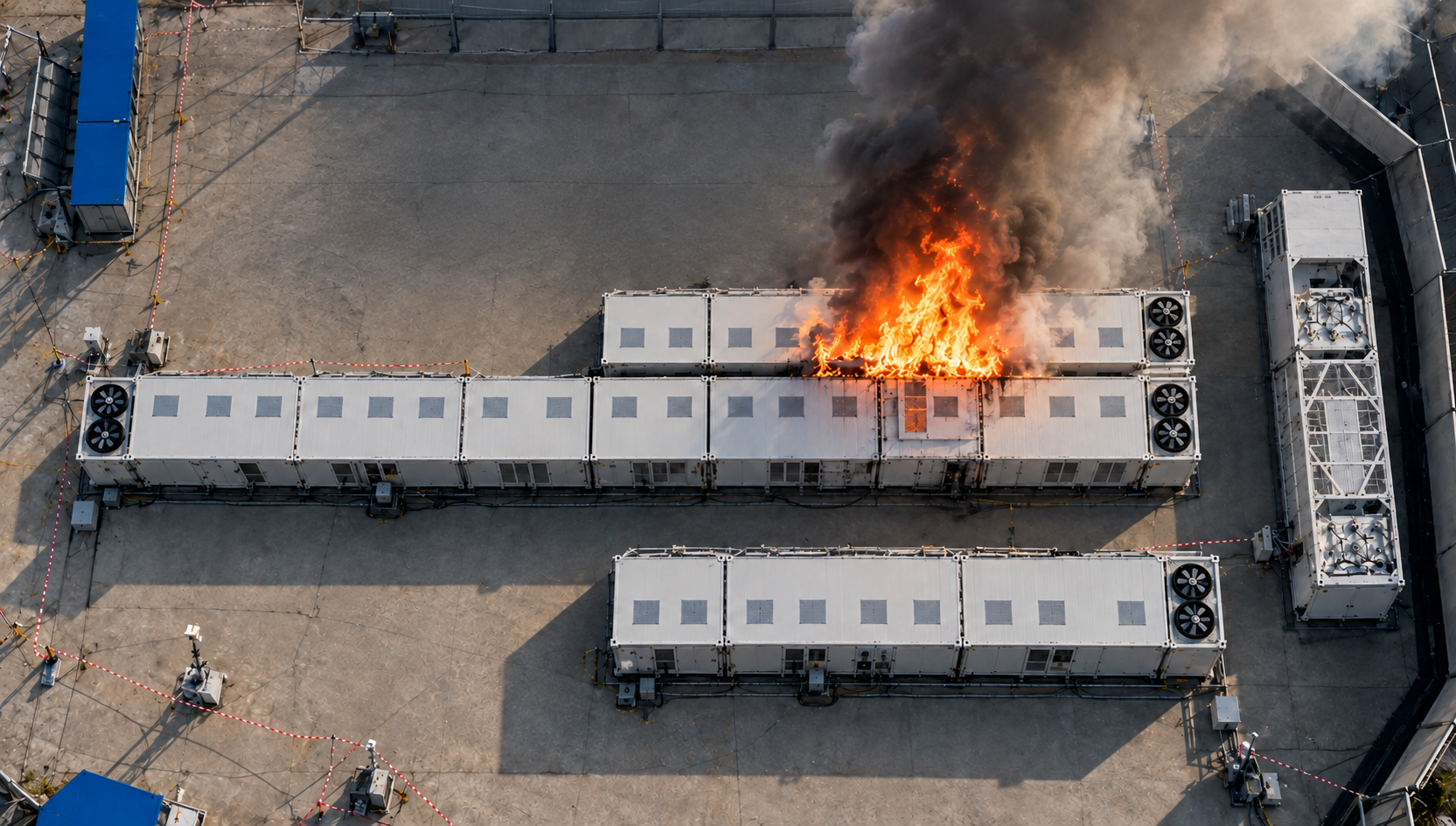
Envision has announced a 64 MWh site-level fire test of its Gen 8 AI energy storage system under 5 cm spacing, 100% SOC and disabled active protection systems.