According to Energy-Storage.news, German system integrator Intilion has reached an agreement with CATL to develop BESS projects using CATL's sodium-ion technology in the DACH region, covering Germany, Austria and Switzerland, with a target scale of up to 3 GWh. At the same time, Finnish power solutions company Merus Power is also working on technical specification integration between its PCS solution and CATL's sodium-ion BESS platform.
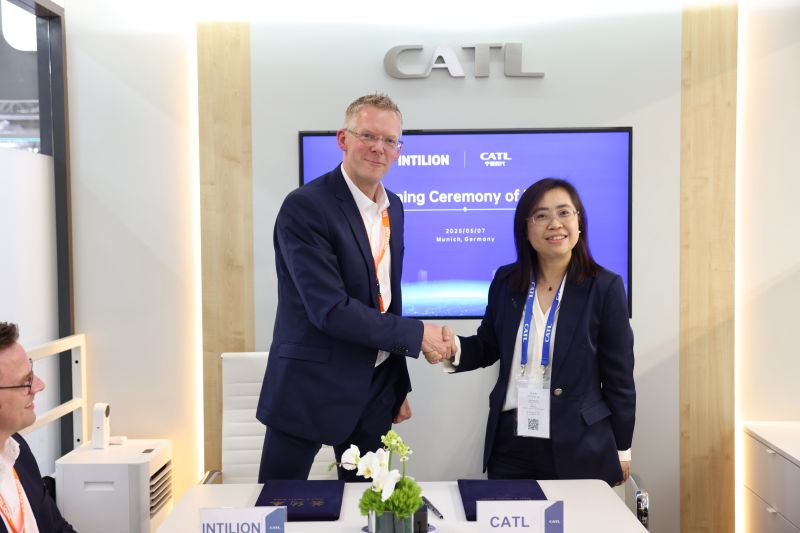
CATL and INTILION previously signed an energy storage cooperation agreement in Munich. Source: INTILION LinkedIn
What matters here is not just one single partnership. The more important signal is emerging commercialisation path for sodium-ion storage. CATL is one of the leading companies moving into this technology route, and its recent steps are worth following closely. Over the past few months, CATL has launched its TENER Sodium Energy Storage System, signed European cooperation agreements, moved into system integration discussions, and set a timetable for global delivery beginning in June 2027.
The first clear milestone in Europe came in July. CATL and Dutch energy solutions provider Alfen announced a 5 GWh sodium-ion battery energy storage partnership, with plans to deploy CATL sodium-ion BESS across Europe. CATL said the joint deployment with Alfen would help it accumulate local application experience for sodium-ion batteries in European grid scenarios, optimise product adaptation to European grid codes, and accelerate the scaling of sodium-ion storage shipments.
For Alfen, the sodium-ion solution also adds a new materials pathway to its energy storage portfolio. CATL's official release stated that the partnership would help Alfen diversify its battery materials portfolio, optimise the cost structure of its storage products, reduce exposure to lithium price volatility, and strengthen its competitiveness in tenders for medium- and large-scale energy storage projects in Europe.
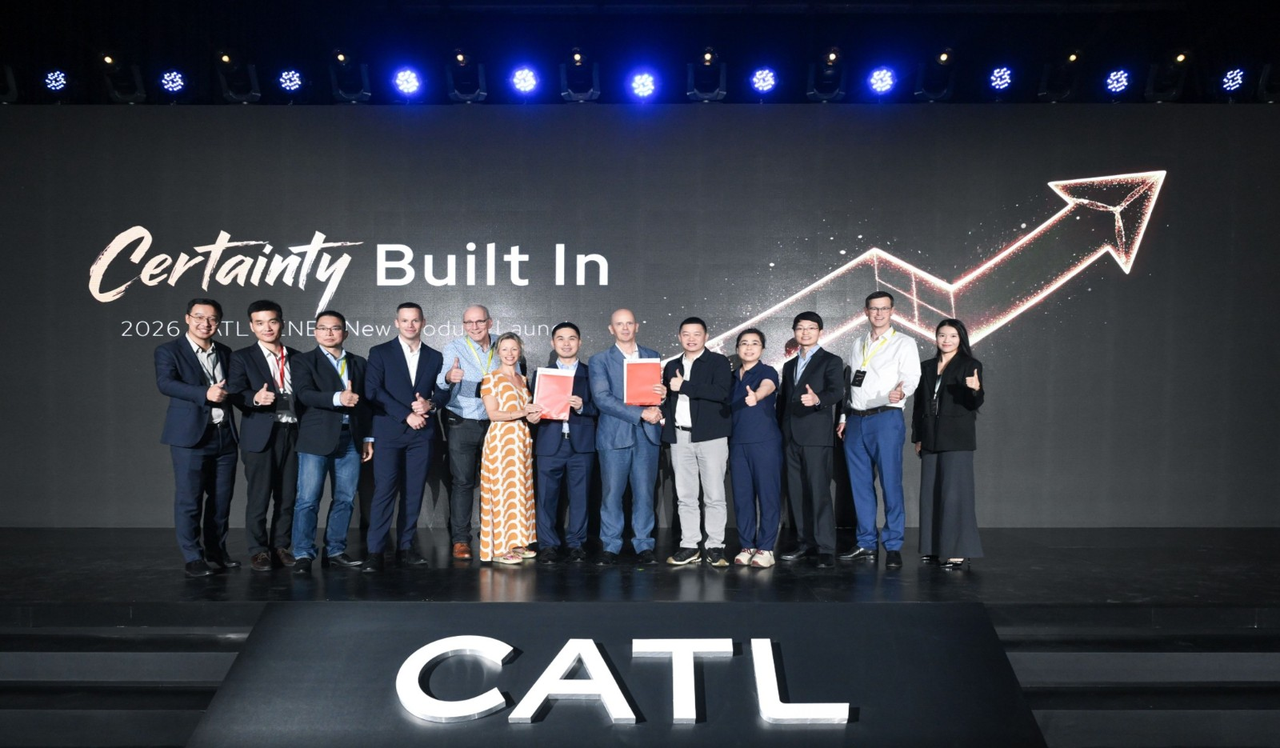
CATL presented its energy storage technology roadmap at its 2026 new product launch event. Source: CATL
The latest Intilion and Merus Power developments show that European system integrators are continuing to move in the same direction. Intilion is focused on the DACH region, while Merus Power is preparing technical integration between its PCS technology and CATL's sodium-ion BESS platform. For energy storage projects, early involvement from system integrators often means that a new technology is starting to enter the stages of engineering adaptation, tender preparation and project solution design.
This does not mean sodium-ion BESS is already replacing LFP at scale in Europe. Energy-Storage.news noted that some developers and owner-operators in Europe still believe sodium-ion technology has not yet reached the level required for fully bankable deployment. For large energy storage projects, a new battery chemistry has to prove more than cell-level viability. It also needs to prove long-term system reliability, acceptance from banks and investors, and the ability to be standardised into deployable project solutions by integrators.
But system integrators rarely wait until every condition is fully mature before preparing. The moves by Alfen, Intilion and Merus Power suggest that sodium-ion BESS is already entering the technology roadmaps and future project selection pools of European storage integrators. What they are now watching is whether this technology route can become a complete solution that is tenderable, deployable, grid-connectable and serviceable.
This is why sodium-ion storage is worth watching now. Compared with LFP, its appeal is not simply lower battery cost. Public cost data actually suggests that sodium-ion has not yet beaten LFP on upfront procurement cost. Wood Mackenzie estimates that the average sodium-ion cell cost in 2025 is around US$59/kWh, compared with around US$52/kWh for LFP. Based on a rough 1 GWh cell-scale calculation, sodium-ion cells would cost around US$59 million, or approximately EUR 50.7 million, while LFP would cost around US$52 million, or approximately EUR 44.7 million. Sodium-ion would still be around US$7 million, or approximately EUR 6 million, higher.
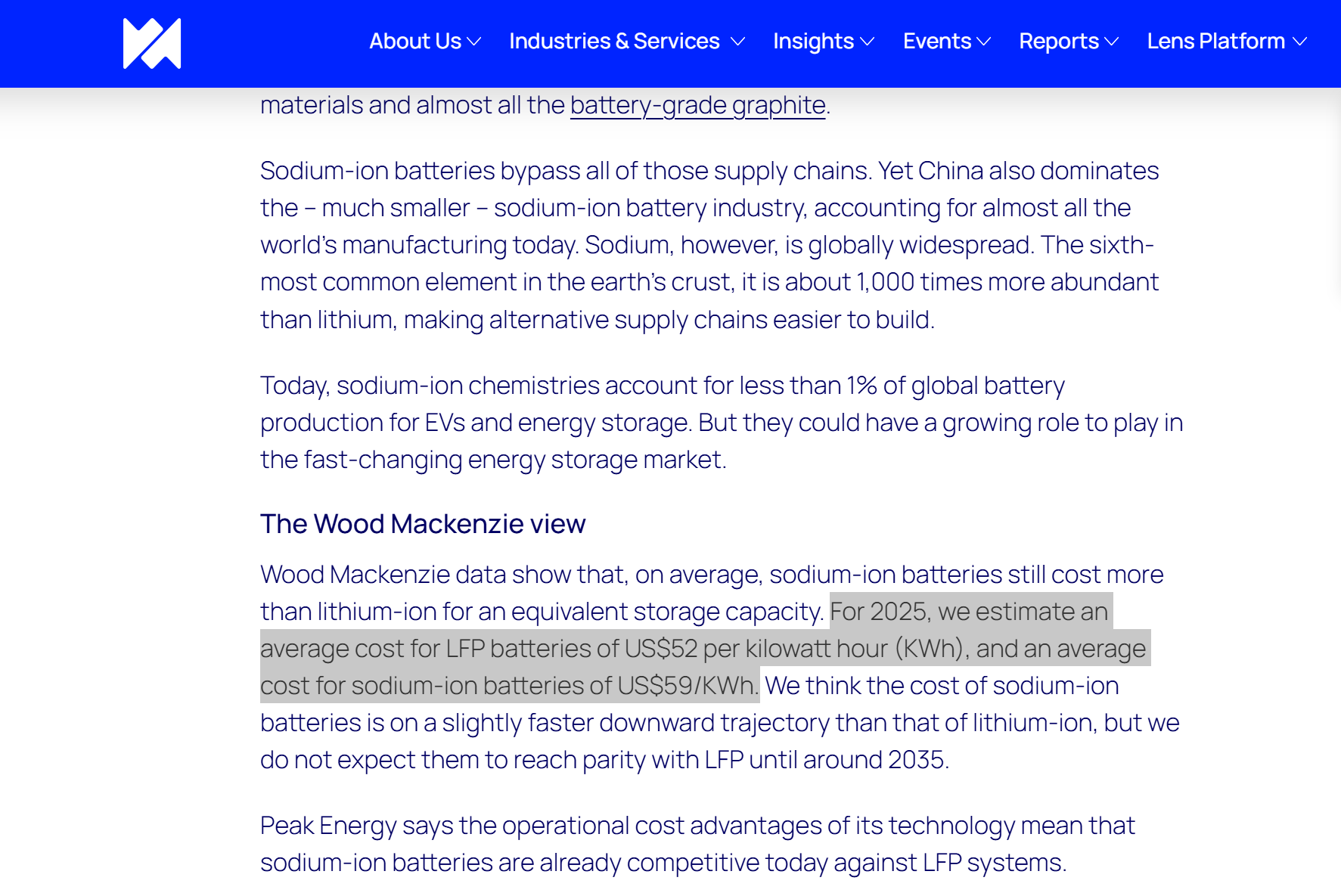
Wood Mackenzie estimates 2025 average cell costs at around US$52/kWh for LFP and US$59/kWh for sodium-ion batteries, and expects sodium-ion to take more time to reach cost parity with LFP. Source: Wood Mackenzie
In the near term, sodium-ion's value is more about supply chain diversification and long-term cost stability. Sodium resources are more widely distributed, which in theory makes the technology less exposed to lithium price volatility and concentrated supply chain risks. For energy storage projects with long lifecycles, large investment requirements and high demand for supply chain stability, that materials pathway carries strategic value.
Of course, bringing sodium-ion into BESS projects is not as simple as replacing one cell chemistry with another. Because sodium-ion batteries have different voltage ranges and operating characteristics, PCS, BMS, thermal management and O&M approaches all need to be adapted. Taking CATL's TENER Sodium system as an example, the system uses a dedicated bidirectional DC voltage regulation system to adapt to a wider voltage range, which CATL says can improve overall system RTE by nearly 2%. Its BMS also uses the continuously sloping voltage curve of sodium-ion batteries to improve SOC estimation accuracy, while increasing overcharge SOC tolerance by 20% compared with lithium-ion batteries.
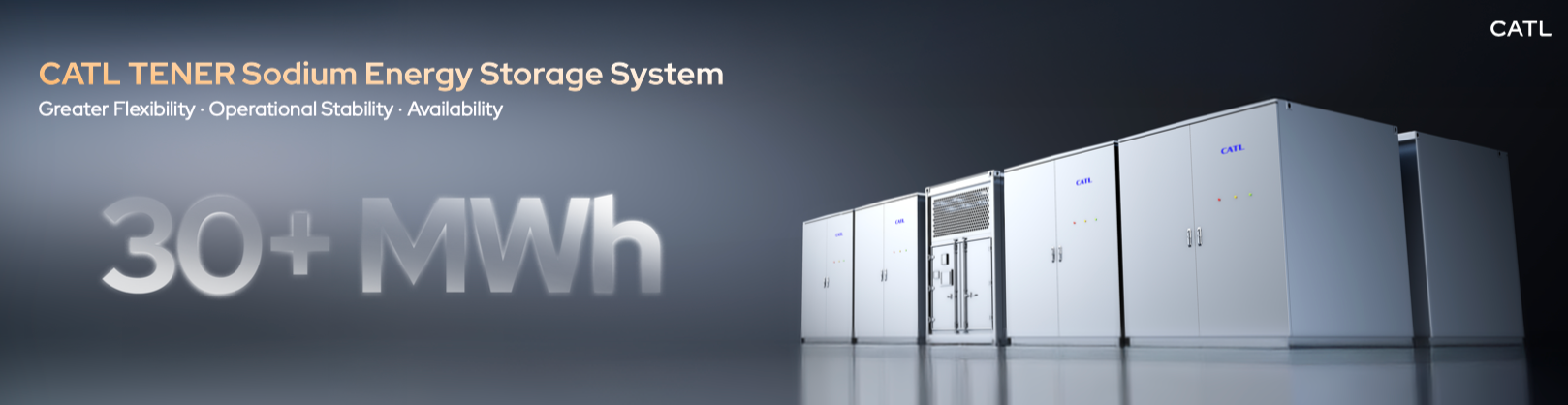
CATL TENER Sodium Energy Storage System uses a modular design, with rated capacity of more than 30 MWh per system, targeting different storage durations and large-scale energy storage project scenarios. Source: CATL
These changes ultimately fall on system integrators. For companies such as Intilion and Merus Power, the real question is whether the full system can match PCS requirements, grid codes, project control logic and O&M workflows. That is why European integrators are getting involved early and treating sodium-ion as a potential complementary option for the next stage of energy storage projects. In the short term, LFP will remain the mainstream chemistry. But if sodium-ion continues to advance in project validation, system adaptation, financing acceptance and scaled cost reduction, it could move from a new technology option into real project pipelines.