Australia Adds 276,000 Home Batteries as Uptake Outpaces AEMO Planning Assumptions
Australia's Cheaper Home Batteries Program, launched in July 2025, has helped accelerate home battery installations. According to the Clean Energy Council's (CEC) latest half-year report, 457,439 home battery systems were installed nationally in the first full year to June 2026, adding approximately 12.9 GWh. Of that total, 276,011 systems and 8,691 MWh were added in the first half of 2026, up 52% and approximately 106%, respectively, from the preceding six months. Quarterly installations more than doubled, rising from 70,571 in Q3 2025 to 154,140 in Q2 2026.
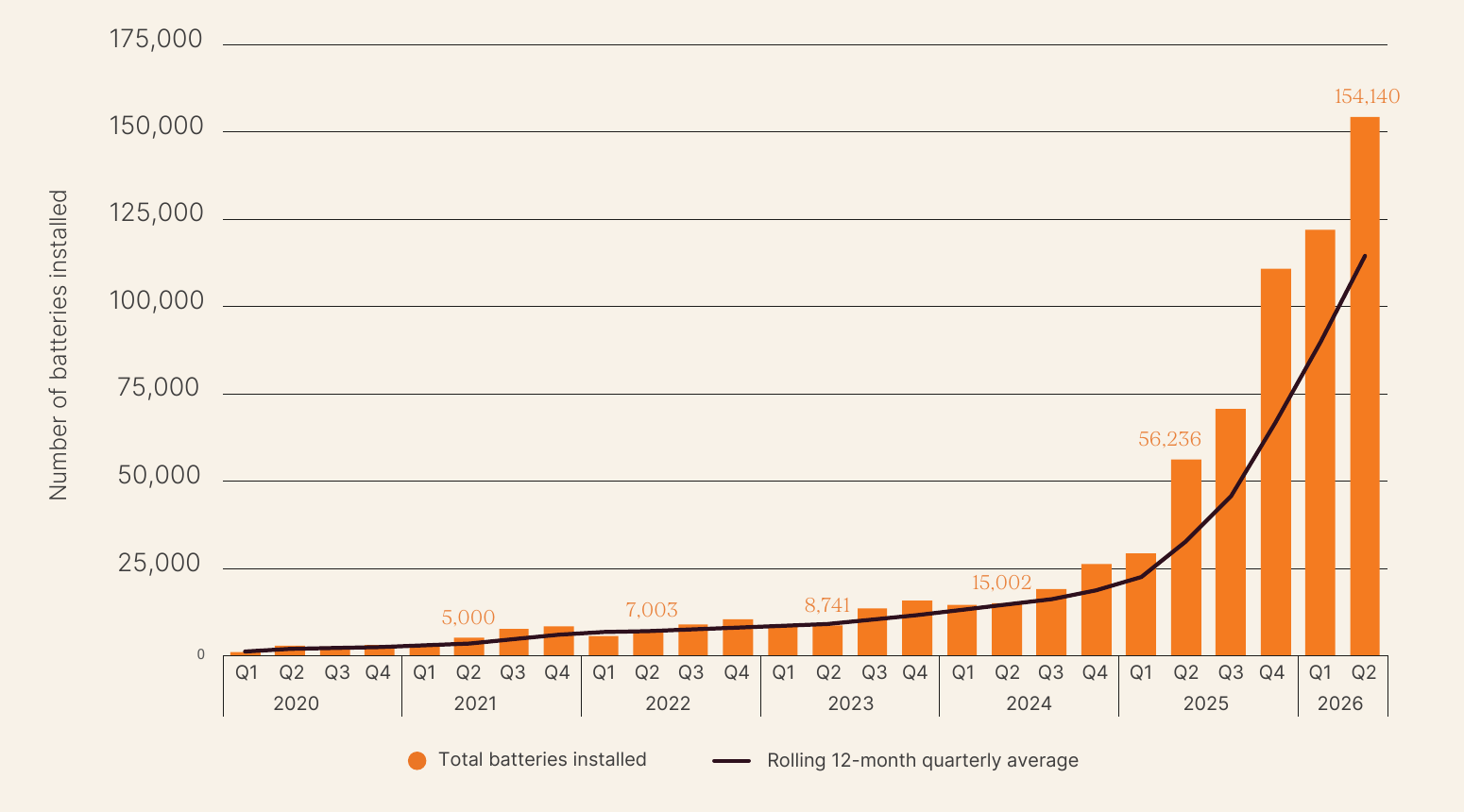
Quarterly home battery installations in Australia reached 154,140 in Q2 2026. Source: CEC, Rooftop Solar and Storage Report, January-June 2026, original Figure 7.
Over the same period, the CEC's approved battery list expanded to 3,406 models from 131 manufacturers, while the number of approved sellers under the New Energy Tech Consumer Code (NETCC) reached 2,389. For businesses entering Australia, demand growth is only part of the opportunity. Certification of specific models, local delivery and after-sales support also determine whether products can reach households. [1]
Existing rooftop solar owners drive additional demand
Australia installed 180,878 rooftop solar systems with a combined capacity of 1,894 MW in the first half of 2026, up 35% and 41% year on year, respectively. Comparing total installations over the same period, approximately 153 batteries were installed for every 100 new solar systems, up from 130 in the preceding six months. [1]
This ratio is not the battery attachment rate for new solar installations. It reflects the fact that battery demand extends beyond households installing new solar, with many existing solar owners adding storage. Australia's installed base of more than 4.4 million small-scale solar systems provides a substantial market for battery retrofits. [1]
Capacity growth was even stronger. New home battery capacity rose from 4,221 MWh in the second half of 2025 to 8,691 MWh in the first half of 2026. Q2 alone added 4,946 MWh, compared with 1,358 MWh in Q3 2025. [1]
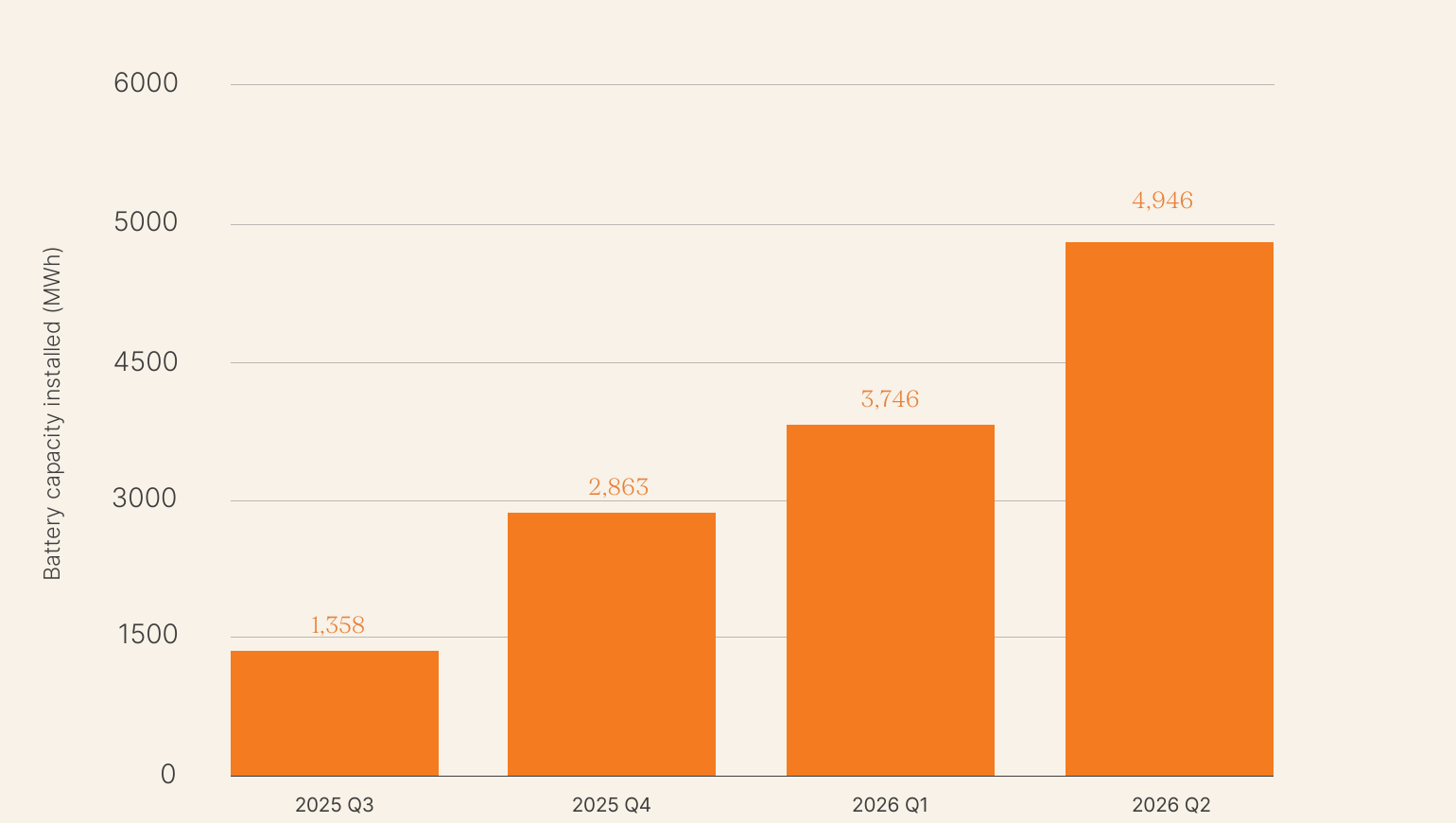
Quarterly additions of home battery capacity. Rounded quarterly figures in the report differ slightly from its half-year total; this article uses the 8,691 MWh total stated in the report text. Source: CEC, original Figure 8.
For suppliers and installers, retrofits and new solar-plus-storage installations require different preparation. Retrofits require checks on existing inverters, grid connections and electrical infrastructure, while new installations allow solar, storage and household loads to be considered together from the design stage. Market growth is also increasing the work involved in compatibility checks, site assessments and after-sales support.
Subsidy tiers put battery sizing under closer scrutiny
Average battery system size rose from 17.2 kWh in July 2025 to 35.3 kWh in April 2026, before falling to 26.6 kWh in June. The average across the first full year of the subsidy programme was 28.2 kWh. [1]
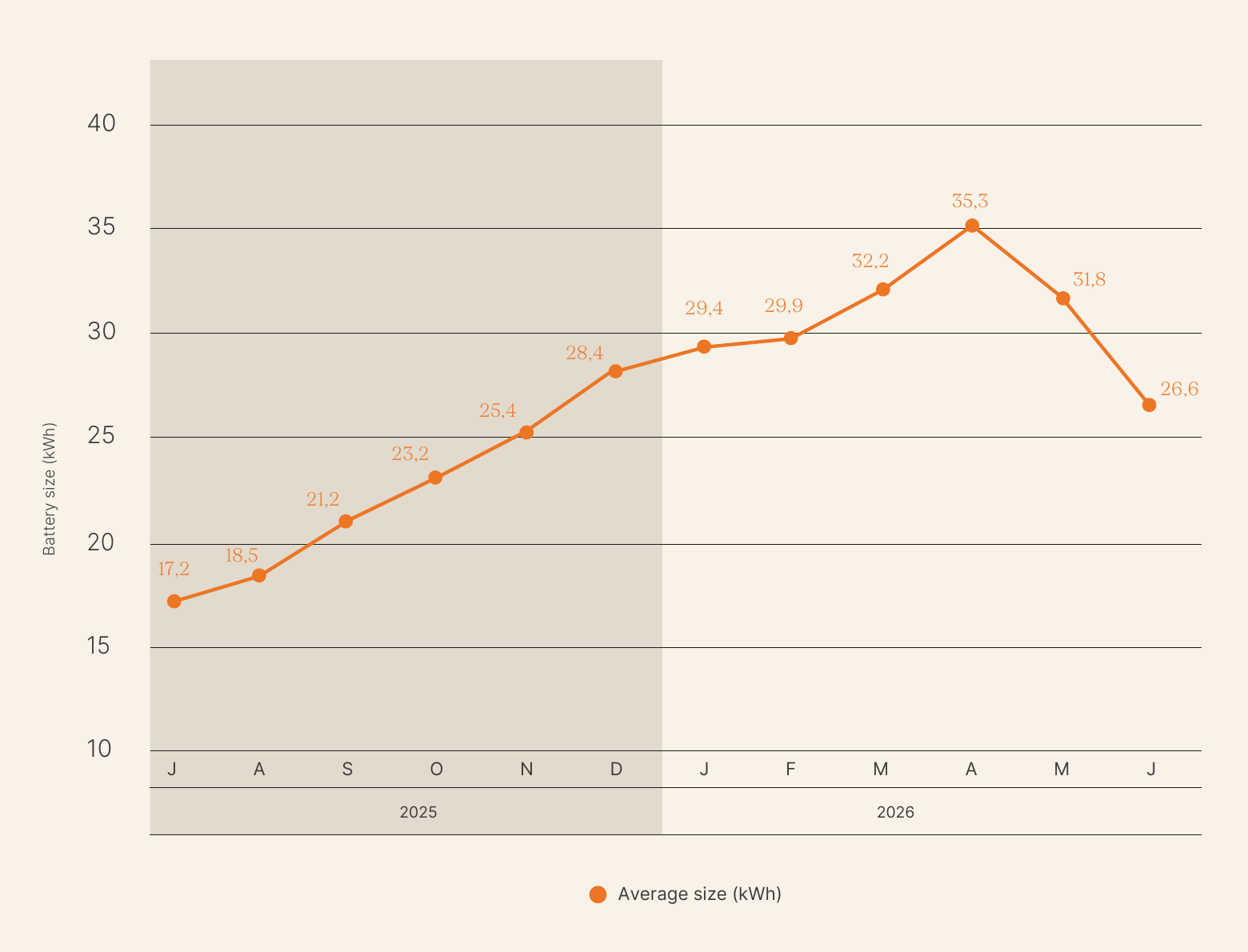
Average battery system size by installation month. System size peaked in April 2026 before declining in May and June. Source: CEC, original Figure 9.
The decline coincided with changes to the subsidy rules. From May 2026, federal support for larger batteries became tiered: the first 14 kWh of usable capacity receives the full small-scale technology certificate (STC) factor; capacity above 14 kWh and up to 28 kWh receives 60%; and capacity above 28 kWh and up to 50 kWh receives 15%. The base STC factor for May-December 2026 is 6.8. [4]
Doubling capacity therefore no longer produces a proportional increase in support. Households and installers need to size systems around evening consumption, backup requirements, tariffs and future electric vehicle demand, rather than nominal capacity and the total subsidy alone. Further installation data will be needed to establish whether the policy changes were the main driver of the fall in average system size.
Eligibility also depends on system configuration. The federal programme requires batteries to have a nominal capacity of 5-100 kWh, be paired with new or existing solar PV of no more than 100 kW, and appear on the CEC approved battery list. Only the first 50 kWh of usable capacity qualifies for STCs. Grid-connected systems must be technically capable of participating in a virtual power plant (VPP) and be installed by a Solar Accreditation Australia (SAA) accredited installer with battery endorsement. VPP capability does not require the owner to join a particular VPP. [4]
Understanding the 3,406 approved model listings
Product listings are expanding alongside demand. The CEC report records 3,406 approved battery models, up sharply from 1,259 in the preceding reporting period. It also lists 3,900 inverter models from 112 manufacturers and 3,586 PV module models from 87 manufacturers. [1]
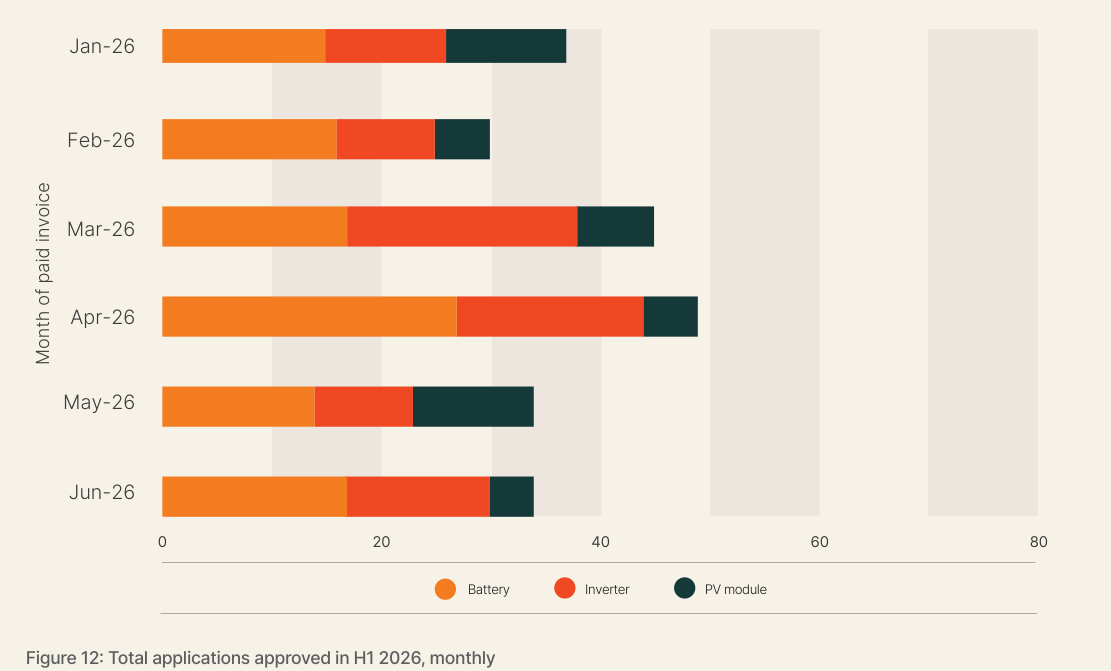
Product applications approved each month in H1 2026: batteries in orange, inverters in red and PV modules in dark green. Application counts and model counts are different measures; a single application may cover multiple models. Source: CEC, cropped from original Figure 12.
The CEC notes, however, that most of the additional battery models were registered by a single manufacturer. The 3,406 figure counts model listings, rather than an equivalent number of distinct products, and cannot be used to infer brand sales. Different module counts, inverter ratings and system combinations can each have separate approved model numbers. [1]
The public list illustrates these configuration differences. Tesla model "1707000-5 kVA-13.5 (AS4777-2 2020)", covering a Powerwall 3 and Backup Gateway 2 configuration, is listed with 14.4 kWh of nominal capacity and 13.5 kWh of usable capacity. Sigenergy model "SigenStor-10S-11.4 (AS4777-2 2020)" is listed at 11.4 kWh nominal and 11.3 kWh usable. [2]
For purchasing, stock planning and subsidy claims, establishing that a brand is present in Australia is not enough. The complete model and installed configuration need to match the listing. Usable capacity is particularly important because it forms the basis of federal STC calculations. [2][4]
Brand and model examples from the public list
Energy Planet checked the CEC public list on 19 October 2026 and selected model records from six brands as examples. The sample covers standalone battery systems and BESS configurations with integrated inverters. It does not represent market share or a brand ranking. [2]
| Brand | CEC listed model | Nominal / usable capacity kWh | Listing expiry |
| SUNGROW | SBR096 | 9.6 / 9.6 | 2026-11-30 |
| SUNGROW | SBR192 | 19.2 / 19.2 | 2026-11-30 |
| BYD | HVM 11.0 | 11.04 / 11.04 | 2026-12-05 |
| Tesla | 1707000-5 kVA-13.5 (AS4777-2 2020) | 14.4 / 13.5 | 2027-12-31 |
| ENPHASE | IQBATTERY-5P-3P-INT-3.00-1P (AS4777-2 2020) | 5 / 5 | 2027-12-31 |
| Sigenergy | SigenStor-10S-11.4 (AS4777-2 2020) | 11.4 / 11.3 | 2027-12-31 |
| Alpha ESS | SMILE-G3-BAT-10.1P II | 20.2 / 19.2 | 2027-12-31 |
Table 1. Selected CEC approved battery listings, checked on 19 October 2026. Capacities, model numbers and expiry dates are reproduced as listed and do not represent each manufacturer's full range. Complete BS or integrated BESS configurations also require checks on the series, certificates and compatible equipment. Source: [2].
Sungrow SBR096 and SBR192 correspond to 9.6 kWh and 19.2 kWh configurations, respectively. Alpha ESS model "SMILE-G3-BAT-10.1P II" is listed at 20.2 kWh nominal and 19.2 kWh usable. Different module combinations within a series can serve different household needs, but the complete expanded system must still match the approved configuration and manufacturer requirements. [2][4]
Approval is also time-sensitive. The current expiry date for the Sungrow examples above is 30 November 2026, while BYD HVM 11.0 expires on 5 December. Installers need to monitor renewals or alternative models. A listing that is valid today does not establish subsidy eligibility for every future installation date. [2]
The CEC is transitioning battery listing requirements to SA TS 5398. From 1 January 2027, new applications must use this technical specification. Products still approved under the previous Best Practice Guide will expire no later than 31 December 2027. Businesses therefore need to maintain compliance beyond their initial approval. [5]
A network of 2,389 sellers faces delivery and service demands
Alongside product certification, Australia uses NETCC to set standards for sales practices. Approved sellers increased from 2,020 at the end of 2025 to 2,389 at the end of June 2026, a rise of approximately 18% calculated from those totals. Victoria accounted for 1,185 sellers, New South Wales 449, Queensland 273 and Western Australia 234. [1]
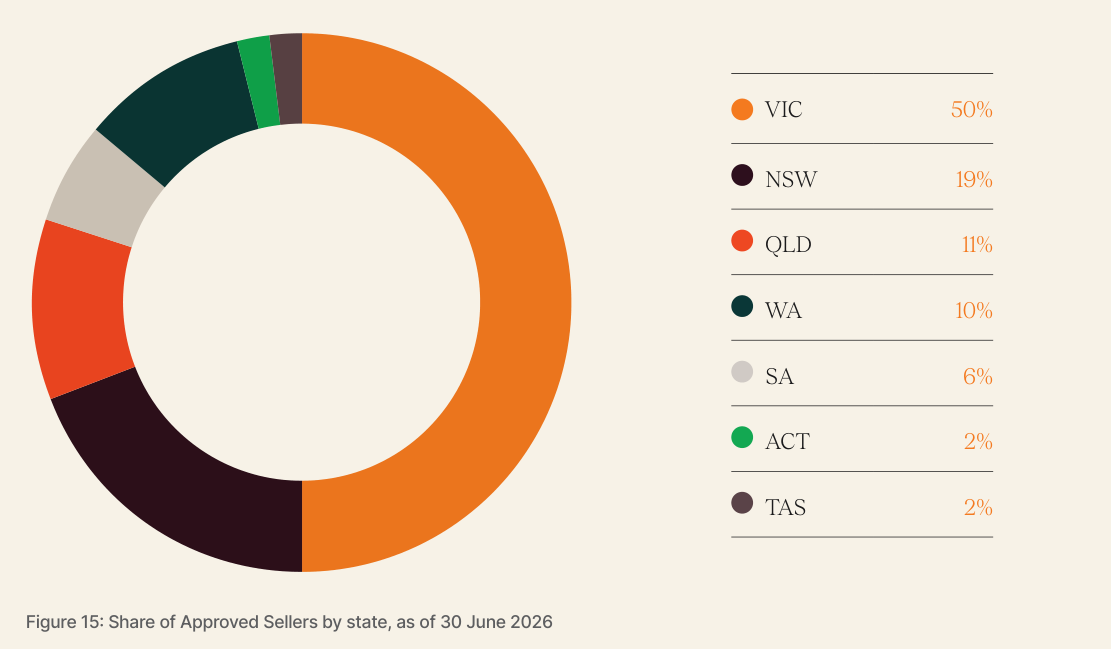
NETCC approved sellers by the state in which they are headquartered. Businesses may operate across state borders, so these shares do not represent service coverage or installation market share. The Northern Territory's two sellers are not shown separately in the chart's rounded percentages. Source: CEC, cropped from original Figure 15.
The public directory also shows the range of services offered by individual sellers. 1KOMMA5 Australia lists energy storage, energy management and VPP services, while Solargain Echuca, Solahart Adelaide North and Hills Natural Solar all list energy storage. Similar brand or business names require checks on the specific registered entity or outlet; approval of one outlet should not be assumed to cover an entire group. [3]
| Directory entry | Listed service areas | Other listed services |
| 1KOMMA5 AUSTRALIA | VIC / NSW / QLD / ACT | Solar PV, EV charging, energy management, VPPs |
| Solargain Echuca | VIC / NSW | Solar PV, EV charging |
| Solahart Adelaide North | SA | Solar PV, EV charging |
| HILLS NATURAL SOLAR | NSW | Solar PV, EV charging |
Table 2. Selected NETCC public directory entries, checked on 19 October 2026. Service categories come from directory records and do not establish product certification, sales rankings or immediate availability across all listed areas. Source: [3].
How seller commitments and technical approvals differ
NETCC primarily covers marketing, quotations, contracts, delivery, after-sales service and complaints handling. The CEC product list assesses specific equipment, while SAA accreditation applies to installers and designers. These credentials address sales, products and personnel respectively, and are not interchangeable. Federal programme rules should not be assumed to cover every state scheme; some state subsidies and green loans impose additional seller requirements. [1][3][4]
Expansion is also increasing the workload for consumer protection. NETCC opened 567 complaint cases in H1 2026, up from 317 in the preceding six months. The report records 143 instances of non-compliance: 34% concerned sales documentation such as quotations and contracts, 11% installation and delivery, and 10% grid connection. [1]
Complaint counts cannot be treated as product failure rates or brand quality rankings. Installations and seller numbers also increased over the period, and cases include contractual, service and disclosure issues. They nevertheless show why accurate quotations, grid-connection coordination and clear responsibility after installation matter as batteries reach more homes.
Installation momentum is running ahead of planning assumptions
Rapid growth also has implications for the power system. AEMO's 2026 Integrated System Plan (ISP) Step Change scenario projects 33 GWh of consumer energy resource storage in the National Electricity Market (NEM) by 2029/30. Extending the current annual installation rate in a straight line, the CEC calculates 59.2 GWh, 79% above that planning scenario. [1]
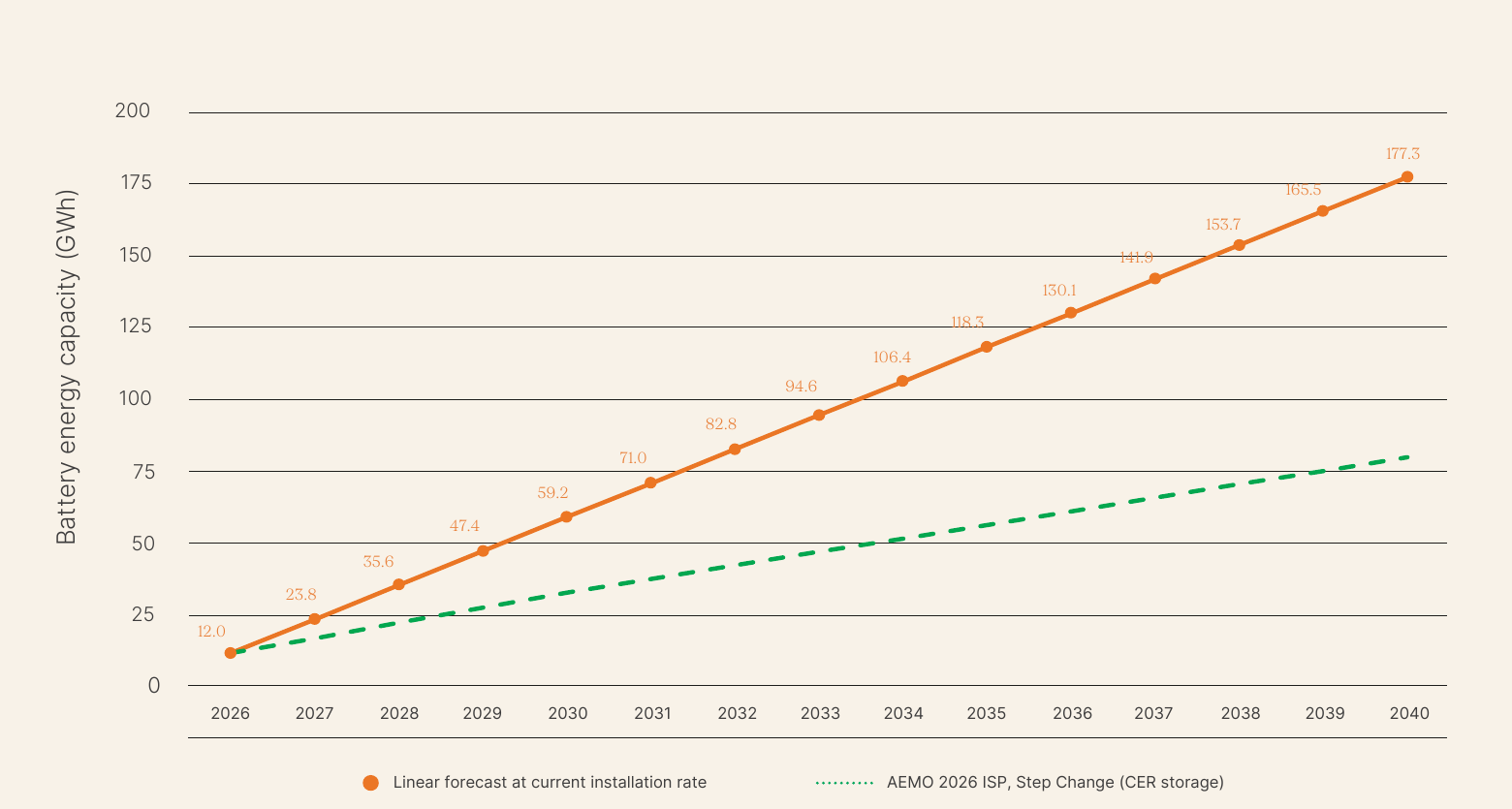
Figure 6. Consumer battery capacity in the NEM compared with the AEMO planning scenario. The orange line holds the current installation rate constant and is a linear scenario, not a market forecast. Source: CEC, original Figure 10.
This extrapolation assumes no changes in subsidies, prices or market saturation and should not be treated as a commitment to future deployment. It instead highlights the need for distribution networks, export limits, equipment interoperability and aggregation arrangements to keep pace if installations continue to accelerate. [1]
The next phase depends on how new capacity is used
The report argues that the next phase of distributed energy in Australia will depend more heavily on coordinated operation. Home batteries are currently used mainly to increase solar self-consumption and reduce electricity purchases. Through VPPs or flexible tariffs, they may also absorb surplus midday solar and supply electricity during evening peaks. Realising those benefits will depend on contracts, tariffs, grid constraints and the control owners retain over their systems. [1]
For manufacturers, a larger market requires valid product approvals and compatibility with local inverters and control platforms. Sellers and installers need to connect model selection, system sizing, subsidy applications and after-sales service. The 276,011 new installations demonstrate expanding demand; approved product and seller lists show how that demand can be served through the delivery network.
Data scope and sources
Market data in this article comes from the CEC's Rooftop Solar and Storage Report, January-June 2026. Installation and capacity figures are based on applications submitted to the Clean Energy Regulator and may include applications still under review. The quarterly battery series uses SunWiz sales data before July 2025 and installation data thereafter, so comparisons across that change require care. National data and NEM scenario data are presented separately. [1]
The brand and seller tables are selected public records as at 19 October 2026, not complete lists or sales or quality rankings. CEC listing is one condition of subsidy eligibility; individual projects must also meet requirements relating to installation dates, complete configurations, site conditions and installer credentials. The original report gives two different storage figures for 2049/50, 127 GWh and 78 GWh; this article does not use that long-term figure.
[1] CEC Rooftop Solar and Storage Report January-June 2026
[2] CEC Approved Batteries live model list
[3] NETCC Find an Approved Seller public directory
Featured News
All News →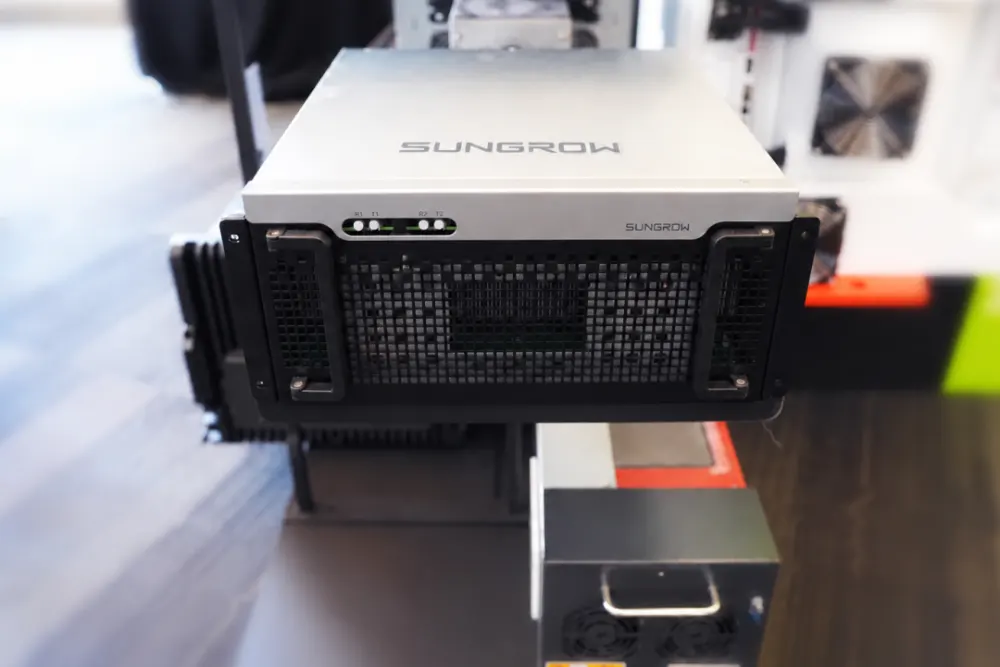
Sungrow's EnerNeo SST Reaches Commercial Deployment, Appears in NVIDIA's OCP Showcase
Sungrow's EnerNeo SST has moved from product launch to commercial delivery and operation under real computing loads in under 100 days. At the 2026 OCP Global Summit, its core modules appeared in the NVIDIA MGX AI Factory Ecosystem zone, while new TÜV Rheinland certifications marked another step towards deploying its 800 VDC power architecture across European and North American markets.
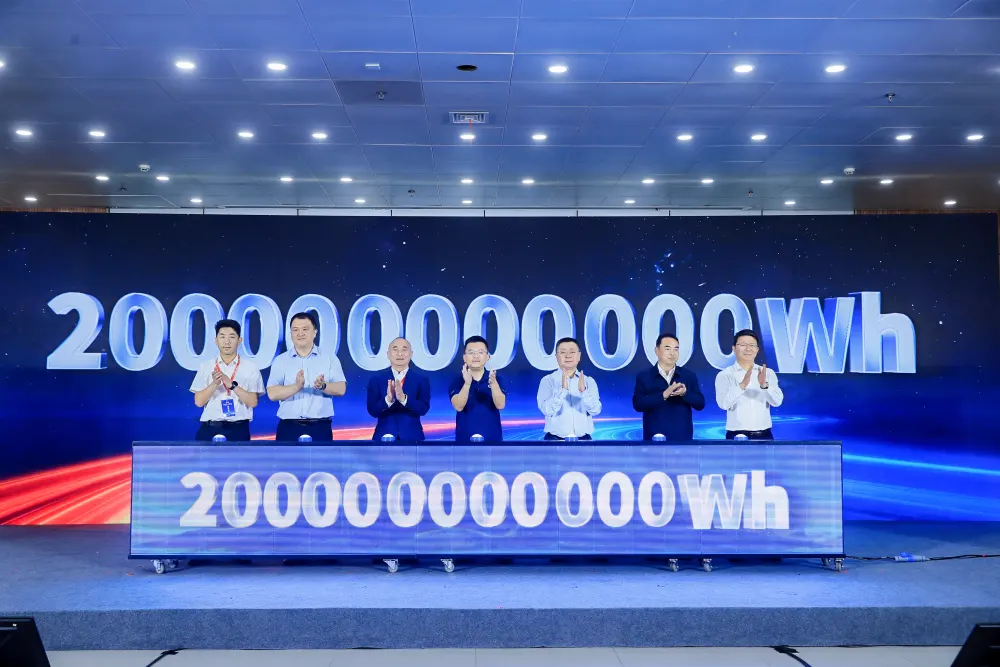
Shipments Surpass 200 GWh: HiTHIUM Leads Long-Duration Energy Storage Through Full-Chain Integration
HiTHIUM has surpassed 200 GWh in cumulative energy storage shipments, just over a year after crossing 100 GWh in August 2025. Announced at its Chongqing base, the milestone highlights the company’s rapid expansion in long-duration storage, integrated manufacturing, supply-chain coordination and global delivery.
Europe's New Sodium-Ion Home Battery: 30,000 Cycles and Discharge Down to -40°C
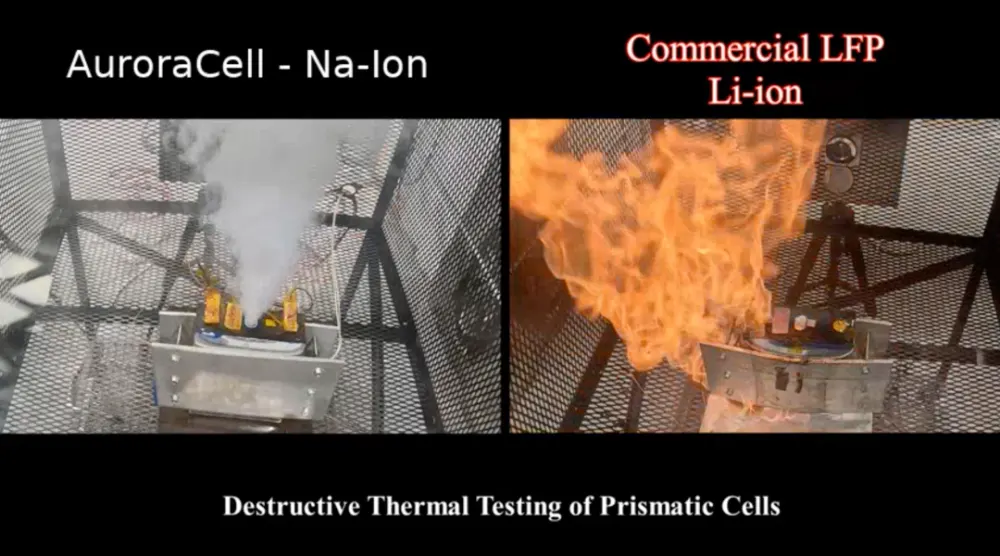
Bulgarian company AuroraCell has introduced a 9.3 kWh low-voltage sodium-ion home battery for the European market, offering up to 30,000 cell-level cycles, discharge operation down to -40°C and expansion to 139.5 kWh through parallel installation. While its NCO chemistry shows potential advantages in cycle life, thermal stability and cold-weather operation, the headline claims remain subject to specified test conditions and require further third-party and system-level validation.
CATL TENER Sodium Moves Deeper into Europe with Intilion and Merus Power
Europe's sodium-ion BESS market is beginning to move from product launch to system integration. Energy-Storage.news reported that Germany-based Intilion has tied up with CATL to realise sodium-ion BESS projects in the DACH region, targeting up to 3 GWh, while Finland's Merus Power is working on technical integration between its PCS solution and CATL's sodium-ion BESS platform. The latest moves follow CATL's 5 GWh sodium-ion storage partnership with Alfen in July and the launch of its TENER Sodium system in Munich in June, suggesting that European integrators are preparing for sodium-ion storage before the technology becomes fully mainstream.
Envision Gen 8 Completes 64 MWh Site Level Fire Test
Envision has announced a 64 MWh site-level fire test of its Gen 8 AI energy storage system under 5 cm spacing, 100% SOC and disabled active protection systems.
First 106 Units Shipped! HiTHIUM’s Shandong Heze Base Begins Large-Scale Overseas Deliveries of LDES
Source: HiTHIUM Recently, the Shandong HiTHIUM Long-Duration Energy Storage Integrated Industrial Park (Shandong Heze Base) marked its first international export since commencing mass production. The initial shipment—comprising 106 units of the ∞Power 6.25MWh 4-hour long-duration energy storage system prefabricated…
Exclusive: Sungrow Launches All-in-One PowerHarbor, Betting Benelux Home Storage Is Just Beginning
Rooftop solar is already widespread among Dutch households, yet relatively few homes have installed residential energy storage. Sungrow believes this market is only just beginning. On September 22, Sungrow held an event in Amsterdam to officially launch its PowerHarbor all-in-one residential energy storage system in…
Eternalplanet Raises Hundred-Million-Yuan Funding for Global Residential Storage Expansion
Source: Eternalplanet Recently, Shenzhen Eternalplanet Energy Co., Ltd. (hereinafter referred to as Eternalplanet) has successfully closed a financing round of hundreds of millions of RMB. Led by ZX Holdings, the raised funds will be mainly used for new product R&D, global market expansion and supply chain…