Europe's New Sodium-Ion Home Battery: 30,000 Cycles and Discharge Down to -40°C
Bulgarian company AuroraCell has brought sodium-ion technology into residential energy storage with a new low-voltage battery developed for the European market.
Unlike today's mainstream lithium iron phosphate home batteries, the product uses sodium-ion NCO chemistry, with sodium chromium oxide, or NaCrO₂, as the cathode material. AuroraCell is positioning long cycle life, safety and low-temperature performance as its three main advantages.
According to the company's latest production-version specifications, the battery has a rated capacity of 9.3 kWh, supports 100% depth of discharge and is presented with a cycle-life rating of up to 30,000 cycles and a 20-year limited performance warranty.
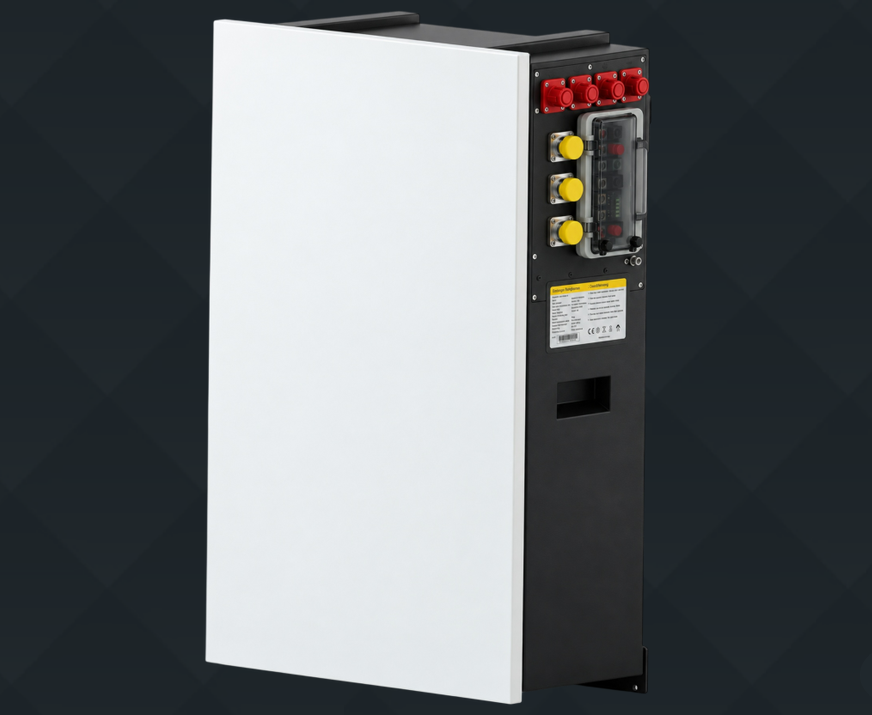
Image: AuroraCell's sodium-ion residential battery
One 48V Sodium-Ion Battery, with Up to 15 Units in Parallel
The product uses a 48V low-voltage architecture and is designed primarily for use with residential hybrid inverters. Its intended applications include rooftop solar self-consumption, home backup power and integrated solar-plus-storage systems.
The main specifications of the production version include:
• Rated energy: 9.3 kWh
• Nominal voltage: 48V
• Nominal capacity: 200 Ah
• Battery round-trip efficiency: approximately 95%
• Maximum discharge current: 100 A
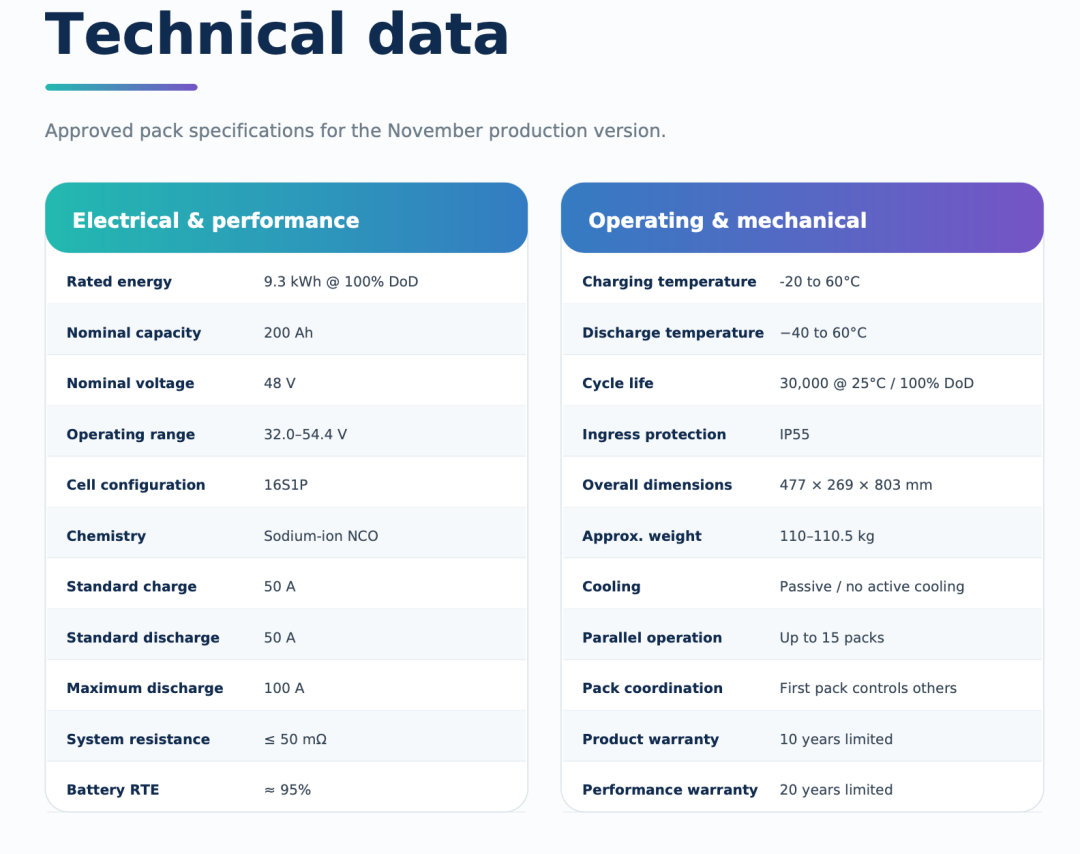
Image: AuroraCell battery specifications
With up to 15 batteries connected in parallel, the system can be expanded to approximately 139.5 kWh of rated capacity. Users can begin with a single unit and add more capacity as required, extending its potential use from conventional homes to larger residential properties and even small commercial applications.
AuroraCell has also developed a 12 kW three-phase low-voltage hybrid inverter for the battery, operating across a battery-voltage range of 30V to 60V.
The company lists Victron, Deye, Solis, Growatt, SMA, Sungrow, SOFAR and Ingeteam among the compatible inverter brands. However, actual integration will still depend on inverter settings, communication protocols and system commissioning.
The Headline Specification Is 30,000 Cycles
At one complete charge-discharge cycle per day, 30,000 cycles would mathematically correspond to around 82 years. That does not mean, however, that a residential battery can realistically be expected to operate for 82 years.
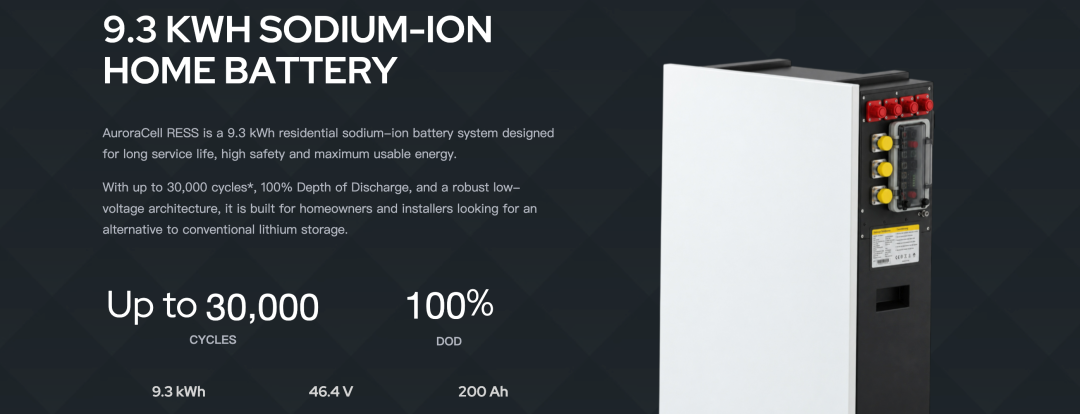
Image: AuroraCell cycle-life information
Residential solar-plus-storage systems do not normally complete one full cycle every day, as usage varies with seasons, weather conditions and household demand. AuroraCell states that its cells are expected to reach 30,000 cycles under specified test conditions at 25°C and 100% depth of discharge.
The company also notes that this figure is based on cell-level test data and lifetime projections. Actual service life will depend on temperature, charge and discharge rates, operating voltage limits and the way the battery is used.
The complete battery has a stated design life of 25 years, while its warranty is divided into two parts:
• Limited product and workmanship warranty: 10 years
• Limited performance warranty: 20 years
The 20-year performance warranty should not be interpreted as an unconditional guarantee of fixed capacity retention, usable energy or AC output. Its practical coverage will depend on the final warranty terms and specified operating conditions.
The 30,000-cycle figure is therefore better understood as a laboratory-based lifetime indicator for the sodium-ion cells, rather than the expected service life of the complete residential storage system. Even with that qualification, it remains a notable figure and one of the product’s most prominent selling points.
Sodium-Ion Cell Avoids the Same Intense Open Flame in Destructive Thermal Test
AuroraCell has published comparative footage from a destructive thermal test involving prismatic battery cells. Its sodium-ion cell is shown on the left, while a commercial LFP cell appears on the right.
Under the conditions shown, the two cells reacted differently to destructive thermal exposure. The AuroraCell sodium-ion cell produced visible venting and smoke but did not develop the same large and intense open flame seen from the LFP cell, which entered visible combustion.
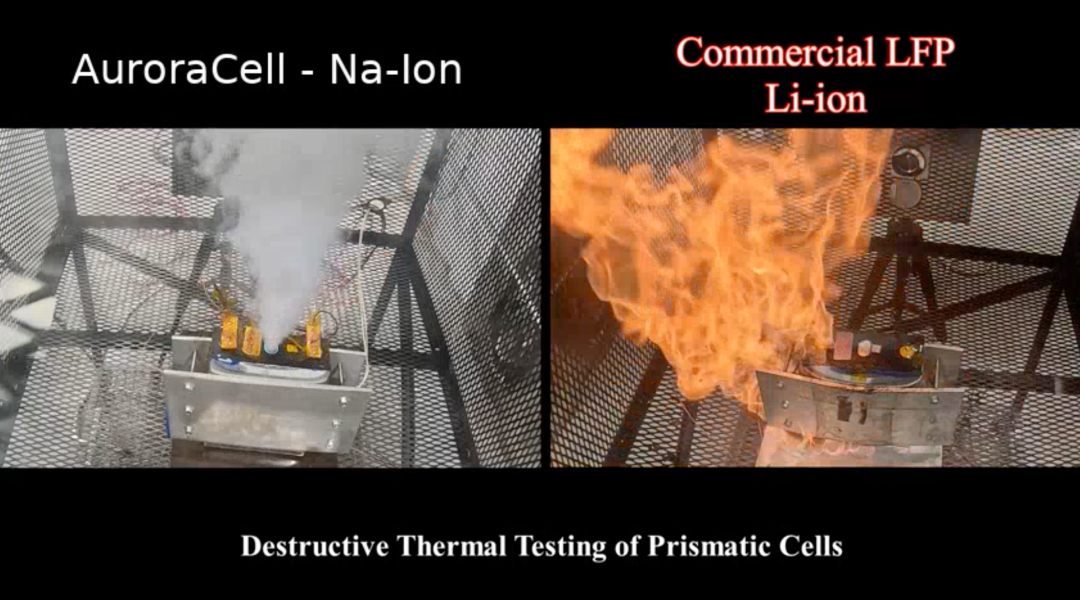
Image: Comparative destructive thermal test of AuroraCell sodium-ion and commercial LFP cells
The footage indicates that AuroraCell’s NCO sodium-ion cell produced a comparatively moderate thermal response during this particular test. For batteries installed in homes, garages or basements, reducing the likelihood of severe thermal runaway and flame propagation has clear practical value.
However, the comparison does not fully disclose the capacity and state of charge of each cell, the initiation method, test temperature or complete test procedure. It therefore demonstrates how these two cells behaved under one specific set of conditions but should not be treated as evidence that all sodium-ion batteries are safer than all LFP batteries.
The footage provides a useful visual indication of the cell’s thermal stability, but it cannot replace complete third-party test results or system-level safety certification.
Discharge Operation Down to -40°C
Alongside cycle life and safety, low-temperature performance is another major focus of the product.
According to the official specifications, the non-heated version has a charging-temperature range of -20°C to 60°C and a discharge-temperature range of -40°C to 60°C. This could be relevant in colder European markets, where maintaining battery operation at low temperatures may also reduce dependence on additional heating equipment.
However, the ability to operate at -40°C does not mean the battery will retain the same power, available capacity or efficiency delivered under normal temperatures.
AuroraCell has not yet published complete low-temperature capacity-retention or power-derating curves. More test data will therefore be needed to establish how much energy and power the battery can actually deliver at -40°C.
Featured News
All News →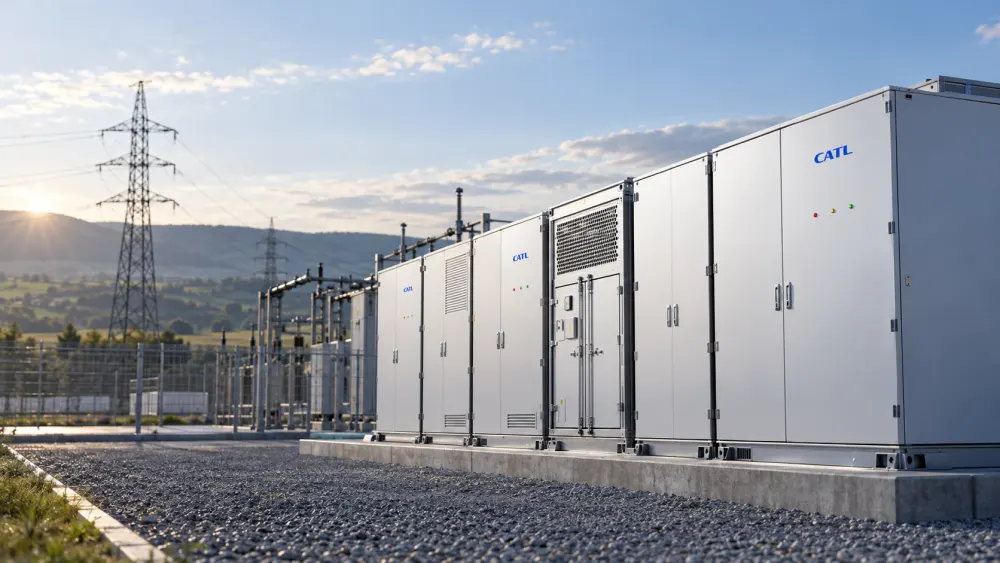
CATL TENER Sodium Moves Deeper into Europe with Intilion and Merus Power
Europe's sodium-ion BESS market is beginning to move from product launch to system integration. Energy-Storage.news reported that Germany-based Intilion has tied up with CATL to realise sodium-ion BESS projects in the DACH region, targeting up to 3 GWh, while Finland's Merus Power is working on technical integration between its PCS solution and CATL's sodium-ion BESS platform. The latest moves follow CATL's 5 GWh sodium-ion storage partnership with Alfen in July and the launch of its TENER Sodium system in Munich in June, suggesting that European integrators are preparing for sodium-ion storage before the technology becomes fully mainstream.
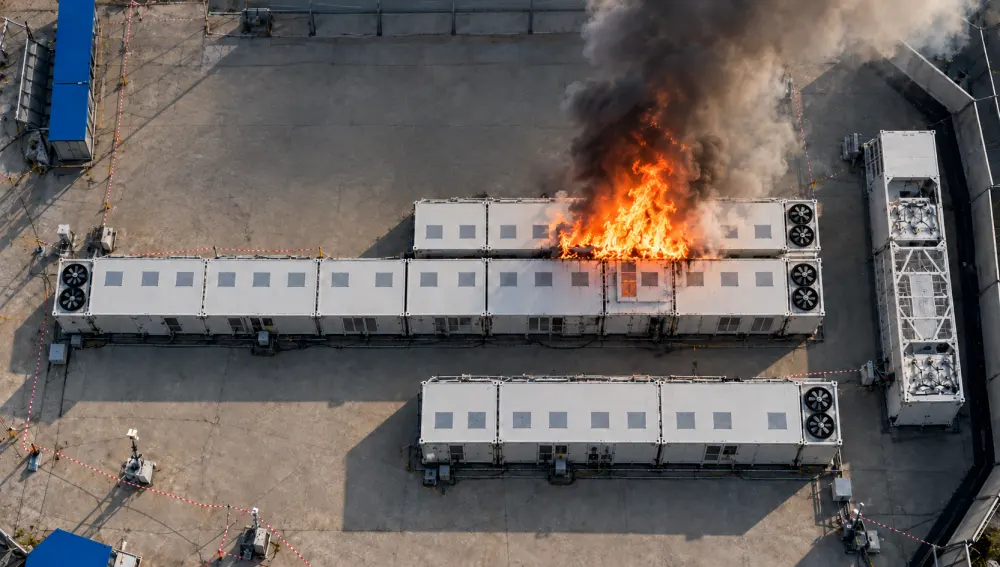
Envision Gen 8 Completes 64 MWh Site Level Fire Test
Envision has announced a 64 MWh site-level fire test of its Gen 8 AI energy storage system under 5 cm spacing, 100% SOC and disabled active protection systems.
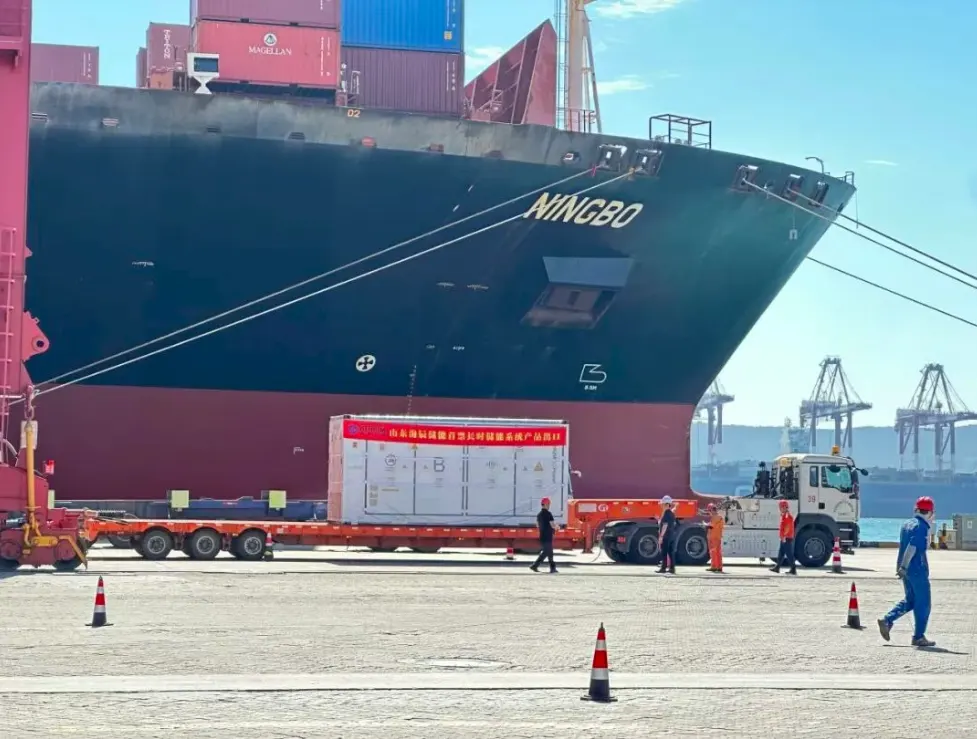
First 106 Units Shipped! HiTHIUM’s Shandong Heze Base Begins Large-Scale Overseas Deliveries of LDES
Source: HiTHIUM Recently, the Shandong HiTHIUM Long-Duration Energy Storage Integrated Industrial Park (Shandong Heze Base) marked its first international export since commencing mass production. The initial shipment—comprising 106 units of the ∞Power 6.25MWh 4-hour long-duration energy storage system prefabricated…
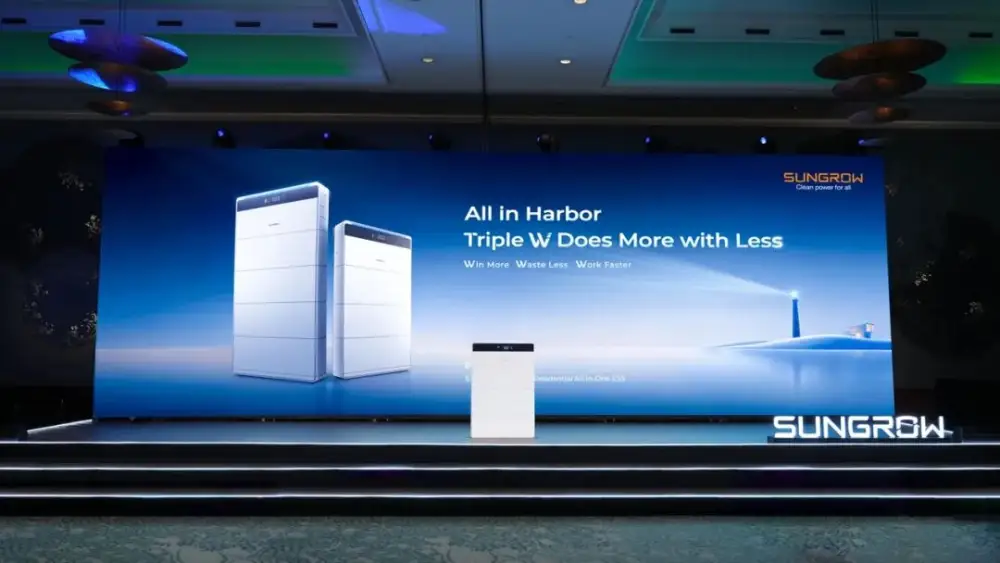
Exclusive: Sungrow Launches All-in-One PowerHarbor, Betting Benelux Home Storage Is Just Beginning
Rooftop solar is already widespread among Dutch households, yet relatively few homes have installed residential energy storage. Sungrow believes this market is only just beginning. On September 22, Sungrow held an event in Amsterdam to officially launch its PowerHarbor all-in-one residential energy storage system in…
Eternalplanet Raises Hundred-Million-Yuan Funding for Global Residential Storage Expansion
Source: Eternalplanet Recently, Shenzhen Eternalplanet Energy Co., Ltd. (hereinafter referred to as Eternalplanet) has successfully closed a financing round of hundreds of millions of RMB. Led by ZX Holdings, the raised funds will be mainly used for new product R&D, global market expansion and supply chain…
NVIDIA Starts Selecting "Standard Components" for AIDCs, First Energy Storage List Released!
On September 21, NVIDIA launched a new AI infrastructure qualification program. This time, NVIDIA is looking beyond GPUs and servers, bringing the power and cooling equipment behind AI data centers into its qualification system as well. The first products included in the DSX Ready qualification scope fall into two…
CATL Lists 587Ah Cell at RMB 0.415/Wh, 280Ah and 314Ah Prices Rise 1–2%
CATL has recently adjusted the prices of its energy storage cells on its official online marketplace in China and published the pricing of its 587Ah energy storage cell for the first time. Compared with the previous model of mainly supplying large customers through GWh-scale orders, CATL is now using its online…
DEWA Expands Mohammed bin Rashid Solar Park Phase 7 to 8.4 GWh of Battery Storage
On September 16, during Energy Storage Summit Middle East 2026, the Dubai Supreme Council of Energy again referred to a large-scale lithium-ion battery storage plan in Dubai, with an initial scale of around 1,000 MW and 6,000 MWh of storage capacity, scheduled to be rolled out between 2027 and 2029. These figures do…