Dutch Home Storage Policy Boost: Government Moves to End "Double Taxation"


The Dutch government has included the issue of energy tax being charged twice on electricity stored in home batteries in its national "500-rule simplification programme".
In the document, the government states that it wants to prevent the same unit of electricity from being taxed multiple times as it moves through the energy system, as this could slow the development of home storage and vehicle-to-grid (V2G) applications.
However, this does not mean that the tax change has already taken effect. The Dutch Ministry of Finance and the Ministry of Economic Affairs and Climate Policy are currently working with industry stakeholders to identify a solution for the period after 2026. The precise tax treatment, metering method and implementation timeline have yet to be determined.

Not Every Unit of Stored Electricity Is Taxed Twice
In the Netherlands, energy tax is triggered not by who ultimately consumes the electricity, but by whether electricity is supplied to a user. As a result, double taxation does not occur in every storage scenario.
- Solar electricity generated, stored and consumed behind the same meter: no energy tax applies.
- Electricity purchased from the grid, stored in a battery and later consumed by the same household: energy tax is paid once.
- Electricity generated by rooftop solar, stored and later exported to the grid: the final consumer pays energy tax once.
Potential double taxation arises in the following chain: electricity is drawn from the grid, stored in a battery, exported back to the grid and then supplied to another user.
The household pays energy tax when drawing electricity from the grid. If that electricity is subsequently exported and supplied to another consumer, a second taxable supply may occur.
Strictly speaking, the same person is not being taxed twice. Instead, the same unit of electricity is counted as a taxable supply at two different stages of the chain. This is particularly problematic for home batteries and V2G systems seeking to earn revenue by charging when prices are low, discharging when prices are high or participating in electricity markets through an aggregator.
If the Same Electricity Is Taxed Again Along the Chain, How Much Value Remains for Energy Trading?
The issue is likely to become more visible after the Netherlands ends its net-metering scheme for small consumers in 2027.
Under the current system, electricity exported by households can be offset against electricity drawn from the grid, making the double-taxation issue less apparent. Once net metering ends, double energy taxation may arise when a home battery charges from the grid, stores the electricity, exports it and that electricity is ultimately supplied to another consumer.
This also explains why the Dutch government has referred not only to home batteries, but also to V2G. Once an electric vehicle battery begins participating in grid dispatch, the same questions arise: where did the exported electricity come from, has it already been taxed and how should it be accounted for?
The main challenge is not the policy position. It is what happens behind the meter.
The Dutch government has previously acknowledged that the difficulty is not recognising that double taxation is undesirable. The problem is that the existing metering system cannot clearly identify how electricity moves behind a household meter. Any solution must also address legal requirements, administrative costs, tax enforcement and verification.
A smart meter can record electricity flowing between a user and the public grid, but it cannot determine whether a particular unit of electricity came from rooftop solar, the grid or a battery that had previously been charged. When solar panels, household loads, batteries and electric vehicles operate simultaneously, electricity flows become mixed behind the meter.
Tax Authorities Cannot Easily Determine Which Electricity Has Already Been Taxed and Which Should Be Exempt
The Dutch government is examining more detailed monitoring and metering options, including whether additional metering could be installed at the battery level to identify when a unit of electricity has been stored and whether energy tax has already been paid.
Any solution would need to meet three conditions:
- It must not create an excessive administrative burden.
- Energy suppliers and tax authorities must be able to implement it.
- Tax authorities must be able to verify the data.
This cannot be resolved simply by announcing the removal of "double taxation". Whether the policy can be implemented will depend on establishing a settlement mechanism linking meters, data systems, aggregation platforms, energy suppliers and tax authorities—one that can clearly identify, calculate and verify each relevant electricity flow.
Based on the information currently available, including double energy taxation in the government's regulatory simplification programme at least shows that the Netherlands is beginning to consider home storage and V2G within the broader framework of electricity markets, taxation and grid flexibility.
Featured News
All News →
Up 350%: Utility-Scale Battery Additions Overtake Residential Storage in Germany
Germany commissioned more than 500,000 battery storage systems totalling approximately 8.2 GWh in the first nine months of 2026. Utility-scale additions surged by around 350% to 3.8 GWh, overtaking residential storage and signalling a shift from household solar support towards grid-scale flexibility.

Sonnen Files for Insolvency Two Months After Shell Sale
German home battery and virtual power plant pioneer Sonnen has filed for insolvency roughly two months after Shell sold the group to investment firm Tiven. Service for more than 150,000 existing customers is expected to continue, while parts of the group may be restructured or wound down. Sonnen's US operation, meanwhile, is reporting higher sales and production, pointing to a sharp regional divide.

UL Opens New Certification Pathway for Modular DC BESS and Compatible PCS
UL Solutions will evaluate modular DC energy storage systems with identified subsystems under applicable UL 9540 requirements and record compatible models in Product iQ. The pathway is intended to clarify certification and installation reviews, but it does not allow separately certified batteries and PCS to be combined without system-level evaluation.
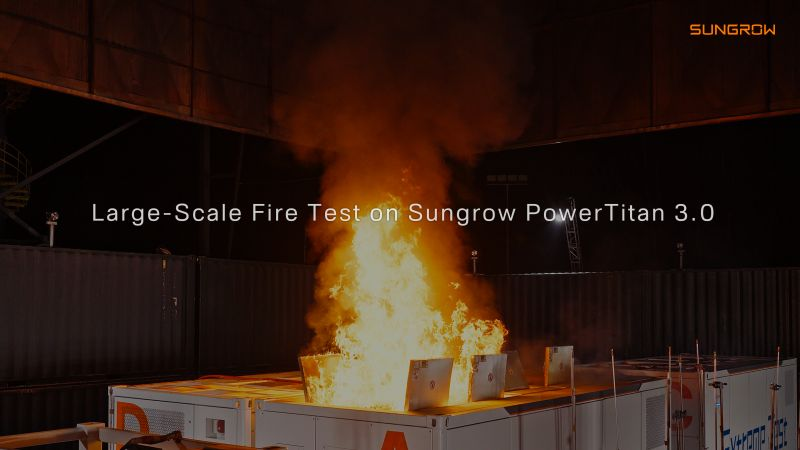
Sungrow's 28.56 MWh PowerTitan 3.0 Fire Test Contains Thermal Runaway Within a Single Unit
Sungrow's PowerTitan 3.0 has completed a large-scale fire test at 100% state of charge, with active fire suppression and thermal management systems disabled. During the 7.5-hour test, the internal temperature of the initiating unit peaked at 1,259.8°C, while thermal runaway did not propagate to adjacent battery units or the medium-voltage system.
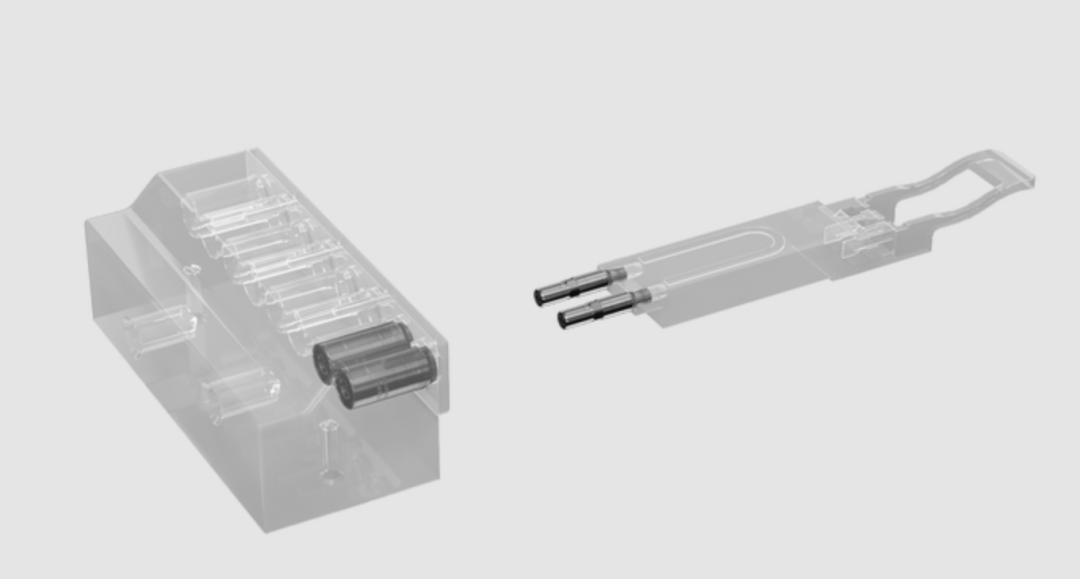
Beyond GPUs: AI Data Centers Are Bringing Liquid Cooling to Optical Transceivers
CoolIT Systems, Stäubli and Ciena have collaborated on a direct-to-plug liquid cooling architecture for next-generation pluggable optical transceivers, combining miniature quick-disconnect couplings with a dedicated OSFP cold plate to support the thermal demands of 3.2T-and-beyond optics in AI data centers.
Australia Adds 276,000 Home Batteries as Uptake Outpaces AEMO Planning Assumptions
Australia added 8.7 GWh of home battery capacity in the first half of 2026. As installations accelerate, product portfolios, sales channels and subsidy rules are also reshaping access to the market.
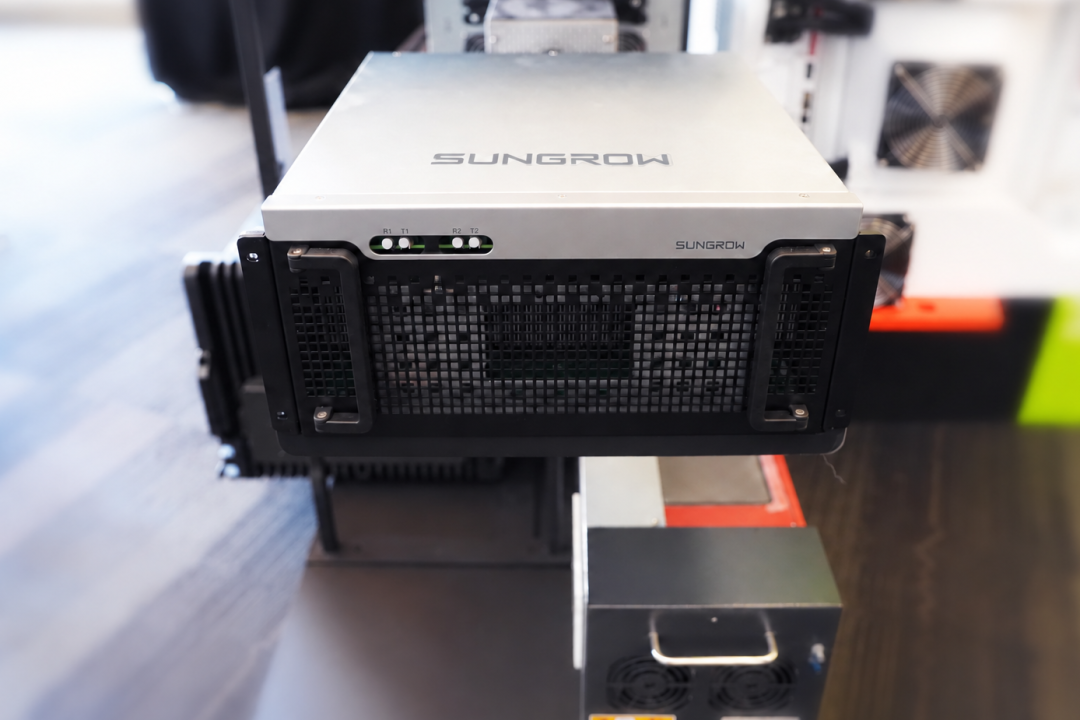
Sungrow's EnerNeo SST Reaches Commercial Deployment, Appears in NVIDIA's OCP Showcase
Sungrow's EnerNeo SST has moved from product launch to commercial delivery and operation under real computing loads in under 100 days. At the 2026 OCP Global Summit, its core modules appeared in the NVIDIA MGX AI Factory Ecosystem zone, while new TÜV Rheinland certifications marked another step towards deploying its 800 VDC power architecture across European and North American markets.

Europe's New Sodium-Ion Home Battery: 30,000 Cycles and Discharge Down to -40°C
Bulgarian company AuroraCell has introduced a 9.3 kWh low-voltage sodium-ion home battery for the European market, offering up to 30,000 cell-level cycles, discharge operation down to -40°C and expansion to 139.5 kWh through parallel installation. While its NCO chemistry shows potential advantages in cycle life, thermal stability and cold-weather operation, the headline claims remain subject to specified test conditions and require further third-party and system-level validation.