Rooftop solar is already widespread among Dutch households, yet relatively few homes have installed residential energy storage. Sungrow believes this market is only just beginning.
On September 22, Sungrow held an event in Amsterdam to officially launch its PowerHarbor all-in-one residential energy storage system in the Netherlands, Belgium and Luxembourg. The product made its debut in Munich in June this year; This time, it officially went on sale in the Benelux market.
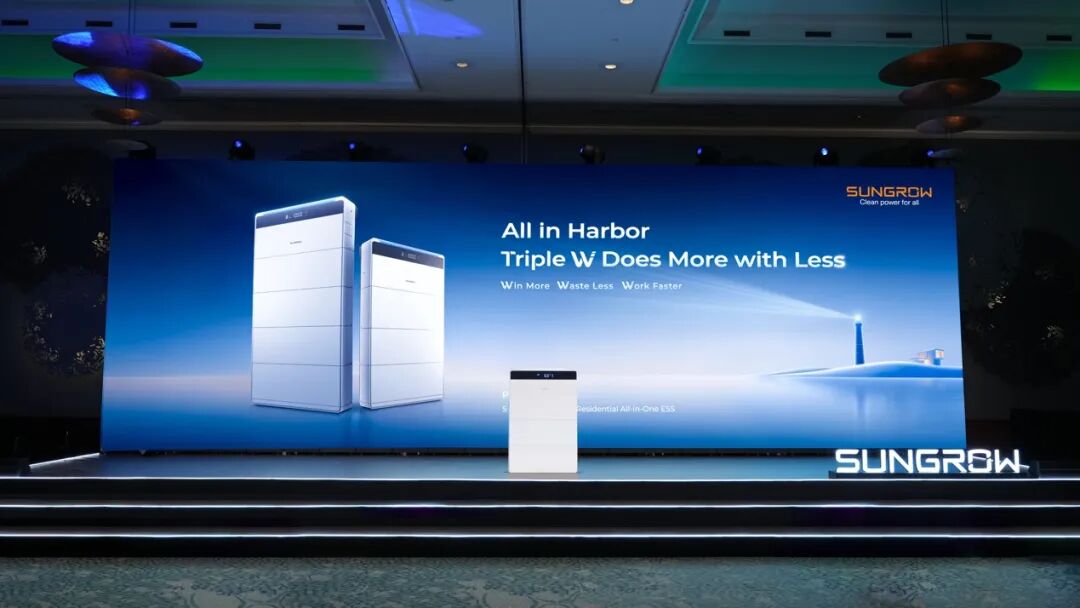
PowerHarbor introduces three Sungrow "industry firsts": a 10 kWh stackable battery module, EnergyBridge Mini Backup, and the iHomeManager Mini plug-in smart management terminal. In the context of Dutch households, these three designs address three practical questions: What if users want to expand their system later? How easy is it for installers to install? Can the battery automatically schedule charging and discharging when electricity prices change?
In an exclusive on-site interview with Energy Planet, Sungrow also discussed issues beyond the product specifications: How will residential storage be sold in the Netherlands, and how does Sungrow plan to establish a long-term presence in the market?

01 End of Net Metering Puts Dutch Home Storage in the Spotlight
The Netherlands' solar net metering scheme will end on January 1, 2027. From that point onward, the solar electricity households export to the grid will no longer offset their electricity consumption under the current arrangement. For households that already have rooftop solar, whether to consume the electricity generated during the day immediately, store it in a battery, or export it to the grid will increasingly become an economic decision.
In the exclusive interview, Sungrow described the Dutch residential storage market as being at an early stage. According to an estimate shared at the event, fewer than 10% of households currently have energy storage, and the end of net metering will be one of the most important growth drivers over the next two to three years. However, the actual financial returns from energy storage will also depend on electricity contracts, compensation for exported electricity, household consumption patterns and installation costs. By bringing PowerHarbor to the Netherlands at this point, Sungrow is targeting households that are beginning to reconsider how they should use the electricity generated during the day.
02 A 'True' Stackable 10 kWh Battery Module
Let us first look at the battery. PowerHarbor's three-phase hybrid inverters are available in eight power ratings: 10/12/15/17/20/22/25/30 kW. Its battery modules are available in three capacities—6/9/10 kWh—and up to six modules can be stacked. With 10 kWh modules, a single tower can provide up to 60 kWh.
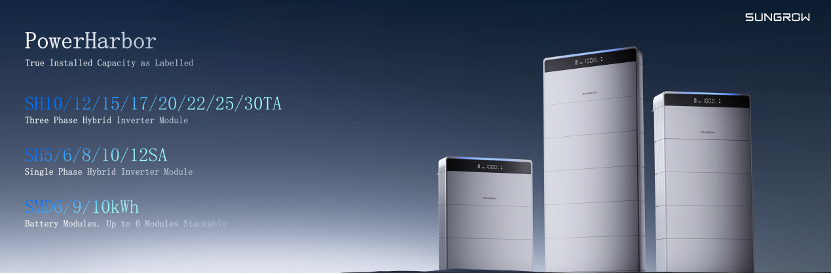
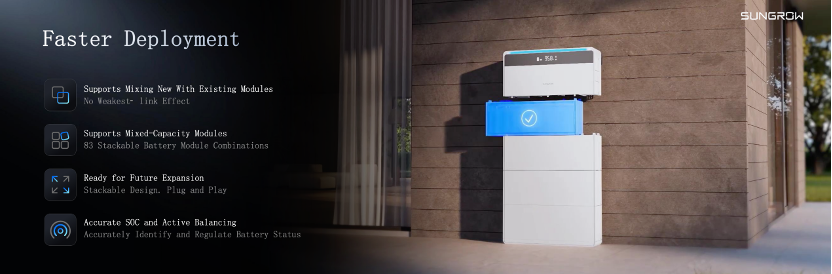
The 10 kWh SMD100 uses 314 Ah battery cells. Sungrow describes it as a "true stackable 10 kWh battery module," highlighting its industry-leading energy density and high-power module-level battery optimizer. The complete battery tower is approximately 25.5 cm deep. The optimizer and DC/DC converter integrated into each module are key to enabling mixed-capacity expansion. The three battery capacities can form 83 combinations within a single tower, while new modules can also be used together with existing ones.
Households may add an electric vehicle or heat pump in the future, in which case their original battery capacity may no longer be sufficient. If modules can be added as needed without replacing the entire system due to differences between new and existing batteries, both users and installers will have much greater flexibility.
03 EnergyBridge Cuts Backup Hardware and Installation Work
The second innovation is EnergyBridge Mini Backup. Traditional backup solutions often require a separate changeover switch, circuit breaker, meter, bypass switch and current transformer. EnergyBridge integrates these five functions into a single device that can be installed inside the distribution board and mounted on a DIN rail. It can reduce costs by up to 12% and save one hour of installation time. Its size is up to approximately 99% smaller than that of a conventional gateway. The device can be mounted directly on a DIN rail without drilling additional holes in the wall, and installation takes only 20 seconds.
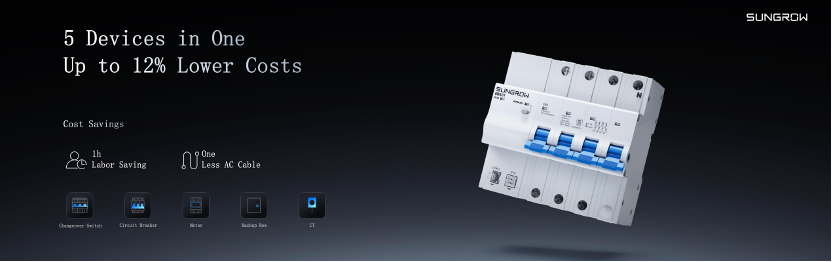
Sungrow calls EnergyBridge PowerHarbor's "killer feature." From an installer's perspective, greater integration creates more opportunities to simplify the number of devices and the amount of wiring required on site. Whether the new product can gain traction in the Dutch market may depend as much on the installation experience as on the battery specifications.
We believe Sungrow places such strong emphasis on installation because residential storage ultimately reaches the customer's home through installers. Installers are an essential intermediary in product delivery. In the interview, Sungrow summarized its support for installers in three areas: "The first is training, the second is product availability, and the third is after-sales service."
Sungrow also conducts joint customer visits with its distributors and organizes online and offline training. It currently has more than 20 warehouses across Europe. When installers encounter problems, they can submit a ticket through the CSP system for follow-up by a Distribution Service Engineer.
04 AI Scheduling Puts Batteries to Work When Power Is Worth More
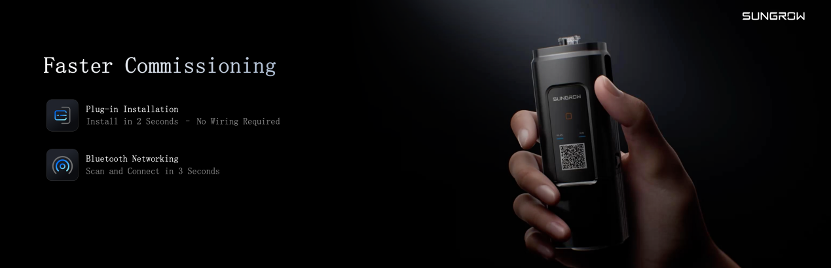
The third innovation is iHomeManager Mini. It combines communication, home energy management and AI-based scheduling, using dynamic electricity prices, weather conditions, solar generation forecasts and household load forecasts to determine when the battery should charge and discharge. It can also work with smart home devices to manage loads such as heat pumps and EV chargers.
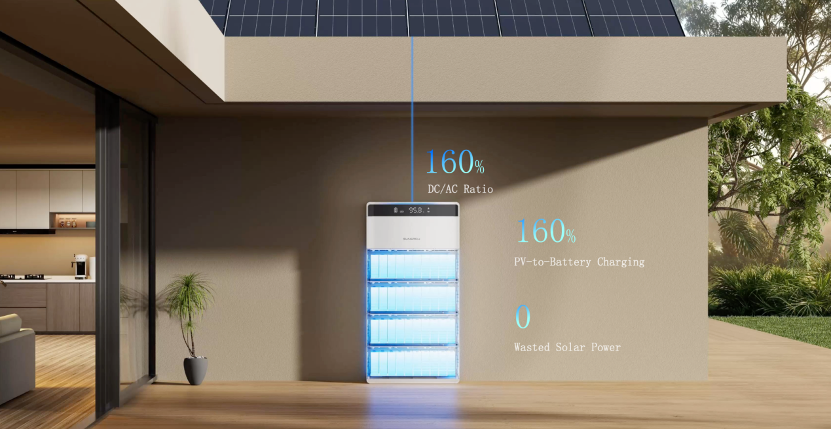
For the scheduling system to respond effectively to changes in electricity prices, the hardware must also provide adequate performance. According to Sungrow's product materials, PowerHarbor supports up to 160% PV-to-battery charging capacity and 0.66P discharging.
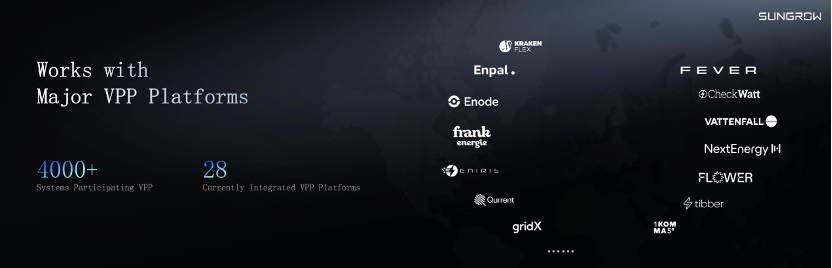
This connects directly to a question we raised during the interview: As dynamic electricity pricing and virtual power plants develop, are residential storage companies selling batteries, or are they selling household energy assets capable of participating in energy dispatch? Sungrow's answer was that the market is shifting from "selling hardware" to "integrated assets": "The player who can help homeowners gain more benefits will win." VPPs are already part of its market plans, although the actual form of participation and the benefits for users will depend on how these partnerships are implemented.
05 PowerHarbor's 12 kW Model Delivers Up to 6 kW on a Single Phase
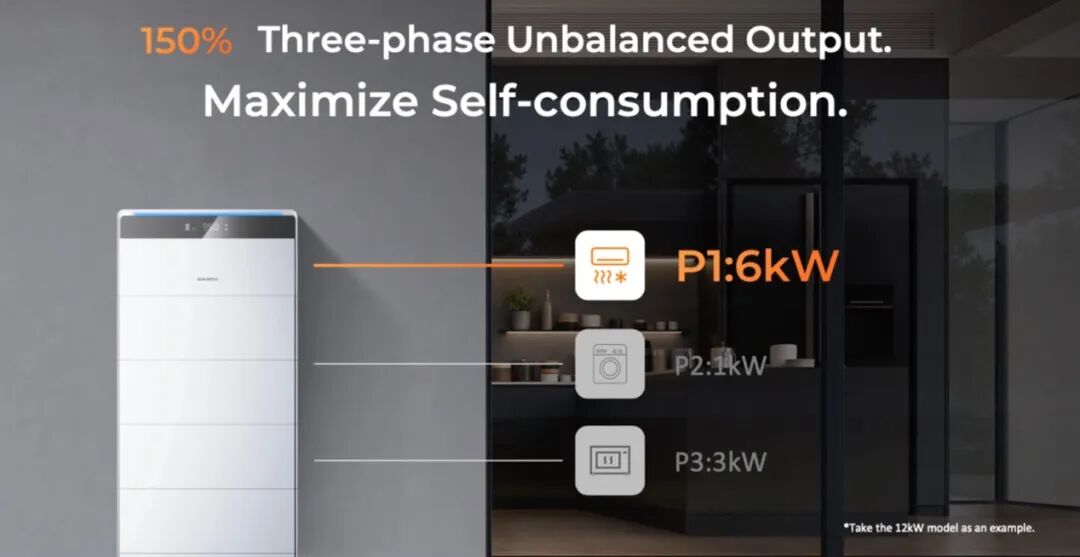
In addition to the three "industry firsts," PowerHarbor must address another practical issue: three-phase household loads are not always balanced. For example, high-power appliances such as air conditioners may be concentrated on one phase. Looking only at the inverter's total output may not reveal whether that individual phase can supply enough power. PowerHarbor's 10 kW and 12 kW models support up to 150% three-phase unbalanced output.
For households with loads concentrated on a single phase, this specification can be more relevant than total power alone.
06 Built for Dutch Rooftops — and the Weather
Many Dutch households already have rooftop solar. For these users, a new energy storage system must be compatible with their existing PV modules and withstand long-term outdoor operation.
First, let us consider rooftop compatibility. According to the product information presented at the event, PowerHarbor supports up to 20 A of input current per PV string. Depending on the model, it is equipped with 3 or 4 independent MPPTs and three or five string inputs. If PV modules are installed on roof sections facing different directions, the independent MPPTs can track the maximum power point of each string separately, reducing interference between strings. Whether an existing string can be retained will still depend on its on-site voltage, current and other conditions.
Rooftop compatibility is only the first step. PowerHarbor is rated to operate at temperatures as low as -20°C. When the ambient temperature falls below 0°C, the battery must first be warmed by its adaptive heating system before charging begins. Models rated at 15 kW or below operate at less than 30 dB(A), while the 17–30 kW models operate at less than 50 dB(A). The product materials also specify an IP66 protection rating and C5 corrosion resistance to withstand rain, dust and highly corrosive outdoor environments.
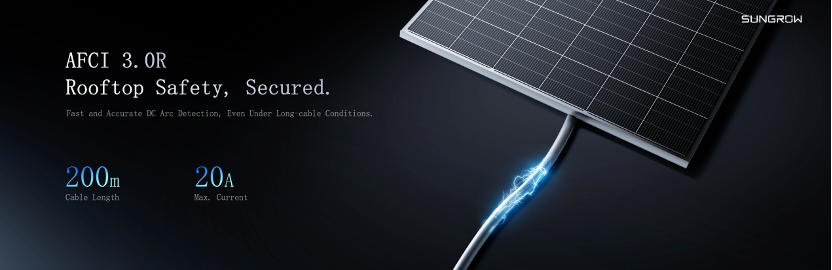
For safety, PowerHarbor is equipped with an active fire suppression component. If battery cell thermal runaway is detected, the fire suppression device can be activated within 30 seconds. The PV DC side is equipped with AFCI 3.0 R arc protection. The system can still detect abnormal DC arcs at a maximum current of 20 A and with cable lengths of up to 200 metres.
From roofs with different orientations to low-temperature operation, safety protection and subsequent maintenance, installers must ultimately provide customers with a reliable solution. This also explains why Sungrow emphasized training, product availability and after-sales support during the interview. Product specifications may attract attention, but long-term service will determine whether installers continue recommending the brand.
07 Sungrow Prioritises Installer Confidence Over First-Year Sales Volume
Sungrow has developed a clear set of selling points for PowerHarbor, but it was notably restrained when discussing first-year sales. In the exclusive interview, it stated: "Rather than immediately pursuing sales volume, Sungrow places greater importance on market acceptance. We want installers to use Sungrow this time and continue using it over the coming months and years."
With the Netherlands approaching the end of its net metering scheme, Sungrow has introduced mixed-capacity expandable batteries, a smaller backup device and smarter energy management to the market. The three "industry firsts" have attracted attention to PowerHarbor at launch, but whether the brand can establish itself in the Netherlands will depend on the product's long-term performance in customers' homes and installer feedback after every delivery. For Sungrow, the goal in the first year may not be the number of systems sold, but convincing the local market that when expansion, maintenance or technical support is needed years later, the brand will still be there.
Market Side Q&A:
Ghita: Could you briefly introduce yourself?
Mo: My name is Mo, and I am responsible for Sungrow’s distribution business in the Benelux market.
Ghita: I'm Ghita. Today, we will discuss Sungrow's view of the market before focusing on the launch of PowerHarbor.
Q: How would you describe the residential energy storage market at its current stage?
Mo: I think it is only just beginning. The penetration of rooftop PV in the Netherlands is very high compared with other European countries, but the battery storage market is still at an early, hardware-driven stage. Many consumers are not yet closely considering factors such as payback periods. Their immediate need is a system that can store solar generation and increase self-consumption. According to our estimate, the share of Dutch households with energy storage is still in the single digits. As the market matures and policies change, particularly with the end of net metering, we expect the sector to grow significantly in the short term.
Q: How do you expect the market to develop over the next two or three years, and what will drive that growth?
Mo: The end of net metering will be the most important factor. Many customers do not yet feel the impact of this change. However, as awareness grows and people exchange experiences, more households will realise that battery energy storage can help them make better use of their solar generation.
Q: How will dynamic electricity prices, smart energy management systems and virtual power plants change the residential storage market?
Mo: The market is already moving in this direction. Sungrow is actively engaging with virtual power plant operators in the Netherlands, including Frank Energie and other market participants. With net metering coming to an end, households will need to manage their solar generation and battery storage more effectively. The market is therefore shifting from standalone hardware towards integrated energy assets. The companies that can help homeowners gain more value from their systems will have the strongest position in the market.
Q: What are Sungrow’s main advantages in this field?
Mo: Sungrow has more than 19,000 employees globally, with over 40% working in research and development. Our founder, Professor Cao Renxian, has always emphasised that quality and technology are the lifeline of Sungrow. We cannot simply copy our experience from the utility-scale market and apply it directly to residential storage, but our technical background gives us a strong foundation. We also have an established network of distribution partners. They help us connect with VPP operators and provide valuable market feedback on both hardware and software.
Q: What is Sungrow’s long-term strategy for the Netherlands and the wider Benelux market?
Mo: Our strategy is to remain in this market for the long term. Many new brands are entering the market, but some lack a strong technical foundation or a stable supply chain, making them vulnerable to price competition. For PowerHarbor, we are not expecting huge sales volumes immediately. We first want to understand market adoption and establish the product as a long-term solution for installation partners. We want installers to choose Sungrow today and continue working with us over the coming months and years.
Q: Installers play an important role in this market. How does Sungrow support them?
Mo: Our support focuses on three areas: training, product availability and after-sales service. For training, we conduct joint customer visits with our distribution partners and organise both online and offline sessions for installers. This gives installers more product knowledge while also helping us collect feedback from the market. The second area is product availability. Including satellite warehouses, Sungrow has more than 20 warehouses across Europe. Reliable product availability gives our installation partners greater confidence. The third area is after-sales service. We have a dedicated CSP ticketing system. If an installer encounters a problem, they can submit a request through the system, and one of our Distribution Service Engineers will follow up and work to resolve it promptly.
Q: What are your sales expectations for PowerHarbor in the Netherlands?
Mo: We do not want to set overly high expectations at the very beginning. However, the market is growing, and we believe the sales potential is promising. At this stage, market acceptance is the most important consideration. PowerHarbor has several clear USPs. EnergyBridge, for example, is an industry-pioneering solution and one of the product’s strongest features. The iHomeManager Mini helps users make full use of the system’s hardware and software, while the all-in-one design is thinner and more compact than many competing solutions. Overall, we see strong potential for the product.
Q: What are Sungrow's plans for PowerHarbor in the rest of Europe?
Mo: The detailed strategy has not yet been fully defined. However, Sungrow is an integrated company, not only in terms of hardware and software but also in its channel strategy. We believe all-in-one systems such as PowerHarbor will become an important part of Sungrow’s residential energy solutions across Europe.
Geeta: Thank you very much for your time, and congratulations on the launch of PowerHarbor. Thank you as well for inviting us and organising the event.
Mo: Thank you for joining us.