On September 16, during Energy Storage Summit Middle East 2026, the Dubai Supreme Council of Energy again referred to a large-scale lithium-ion battery storage plan in Dubai, with an initial scale of around 1,000 MW and 6,000 MWh of storage capacity, scheduled to be rolled out between 2027 and 2029.
These figures do not represent a new project. They correspond to the storage configuration used in the early planning stage of Phase 7 of the Mohammed bin Rashid Al Maktoum Solar Park.
Over the past year, the project has expanded from the initial 1,000 MW / 6,000 MWh to 1,400 MW / 8,400 MWh at the current tender stage. At the same time, the associated solar PV capacity has increased from 1,600 MW to 2,000 MW.
What deserves closer attention is that the project has expanded in scale, the developer tender is progressing, and the storage supply chain is gradually becoming clearer.
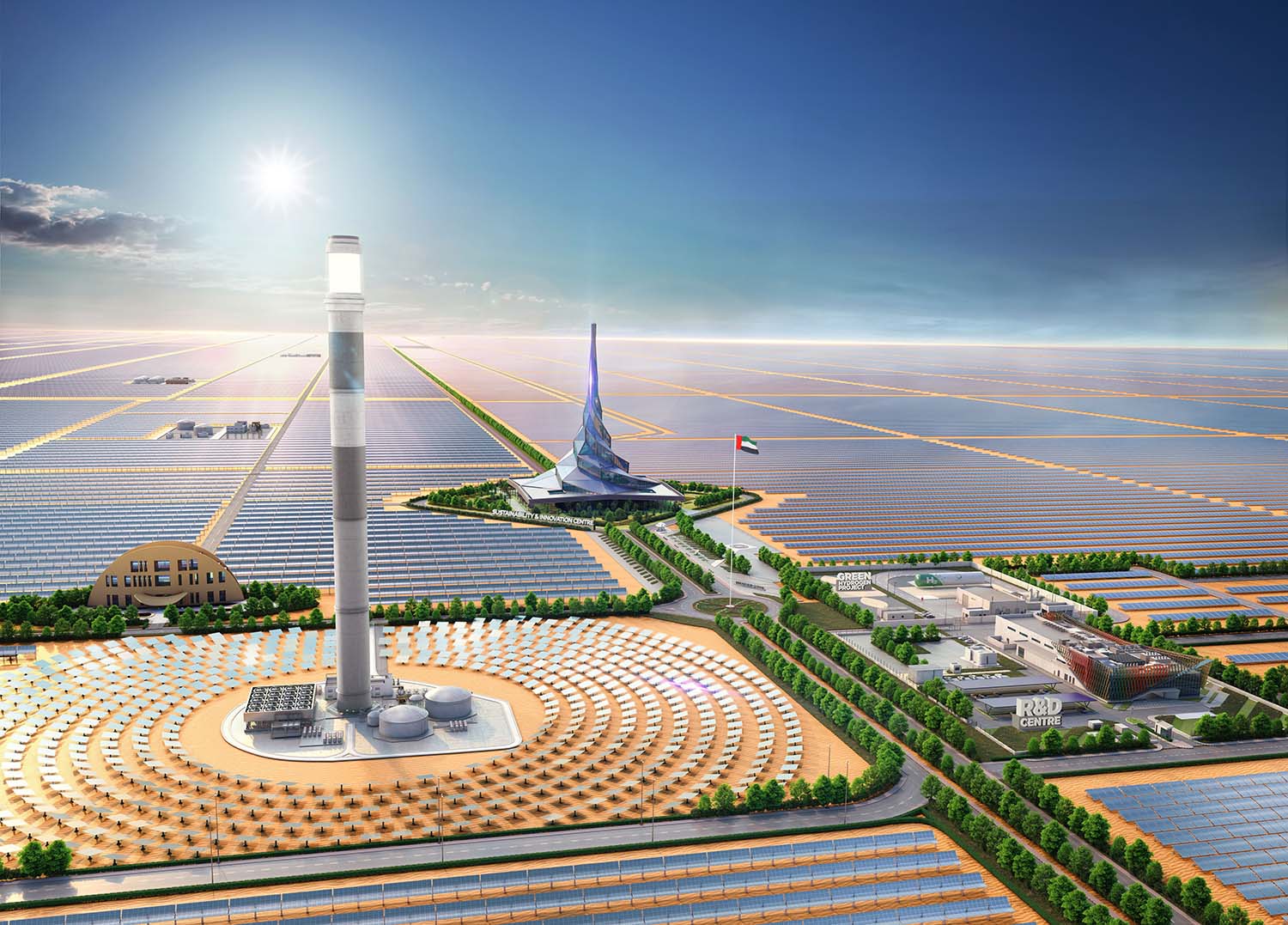
Phase 7 Storage Capacity Expands from 6 GWh to 8.4 GWh
Phase 7 of the Mohammed bin Rashid Al Maktoum Solar Park was never intended to be a conventional solar expansion. In February 2025, DEWA appointed a Deloitte-led consortium as project adviser, covering tendering, commercial negotiations, financial structuring and the PPA. One month later, DEWA formally invited international developers to submit Expressions of Interest. The plan announced at the time was for 1,600 MW of solar PV, expandable to 2,000 MW, together with 1,000 MW / 6,000 MWh of battery storage.
As the project progressed, DEWA expanded the storage configuration in step with the solar capacity. As PV capacity increased from 1.6 GW to 2 GW, keeping the original storage size would have reduced the proportion of solar output that could be covered by storage. By the time DEWA invited qualified bidders to submit proposals in November 2025, the project had been revised to 2,000 MW PV + 1,400 MW / 8,400 MWh BESS, while retaining a six-hour storage duration.
Six-Hour BESS Becomes a Core Part of the 2 GW Solar Project
Compared with the four-hour standalone storage projects being deployed at scale in Saudi Arabia, Dubai Phase 7 uses a longer six-hour configuration. The large standalone BESS projects currently being advanced by Saudi Arabia’s SPPC generally use a 500 MW / 2,000 MWh four-hour design, focused on system flexibility and intraday energy shifting. Dubai Phase 7, by contrast, directly combines storage with 2 GW of solar PV, with a stronger focus on extending daytime solar generation into the evening and night.
Under the current configuration, 1,400 MW × 6 hours = 8,400 MWh.
When solar output is high during the day, the batteries can absorb part of the generation; after solar output falls, the system can continue supplying electricity to the grid for several hours. DEWA also stated at an early stage that Phase 7 would use storage to maximise renewable energy utilisation and provide more dispatchable clean power.
Masdar, ACWA Power and Others Enter the Developer Competition
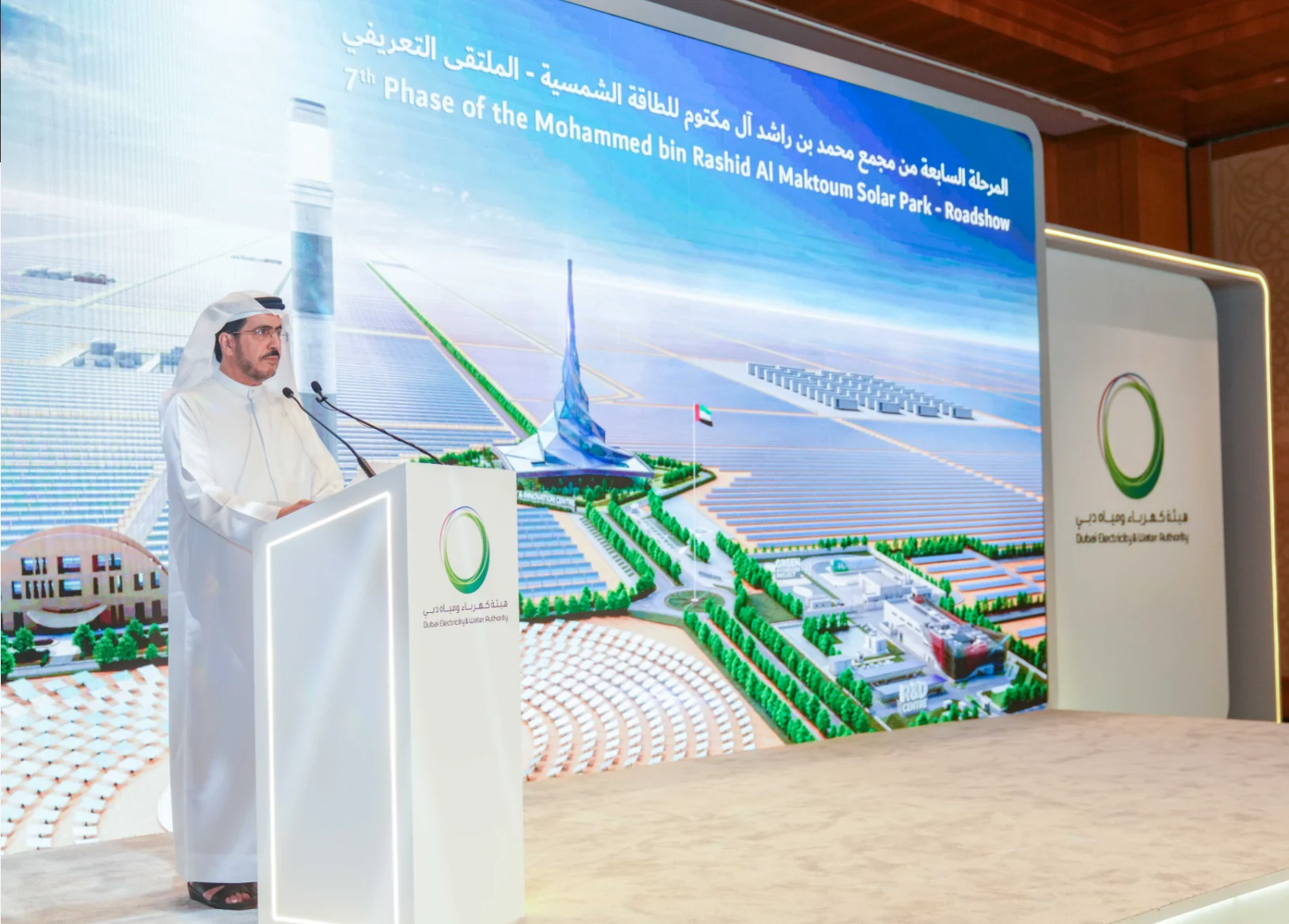
In April 2025, DEWA said that 47 companies had expressed interest in participating in the project. In June, DEWA travelled to China for a roadshow and held discussions with a number of solar, battery and energy storage companies. Sungrow, CATL, Huawei, Tesla, CRRC and SPIC were among the companies named by DEWA. This shows that, while the developer tender was moving forward, DEWA had also begun assessing the equipment and supply-chain capabilities required for a solar-plus-storage project of this scale.
In October 2025, DEWA formally issued the RFP to qualified bidders. Once the project entered the pricing stage in 2026, the developer competition also became clearer. According to MEED, ACWA Power, Etihad Water & Electricity and Masdar all submitted bids, with Masdar submitting the lowest offer. However, DEWA has not yet announced the final award, so the developer still requires official confirmation.
BYD and Gotion Reportedly Join the Competition to Supply the 8.4 GWh BESS
As the developer tender moves into its later stages, attention is also shifting to who will supply the 8.4 GWh battery storage system. MEED, citing project sources, reported that BYD is expected to be involved in BESS supply, while Gotion is also understood to remain in the competition to provide storage technology. These reports have not yet been formally confirmed by DEWA, Masdar, BYD or Gotion, and therefore cannot yet be treated as final supply contracts.
Taken together with DEWA’s earlier roadshow in China, the reports indicate that Chinese suppliers entered the project assessment and competitive process relatively early. For an 8.4 GWh project, equipment competition will not revolve around cell pricing alone. A six-hour system must perform sustained large-scale energy shifting, while the high-temperature environment places greater pressure on thermal management, cycle performance, system efficiency and capacity degradation.
Beyond 8.4 GWh, the more important question is which companies can enter the project’s long-term delivery structure. This means developers must consider both upfront cost and long-term operating performance when selecting suppliers. BESS integration, PCS, cooling systems, EMS, degradation management, augmentation strategies and local service capabilities will all directly affect lifecycle returns.
The project has now entered the later stages of tendering. Potential developers have emerged, and several storage suppliers have begun to be named in market reports. The next issues to watch are threefold: who ultimately secures the development rights; who supplies the 8.4 GWh BESS; and what long-term performance guarantees will be adopted for a six-hour system operating in Dubai’s high-temperature environment?
The answers will determine the final technology configuration of the 2 GW solar + 8.4 GWh storage project and provide a clearer indication of how supplier requirements are evolving for large-scale solar-plus-storage projects in the Middle East.
Sources:
2. DEWA — Appointment of Deloitte-led consortium as consultant for Phase 7
3. DEWA — Expression of Interest for 1,600 MW Phase 7 with 1,000 MW / 6,000 MWh energy storage
4. Emirates News Agency (WAM) — 47 global companies express interest in developing Phase 7
5. DEWA — China roadshow with international solar and energy storage companies
6. DEWA — Proposals invited for Phase 7; 2,000 MW PV + 1,400 MW / 8,400 MWh BESS
7. DEWA — Phase 7 update at DIPMF 2026
8. MEED — DEWA opens bids for MBR Solar Park Phase 7
9. MEED — Lowest bidder emerges for DEWA Solar Park Phase 7; BYD and Gotion linked to BESS supply