Envision's Overseas "Booming Orders" Underway with Three New Major European Energy Storage Deals


In the past, when the outside world discussed the overseas expansion of Chinese energy storage enterprises, the focus was often on cost, capacity, and delivery speed. Today, in high-end markets such as Europe, North America, and Japan, customers care more about system safety, grid connection capability, long-term availability, and project IRR. Only those who can transform energy storage equipment into power assets that generate stable, long-term returns can truly join the core table of global energy storage competition.
The three consecutive collaborations recently secured by Envision in Europe serve as a typical exemplar of this shift.
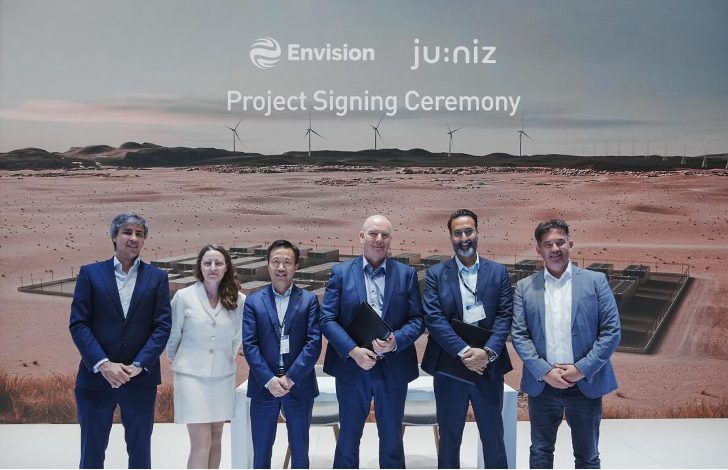
Recently, Envision has successfully landed three consecutive projects in the European energy storage market. Partnering respectively with German energy storage developer ju:niz Energy, global independent power producer Elements Green, and leading UK energy storage company Pulse Clean Energy, Envision is advancing energy storage projects with a combined capacity of over 2.1 GWh in Germany and the UK. Rather than the scale of the orders themselves, what deserves more attention is that all these projects are located in high-end markets like Germany and the UK, which feature mature power market mechanisms, strict grid connection standards, and complex revenue models.
In the UK, Envision is collaborating with Pulse Clean Energy to advance the Wolverhampton energy storage project, with a scale of 129 MW / 310 MWh. The project will utilize Envision's grid-forming energy storage system solutions to enhance grid stability and system regulation capabilities.
In Germany, Envision will deliver the first batch of energy storage projects with a total capacity of 140.6 MWh to ju:niz Energy, distributed in locations such as Baindt and Schöningen, utilizing the new-generation Gen 8 energy storage system to adapt to diverse grid conditions. During the same period, Envision is advancing the Stadorf battery energy storage project in northern Germany with Elements Green, boasting a capacity of 400 MW / 1600 MWh, which is one of the largest energy storage projects in Germany currently and likewise utilizes the Gen 8 energy storage system solution.
Germany and the UK are crucial bellwethers for the European energy storage market. On one hand, the continuous increase in renewable energy penetration in both countries places higher demands on grid flexibility, inertia support, frequency regulation, peak shaving, and system stability capabilities; on the other hand, mature markets present higher thresholds for suppliers' technical compliance, safety standards, engineering delivery, long-term O&M, and revenue realization capabilities.
Therefore, the significance of Envision' three European deals lies not merely in "booming orders," but rather in the concentrated validation of its grid-forming technology, full-stack product portfolio, localized delivery, and full-lifecycle operational capabilities in high-end markets.
Since the beginning of this year, Envision's overseas market expansion has gained full momentum, continuously securing heavy-weight orders in core markets across Europe, Africa, North America, and Asia-Pacific, covering diverse scenarios such as energy storage cells, system integration, and wind-solar-storage-hydrogen integration.
In June, Envision teamed up with South Africa's SOLA Group and WBHO to build the region's largest utility-scale solar-storage hybrid power plant, equipped with 300 MW of solar PV and a 660 MWh energy storage system. In the Canadian market, two comprehensive energy projects were landed within the year, including a 300 MW wind-storage integrated zero-carbon demonstration project, as well as an ultra-large wind-solar-storage-hydrogen integrated system with a planned total scale of 3.3 GW of wind power, 1.1 GWh of energy storage, and 2.2 GW of electrolyzers.
Breakthroughs have also been continuously achieved in the high-end battery cell track. In June, Envision secured a three-year procurement contract of over 10 GWh for energy storage cells and modules from US energy storage integrator Prevalon, entering the North American AIDC power infrastructure track. In March, it clinched a 1.5 GWh cell procurement agreement with Japanese energy storage integrator NEXTES, continuing to deepen its penetration into high-end East Asian markets.
From Europe to North America, from Africa to Japan, Envision's recent orders cover not a single market, but rather multiple highly diverse energy scenarios: Europe emphasizes grid stability and market-based revenues, North America focuses on new power infrastructure and zero-carbon energy systems, Africa values solar-storage synergy and power supply resilience, while Japan highlights safety, quality, and long-term reliability. Breaking through in multiple markets simultaneously indicates that what Envision exports is not standardized equipment packages, but a set of system solutions capable of adapting to different grid conditions, policy mechanisms, and customer revenue models.
Behind the continuous landing of orders lie Envision's rapid product iteration and technological moat. Since its establishment in 2007, Envision has built a complete technical layout spanning from cells to systems, source-side to load-side, and hardware to software.
At ESIE 2026 in April, Envision released its 12.5 MWh AI energy storage system equipped with the new-generation AI-adaptive PCS, and announced the official production of the 790Ah cell, the world's largest prismatic winding energy storage cell. During the same period, Envision's first sodium-ion energy storage-specific cell was officially launched off the production line, forming a scenario-differentiated complement with lithium batteries to jointly provide the hardware foundation for the next generation of energy storage systems.
At the SNEC exhibition in June, Envision released the world's first AI solar-storage integrated system, which maximizes station power generation and improves weak grid adaptability and steady-state support capabilities by real-time collaborative control of solar inverters and energy storage PCS.
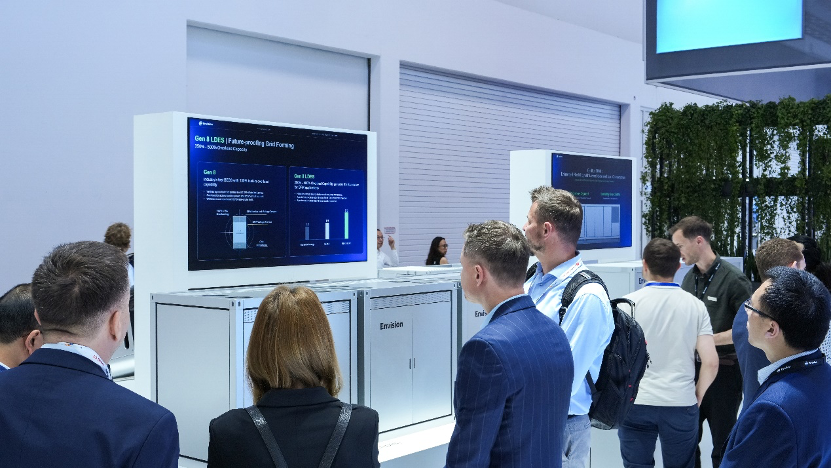
At Intersolar Europe 2026, Envision fully demonstrated its integrated solutions oriented toward new power systems in Europe for the first time. Centering around three core scenarios—AIDC, grid stability, and industrial decarbonization—Envision released its "AI Power System" power infrastructure, 4.X MWh long-duration energy storage system, and wind-solar-storage integrated solutions.
These product iterations do not merely pursue larger capacities or higher parameters, but instead revolve around the core pain points of global energy storage projects: improving safety, lowering LCOS, enhancing weak grid adaptability, increasing system availability, and improving revenue models through intelligent dispatch.
For energy storage owners, what truly matters is not the installation scale itself, but whether the asset can stably generate revenue over its lifetime of one to two decades. The IRR of an energy storage project is influenced by multiple factors, including initial system investment, grid connection progress, operational efficiency, availability, degradation levels, O&M costs, electricity trading strategies, and ancillary service revenues. Any issue in any single link can affect the realization of project revenues.
The value of Envision's system capability is precisely reflected in this aspect. Relying on its full-stack self-developed core hardware, the EnOS intelligent IoT operating system, and physical AI large models, Envision can achieve collaborative dispatch across source-network-load-storage scenarios, outputting customized system-level solutions tailored to different markets, grid conditions, and revenue mechanisms. During the project development and delivery stages, Envision can provide grid-connection adaptation, system design, engineering collaboration, and delivery support; during the operational stage, through AI prediction, intelligent dispatch, remote diagnosis, and predictive maintenance, it increases system availability and reduces O&M costs; during the revenue optimization stage, through multi-scenario dispatch capabilities, it helps projects better participate in diverse markets such as capacity, energy, and ancillary services, thereby improving station IRR.
From the successive steps taken with the three European deals to the intensive breakthroughs in mainstream markets like North America, Africa, and Japan, Envision's globalization progress reflects a new shift in Chinese energy storage exports: the competition is moving from product export to system value export. Orders are merely the result, while system capability is the cause. What Envision is exporting is also not just sets of energy storage equipment, but a set of system-level capabilities oriented toward new power systems.
The outcome of future global energy storage market competition will depend not only on who possesses larger capacity and lower costs, but also on who can operate stably under complex grid conditions, who can meet the compliance and safety requirements of high-standard markets, who can deliver on time and guarantee long-term availability, and who can help owners maximize their full-lifecycle revenues.
Featured News
All News →
Italy Opens 16GWh Storage Auction Today as Second MACSE Round Expands by 60%
Italy will open its second MACSE energy storage auction on 24 November, procuring up to 16GWh of capacity from new projects scheduled for delivery in 2029. Compared with the first auction, procurement volume has increased by 60%, while the maximum permitted bid has been reduced from €37,000/MWh/year to €27,000/MWh/year. The results will provide a new indication of competition, regional deployment and current cost levels in Italy's energy storage market.

The Real Test Comes When the Grid Goes Down: 1,000 Witness MWh-Scale Diesel–Battery Microgrid Demonstration
A live MWh-scale demonstration at Sungrow GEPS 2026 showcased how battery storage, diesel generation and grid-forming technology can work together to deliver reliable power in off-grid applications. ENERGY PLANET joined the event to explore the technical highlights and their implications for future C&I energy storage projects.

Tesla Launches 7.4MW Powercore: Connecting Batteries Directly to the 34.5kV Grid and Medium Voltage to 800V Data Centres
Tesla has launched Powercore, a solid-state medium-voltage platform integrating transformer, bidirectional inverter and circuit-breaker functions. Rated at 7.4MW, it connects 800V–2,000V DC systems with 10kV–34.5kV AC networks, targeting battery storage, solar and 800V AI data centres. The first units are scheduled to operate in 2027, although Tesla has not disclosed pricing, customers or initial projects.
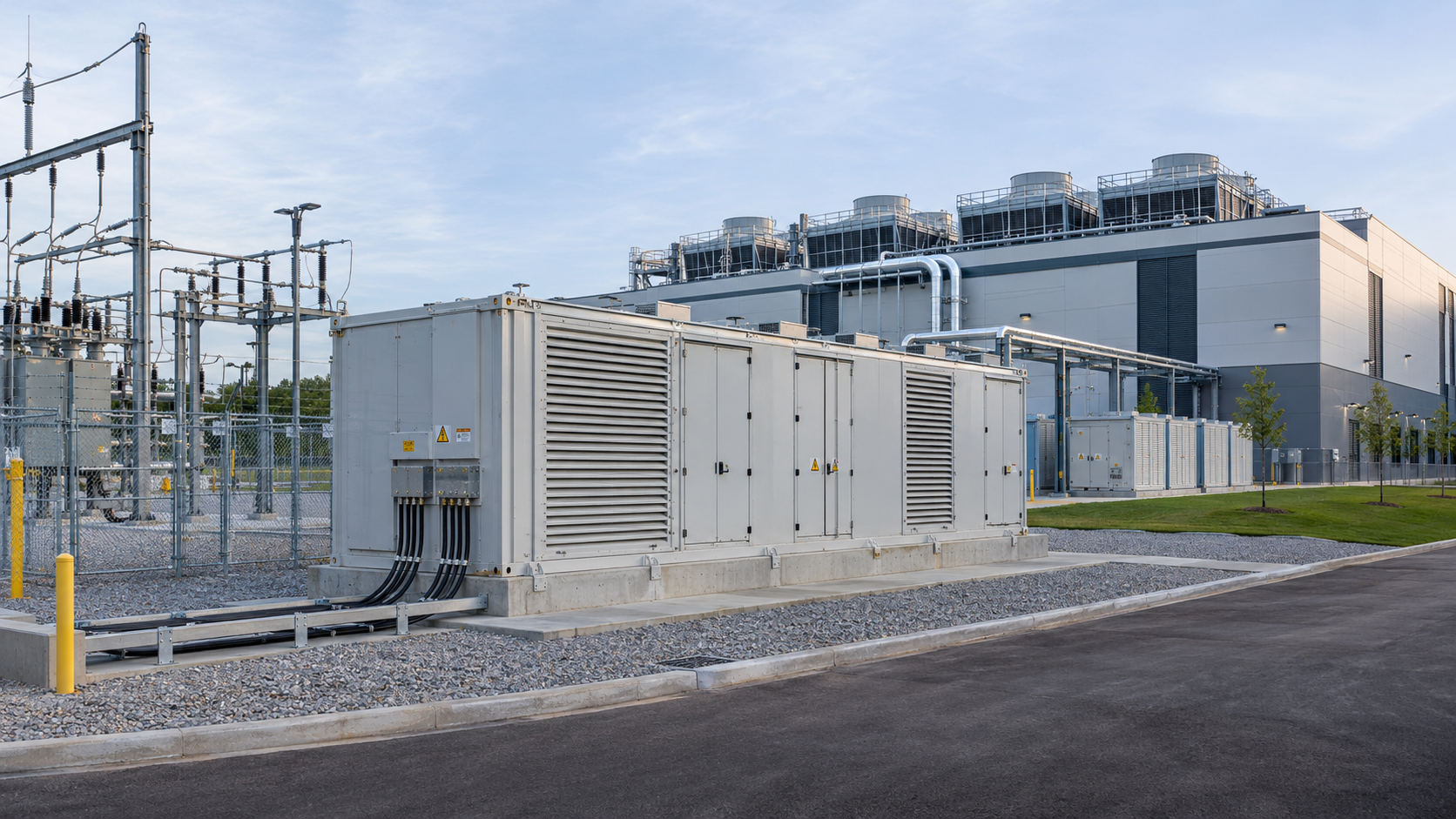
UPS Moves to the Grid Edge as Vertiv Launches 3 MVA Medium-Voltage System
Vertiv has launched the 3 MVA PowerNexus MV UPS, moving UPS functionality from the indoor low-voltage side to the outdoor 34.5kV grid connection point. Designed for new and expanding AI data centres, the system integrates fault ride-through, AI load smoothing, power-quality control and one-to-four-hour battery backup. Following a proof-of-concept demonstration in Bologna, commercial shipments are expected to begin in mid-2027.

Envision Gen 8 Selected for 442 MWh Grid Forming BESS in Germany Taking Partnership Close to 600 MWh
Envision Energy and German storage developer ju:niz Energy are advancing the 442 MWh Smareg 13 project in Bavaria. The four-hour, grid-forming development is planned next to the operational Smareg 12 site, while public records currently show a 100 MW/401 MWh configuration and a March 2028 target date.

CATL Delivers First 8-Hour EnerQB Systems for Quinbrook's 24GWh Australian Pipeline
CATL and Quinbrook Infrastructure Partners have completed production and delivery of the first EnerQB long-duration energy storage systems. Designed for eight-hour discharge, the initial units will undergo a 12-month trial at Stanwell Power Station in Queensland, Australia. Quinbrook has identified a potential 3GW/24GWh project pipeline, although wider deployment will depend on trial results, financing, grid connections and subsequent procurement.

1.24GWh! Sungrow Supplies Europe's Largest Operational Energy Storage Project
BW ESS’s Hams Hall project in the UK has officially brought its first phase online, with 350MW/1.243GWh of capacity, making it the largest operational battery storage project in Europe. Sungrow supplied the BESS, with Energy-IO and other partners involved in project delivery. The project also secured a 10-year optimisation agreement with EDF, debt financing from international banks and equity investment from AIP, highlighting the full value chain behind Europe’s GWh-scale storage projects, from equipment supply and project delivery to commercial operations and financing.

BNEF's Q4 Energy Storage Tier 1 List Shrinks 26% to 50 Manufacturers
BloombergNEF has named 50 manufacturers to its Q4 2026 Tier 1 Energy Storage list. Based on publicly available company disclosures, Energy Planet has confirmed 19 of the manufacturers and compiled historical inclusion records for 12 of them. While a single appearance shows that a supplier met the criteria for that quarter, repeat inclusion offers a stronger indication of its ability to maintain a pipeline of qualifying projects. Tier 1 remains a measure of market adoption, however, rather than a product-quality ranking, corporate credit rating or substitute for project-level technical and financial due diligence.