The Real Test Comes When the Grid Goes Down: 1,000 Witness MWh-Scale Diesel–Battery Microgrid Demonstration


One demonstration at Sungrow's GEPS 2026 particularly caught my attention: a live test of an MWh-scale commercial and industrial microgrid integrating battery storage, diesel generation and EV charging. Having spent years delivering and maintaining energy storage projects, I know that the moments C&I power users worry about most are often when the grid fails, loads change suddenly, or diesel generators enter and leave operation.
A sudden increase in load can cause voltage fluctuations, while running diesel generators brings persistently high fuel costs. Businesses may want to add solar and storage, but limited installation space or insufficient initial capital can lead to repeated switching between power sources. Frequent diesel-generator starts and stops, together with repeated ATS switching, can accelerate generator ageing and interrupt power to the load. A single production-line shutdown may cost far more than the electricity itself.
In weak-grid, off-grid and diesel-dependent C&I projects, these issues directly affect business operations. In remote areas with weak or no grid access, customers ultimately want to know whether a C&I storage system can maintain stable power under a range of extreme operating conditions.

The battery–diesel–charging test platform demonstrated at GEPS 2026 comprised a 400kW diesel generator, a 750kW/1,200kWh PowerKeeper system and EV charging infrastructure.
In this live demonstration before an audience of 1,000, Sungrow combined six PowerKeeper units into a 750kW/1,200kWh energy storage system. The system operated alongside a 400kW diesel generator to supply EV charging loads.
The demonstration made the grid-forming capability of C&I storage visible through an actual operating sequence: the diesel generator was already supplying the load, the battery system joined the microgrid, both sources adjusted their output, and the vehicles continued charging.
It addressed a critical question at project level: when the mix of power sources and their respective output shares change, can the load continue operating without disruption?
To understand the significance of the test, it is important to look at how it was configured. The demonstration took place without support from a utility grid. The platform included a charging station, with two 160kW chargers supplying two vehicles during the battery–diesel load-sharing and flexible dispatch sequence.
At the beginning of the test, the diesel generator supplied the full charging load. Six PV-storage PCS units were then brought online, allowing the battery system and diesel generator to share the load. The PCS initially supplied approximately 30% of the power, with the diesel generator providing around 70%. After the dispatch settings were adjusted, the PCS contribution increased to approximately 70%, while the diesel generator's share fell to around 30%.

The demonstration showed no obvious change in the charger's voltage or current waveforms on the oscilloscope as the PCS units were brought online. Charging power remained at 160kW after the output shares were adjusted. The two power sources operated in parallel, their respective contributions changed, and the load remained stable throughout. For a C&I customer, this corresponds directly to whether production equipment can continue operating.
The value of grid-forming capability becomes especially clear when there is no utility grid to provide a stable reference. Energy stored in a battery does not automatically mean the entire microgrid will remain stable. The power sources must also maintain voltage and frequency together while responding to changes in demand.
During the demonstration, Sungrow highlighted PowerKeeper's VSG grid-forming capability. VSG stands for virtual synchronous generator. Its control system emulates the dynamic behaviour of a conventional synchronous generator, allowing the power conversion system to help establish and support voltage and frequency while coordinating with other power sources.
In a battery–diesel application, this means the PCS response must coordinate with the diesel generator's governor, excitation and protection controls. When the load changes, both sources must share the demand appropriately. When their output is adjusted, the system must remain stable. The joint load supply and flexible dispatch demonstrated during the test were practical examples of this coordination. Once the two sources were operating together, their power-sharing ratio could be adjusted according to actual conditions, reducing the need to alternate between power sources whenever demand changed.

The live demonstration focused on VSG grid-forming operation, simultaneous battery–diesel power supply, flexible expansion and initial investment optimisation.
Once power stability is secured, the owner's next concern is the daily operating bill. Continuous diesel-generator operation brings fuel, maintenance and transportation costs. Adding storage creates more flexibility in determining where the site's energy comes from.
Supporting materials explain that PowerKeeper offers two control modes—diesel maintenance and diesel priority—with one-touch switching between them. Through iSolarCloud, operators can monitor power flows and configure diesel-generator strategies, power-sharing ratios, and start-stop controls. Projects can therefore select operating strategies based on load, battery state of charge, fuel prices and generator requirements. When sufficient stored energy is available, the battery system can make a larger contribution. When battery reserves need to be maintained, the diesel generator can assume a greater share of the load.
An important technical judgement is required here: reducing generator output does not mean fuel consumption will fall by the same proportion. Prolonged low-load operation may also affect the generator's condition. The operating strategy must therefore account for the generator's fuel-consumption curve, minimum permitted load, storage losses and battery cycling costs. It is no exaggeration to say that this is a highly complex control challenge. Product value must be maximised across complicated operating conditions without compromising system stability.
The real test at a project site also comes when the load changes suddenly. Connecting charging vehicles or starting equipment can cause demand to rise quickly. When charging ends or production equipment shuts down, demand can fall just as sharply.
The accompanying technical materials describe two further capabilities: millisecond-level power response during sudden load changes and continued power support after the diesel generator shuts down. Both address practical operational challenges in battery–diesel projects.
When the load rises suddenly, the battery system can quickly increase its output to cover the temporary power shortfall and help maintain system stability. When the load drops abruptly, the battery system can reduce its output or, where conditions permit, absorb surplus power. This helps limit the supply-demand imbalance and reduce the risk of reverse power flow into the diesel generator.
If the diesel generator is taken offline for maintenance or another reason, the battery system's ability to support the load independently becomes critical. Provided that available battery power, state of charge and protection settings meet the required conditions, storage can continue supplying essential loads and support continuity of service. The duration of that support will depend on the battery's usable energy and the actual load.
For an EV charging site, this determines whether services can continue. For an island hotel, remote industrial park or factory, it determines whether critical electricity demand can be maintained. The value experienced by the customer ultimately comes down to every additional minute that essential equipment remains operational.
System capability also determines how confidently a project can be financed and expanded. At sites with existing diesel generators, coordinated battery–diesel operation creates more options for system sizing. The diesel generator can provide part of the continuous power requirement, while storage supplies energy and rapid balancing support.
Provided that supply-security targets are met, owners can size the system according to load duration, required battery autonomy and diesel-fuel availability, then expand it in phases as the business grows. This creates room to avoid excessive upfront capacity and optimise initial investment.
For EPC contractors and service teams, the importance of this system-level capability is equally direct. Project delivery requires capacity matching, parallel-operation controls, state-of-charge strategies, diesel-generator protection and load characteristics to be considered together and verified on site. Whether the equipment can operate as a stable, dispatchable system will directly affect commissioning complexity and long-term operating quality.
Final Thoughts
We believe that as C&I storage expands into more weak-grid, off-grid and hybrid power applications, customers will increasingly focus on one practical outcome: can the system keep their loads stable and operating costs under control at their own site?
This MWh-scale battery–diesel–charging demonstration provided a clear view of Sungrow's system-level capabilities. For C&I customers, only when storage can maintain reliable power under complex operating conditions can its technical advantages be translated into greater certainty for the business.
Featured News
All News →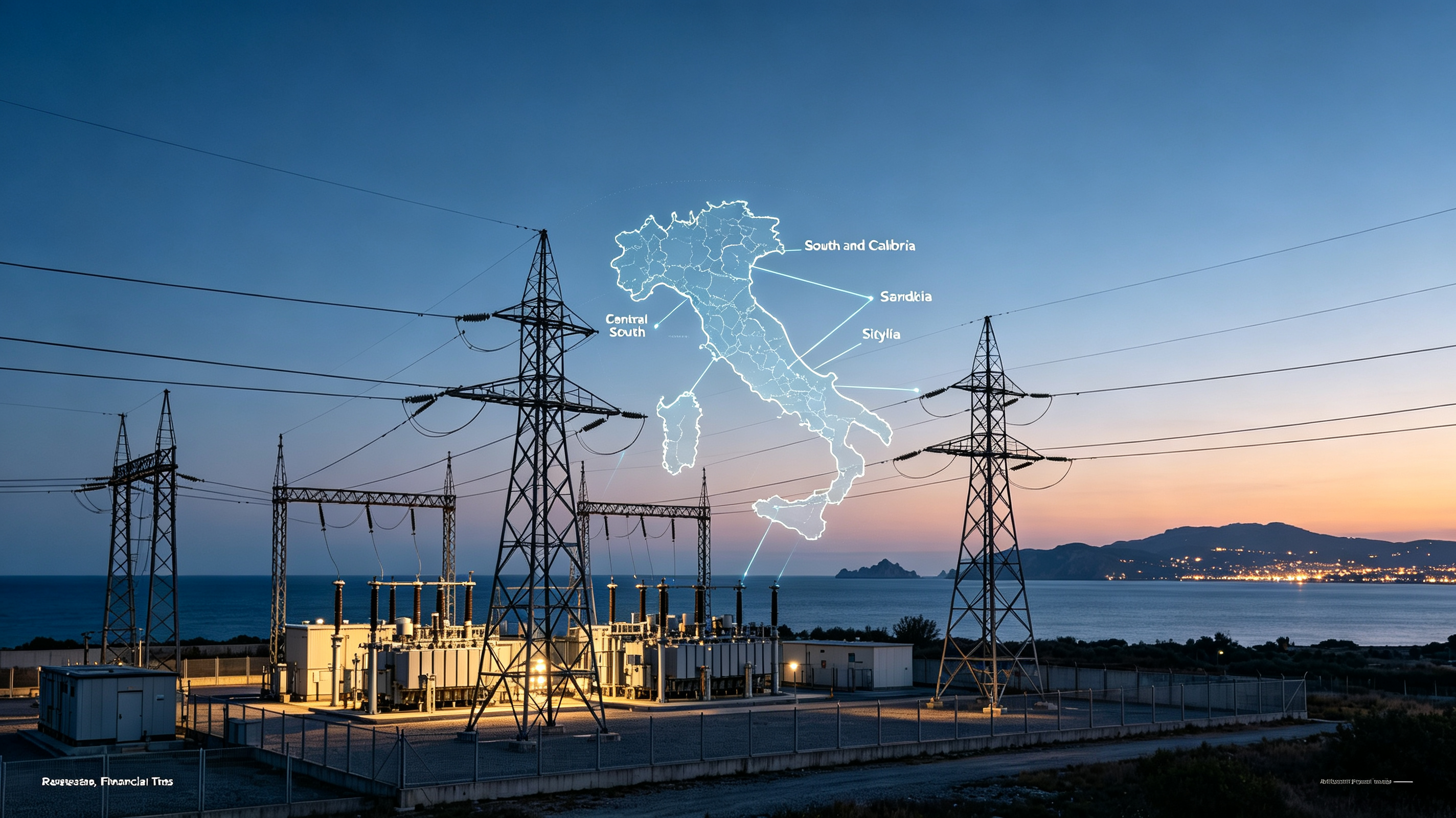
Italy Opens 16GWh Storage Auction Today as Second MACSE Round Expands by 60%
Italy will open its second MACSE energy storage auction on 24 November, procuring up to 16GWh of capacity from new projects scheduled for delivery in 2029. Compared with the first auction, procurement volume has increased by 60%, while the maximum permitted bid has been reduced from €37,000/MWh/year to €27,000/MWh/year. The results will provide a new indication of competition, regional deployment and current cost levels in Italy's energy storage market.

Tesla Launches 7.4MW Powercore: Connecting Batteries Directly to the 34.5kV Grid and Medium Voltage to 800V Data Centres
Tesla has launched Powercore, a solid-state medium-voltage platform integrating transformer, bidirectional inverter and circuit-breaker functions. Rated at 7.4MW, it connects 800V–2,000V DC systems with 10kV–34.5kV AC networks, targeting battery storage, solar and 800V AI data centres. The first units are scheduled to operate in 2027, although Tesla has not disclosed pricing, customers or initial projects.
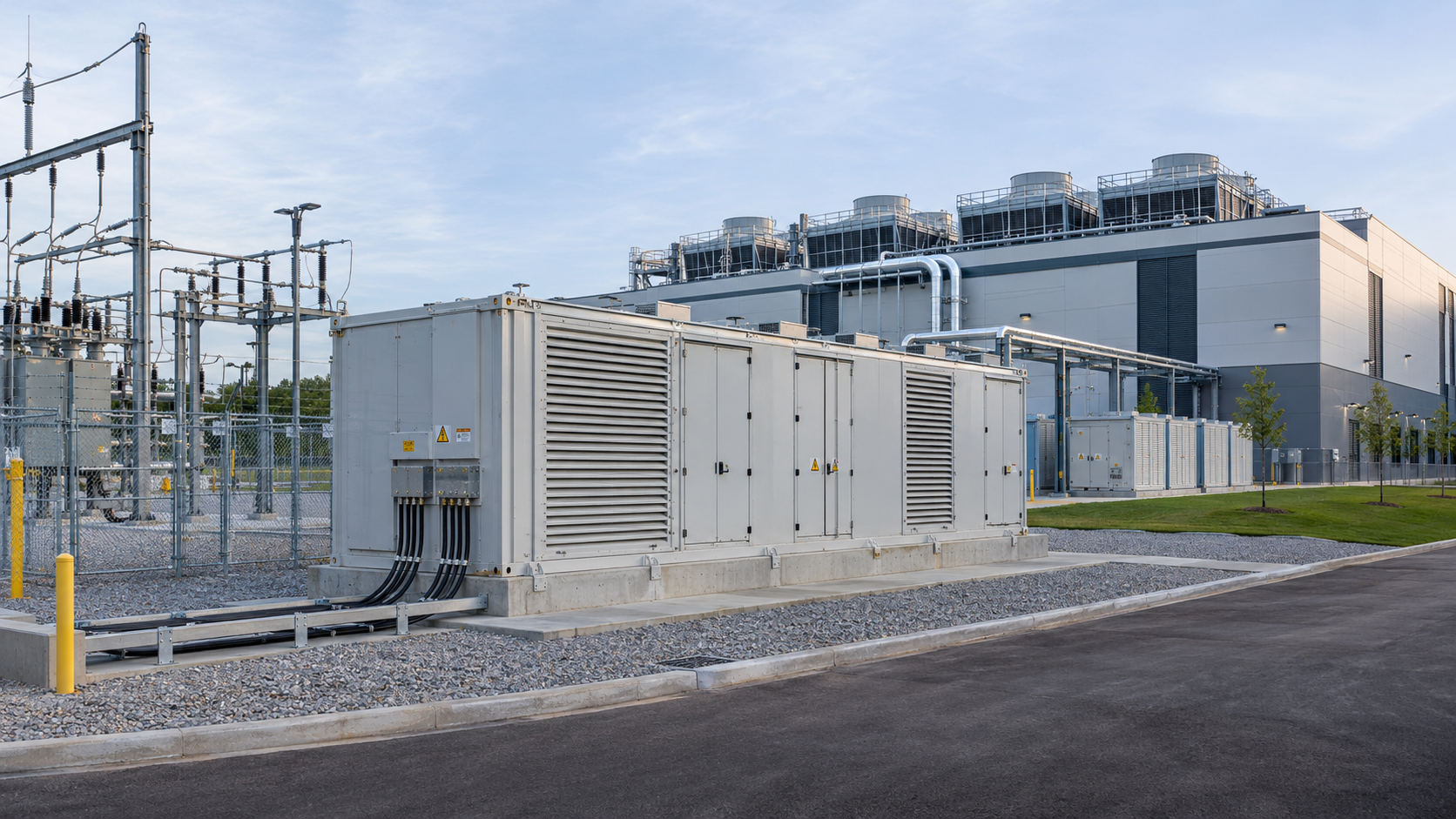
UPS Moves to the Grid Edge as Vertiv Launches 3 MVA Medium-Voltage System
Vertiv has launched the 3 MVA PowerNexus MV UPS, moving UPS functionality from the indoor low-voltage side to the outdoor 34.5kV grid connection point. Designed for new and expanding AI data centres, the system integrates fault ride-through, AI load smoothing, power-quality control and one-to-four-hour battery backup. Following a proof-of-concept demonstration in Bologna, commercial shipments are expected to begin in mid-2027.

Envision Gen 8 Selected for 442 MWh Grid Forming BESS in Germany Taking Partnership Close to 600 MWh
Envision Energy and German storage developer ju:niz Energy are advancing the 442 MWh Smareg 13 project in Bavaria. The four-hour, grid-forming development is planned next to the operational Smareg 12 site, while public records currently show a 100 MW/401 MWh configuration and a March 2028 target date.

CATL Delivers First 8-Hour EnerQB Systems for Quinbrook's 24GWh Australian Pipeline
CATL and Quinbrook Infrastructure Partners have completed production and delivery of the first EnerQB long-duration energy storage systems. Designed for eight-hour discharge, the initial units will undergo a 12-month trial at Stanwell Power Station in Queensland, Australia. Quinbrook has identified a potential 3GW/24GWh project pipeline, although wider deployment will depend on trial results, financing, grid connections and subsequent procurement.

1.24GWh! Sungrow Supplies Europe's Largest Operational Energy Storage Project
BW ESS’s Hams Hall project in the UK has officially brought its first phase online, with 350MW/1.243GWh of capacity, making it the largest operational battery storage project in Europe. Sungrow supplied the BESS, with Energy-IO and other partners involved in project delivery. The project also secured a 10-year optimisation agreement with EDF, debt financing from international banks and equity investment from AIP, highlighting the full value chain behind Europe’s GWh-scale storage projects, from equipment supply and project delivery to commercial operations and financing.

BNEF's Q4 Energy Storage Tier 1 List Shrinks 26% to 50 Manufacturers
BloombergNEF has named 50 manufacturers to its Q4 2026 Tier 1 Energy Storage list. Based on publicly available company disclosures, Energy Planet has confirmed 19 of the manufacturers and compiled historical inclusion records for 12 of them. While a single appearance shows that a supplier met the criteria for that quarter, repeat inclusion offers a stronger indication of its ability to maintain a pipeline of qualifying projects. Tier 1 remains a measure of market adoption, however, rather than a product-quality ranking, corporate credit rating or substitute for project-level technical and financial due diligence.

From 110 kV Rejection to 400 kV Approval: What Local Capabilities Do BESS Projects Need in Poland?
Poland's energy storage market is attracting a growing number of equipment manufacturers, developers and investors, but entering the market is not the same as delivering a project. In an Energy Planet webinar, CORVION P.S.A. CEO Mariusz Balicki drew on project experience, including a grid connection that shifted from a rejected 110 kV route to an approved 400 kV route and an ageing wood-processing plant that cut its energy costs by more than 30%, to explain how local teams contribute to grid analysis, system design, financial modelling, certification and long-term delivery.