A new model emerges! Shared residential solar + storage solution


For a long time, residential solar + storage has mainly been an energy solution designed for detached houses. Families with roofs, property ownership, and individual electricity meters can install solar panels and a battery system. For these users, a solar + storage system can reduce electricity bills and improve energy self-sufficiency.
But the problem is that not everyone lives in a detached house. In markets such as Europe, the UK, and Australia, a large number of residents live in apartment buildings, social housing, and private rental housing. They also face high electricity prices and equally need low-cost clean electricity, but it is difficult for them to install their own individual solar + storage system like detached house users. The roof is shared by the entire building, electricity meters belong to different households, ownership structures are complex, and installation space is limited. If each household installs its own PV system, inverter, and battery, not only would the cost be high, but the number of devices would also expand rapidly. This is exactly the problem Allume Energy aims to solve.
Therefore, they launched SolShare 2 in the UK and Australia. This product builds on the original shared solar electricity distribution approach and further enhances integration with energy storage systems, while increasing the maximum capacity of the shared solar system by 50%. What SolShare 2 truly aims to do is bring the benefits of solar and storage into apartment buildings.
In apartment buildings, the challenge of solar + storage is not generation, but distribution
For apartment buildings, whether rooftop solar can be installed is only the first step. The real challenge is how to distribute the electricity after installation. A single building may include more than ten, dozens, or even over a hundred households. Although rooftop solar can be installed, the question remains: who should the electricity be allocated to? How should it be distributed? By floor area, or by electricity consumption? If one household is not at home during the day while another is using electricity, should solar power be dynamically allocated to the household currently consuming electricity?
This is the most practical challenge in apartment solar projects.
▍Typical case
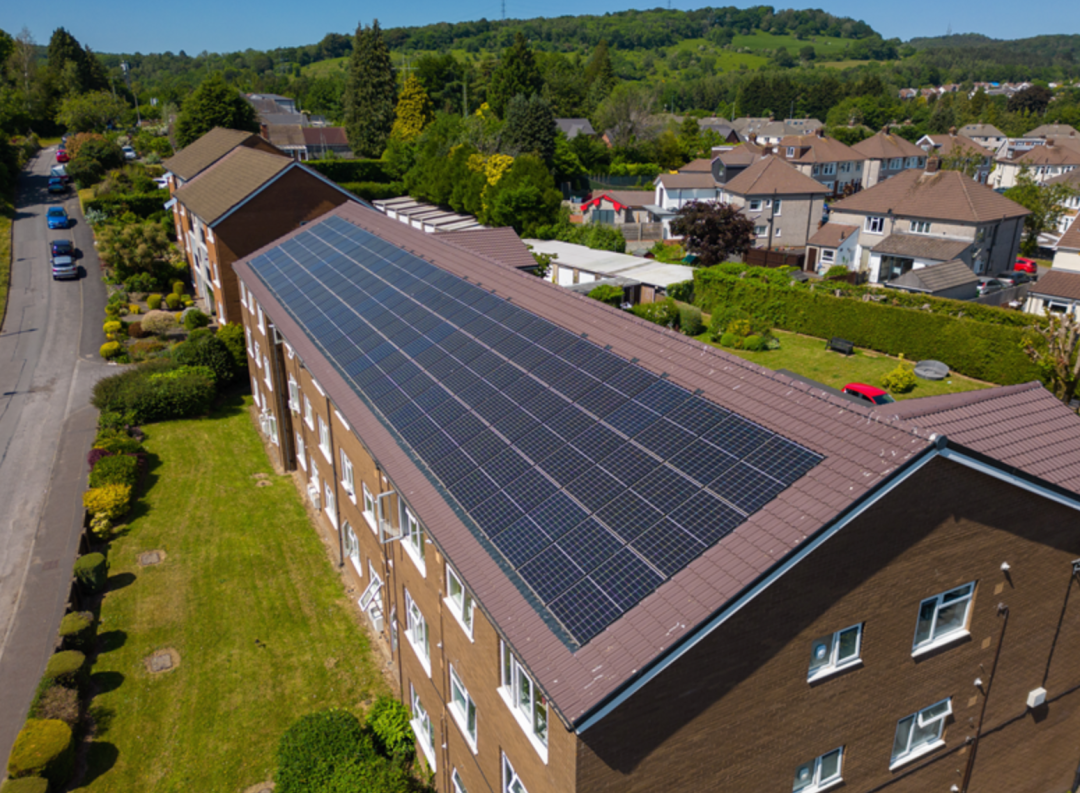
In the UK Odet Court project previously disclosed by Allume, this issue is very typical. The project is located in Cardiff, UK, and involves a total of 24 apartment units.
If using a traditional approach, each apartment would need to install its own independent solar + storage system, which would require a large number of inverters and batteries. However, due to space, safety, and maintenance constraints, the project ultimately adopted SolShare, connecting the rooftop solar system and community-level storage to all 24 apartments, enabling residents to share locally generated solar and storage energy.
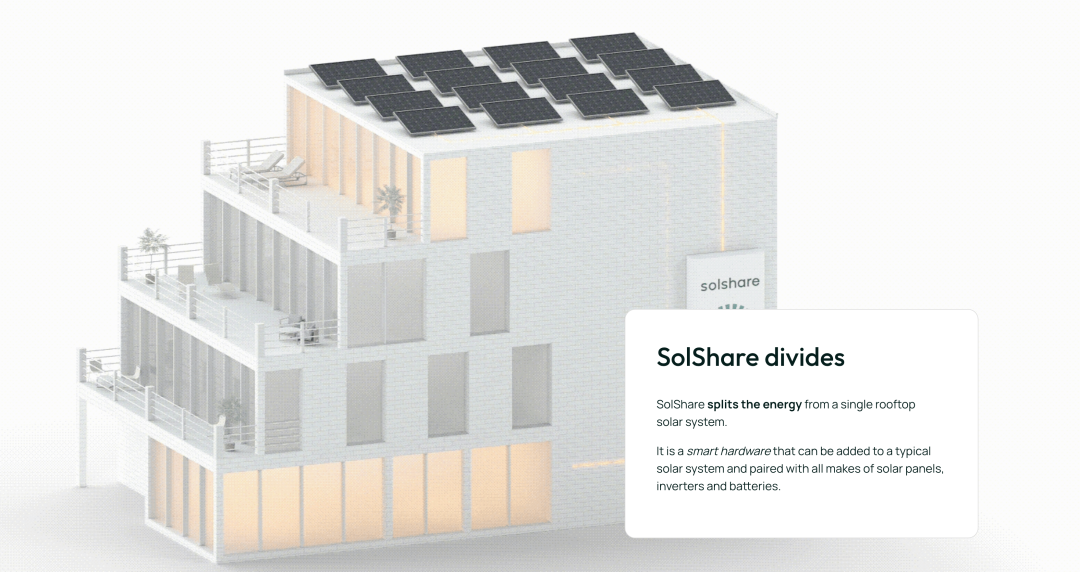
This is also the core logic of SolShare: instead of allowing each household to own an independent solar + storage system, it enables the entire building to share a single rooftop solar and storage system, and then uses hardware and algorithms to distribute electricity fairly and dynamically to each household. SolShare is not replicating the solar + storage model of detached houses, but rather redesigning the way energy is allocated in apartment buildings.
What is SolShare 2?
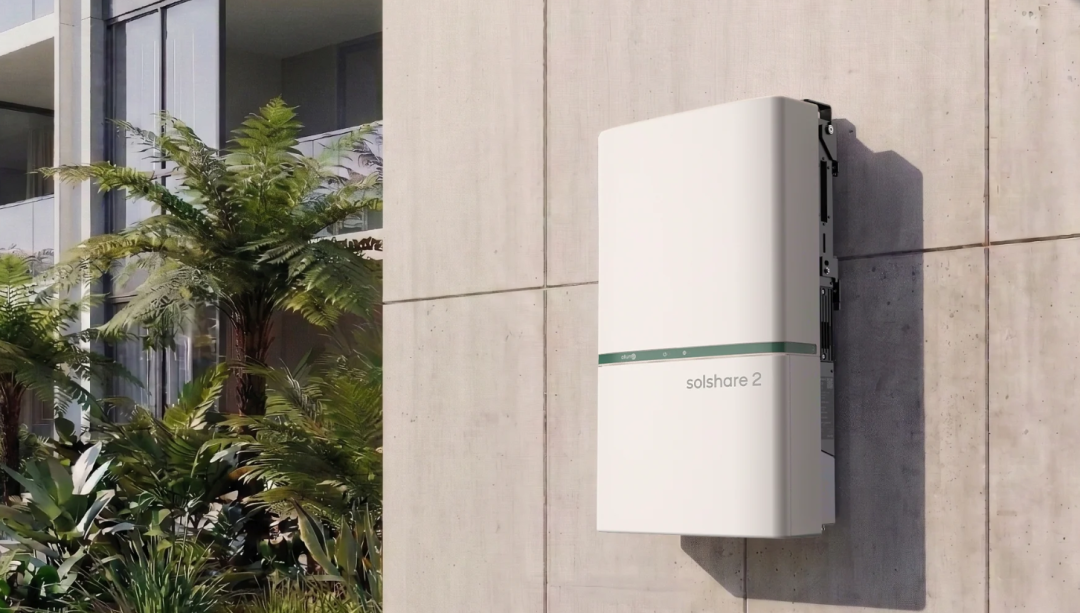
According to Allume's official description, SolShare is essentially a behind-the-meter shared solar energy distribution solution. It is not a solar panel, nor is it a battery system itself, but rather functions as a "power distribution hub." It can connect multiple apartments to a single rooftop solar system and allocate the generated solar electricity across different households for consumption.
Allume describes it as an Australian-made shared solar energy distribution technology. In simple terms, it enables multiple apartments to be linked to one rooftop solar system, and through intelligent hardware and dynamic allocation algorithms, allows solar energy to flow fairly and efficiently among residents.
The main challenge of traditional apartment solar PV projects is that solar generation does not always align with residents’ electricity consumption. Some people work from home during the day and consume more electricity; some are out during the day and only return at night; some are boiling water while others are using an oven. If solar energy is allocated based on a fixed ratio, part of it may be wasted, while households that are actively consuming electricity still need to purchase power from the grid.
SolShare takes a dynamic allocation approach.
Jack Taylor, General Manager Europe at Allume, explains that SolShare analyzes a building’s electricity consumption every 200 milliseconds. For example, when one household turns on a kettle, the system allocates solar energy to that household at that moment. Half an hour later, when that household is no longer using electricity and another household turns on an oven, solar energy is redirected to the other household.
The key is not simple averaging, but balancing efficiency and fairness. Solar energy is prioritized for whoever is currently consuming electricity, thereby increasing the building’s self-consumption rate. However, over a monthly cycle, each household still receives its pre-defined allocation share, ensuring that the system does not become a “first come, first served” model where faster users benefit more. This is what makes SolShare fundamentally different from conventional solar systems. It is not about how to generate electricity, but how to fairly distribute electricity within the same building.
Upgrades to SolShare 2
Compared to the previous generation, SolShare 2 introduces two major upgrades. First, increased capacity.
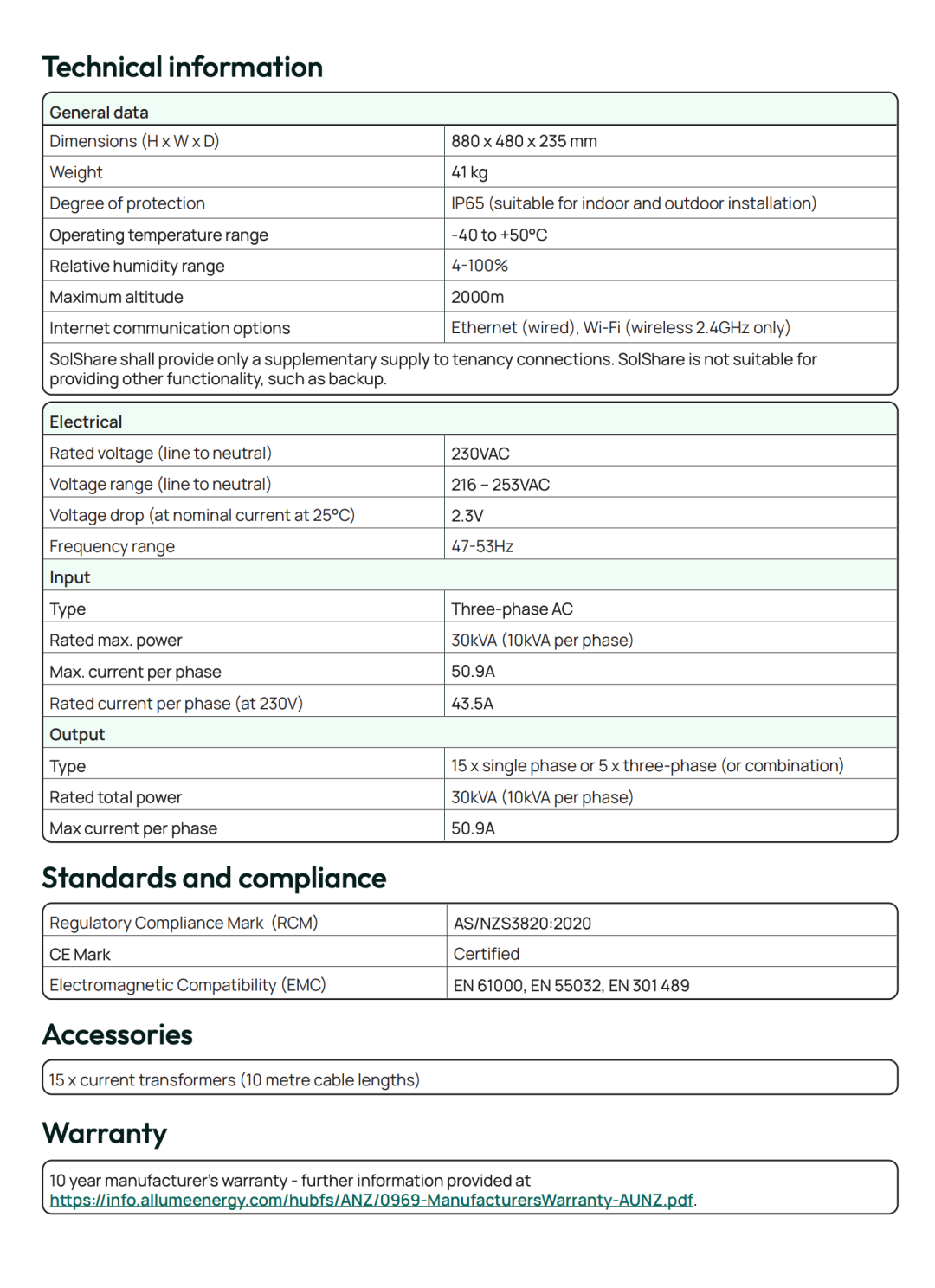
SolShare 2 raises the shared energy capacity from 20 kW to 30 kW, a 50% increase. A single unit can still support up to 15 connection points, and larger buildings can deploy multiple units in parallel. For apartments, social housing, and private rental properties, this means a single system can cover higher energy demand and is more suitable for scalable deployment.
Second, stronger energy storage integration.
Earlier versions of SolShare could integrate with battery storage in certain configurations, but SolShare 2 significantly expands this capability, enabling storage integration in a wider range of installation scenarios. This is a critical improvement. For apartment buildings, solar generation is only the first step. What truly determines cost savings is the self-consumption ratio. If excess solar power is exported to the grid during the day, residents still need to buy electricity at night.
With shared storage, unused solar energy generated during the day can be stored and redistributed to residents in the evening and at night. In other words, SolShare 2 is no longer just a shared solar distribution device for multi-family buildings—it evolves into a shared solar + storage orchestration system for apartment communities.
The UK market as a key entry point
In the UK market, social housing has long been a key entry point for Allume. Many low-income households live in apartment buildings and have historically found it difficult to directly benefit from green energy solutions. The introduction of SolShare provides a new retrofit pathway for these types of buildings.
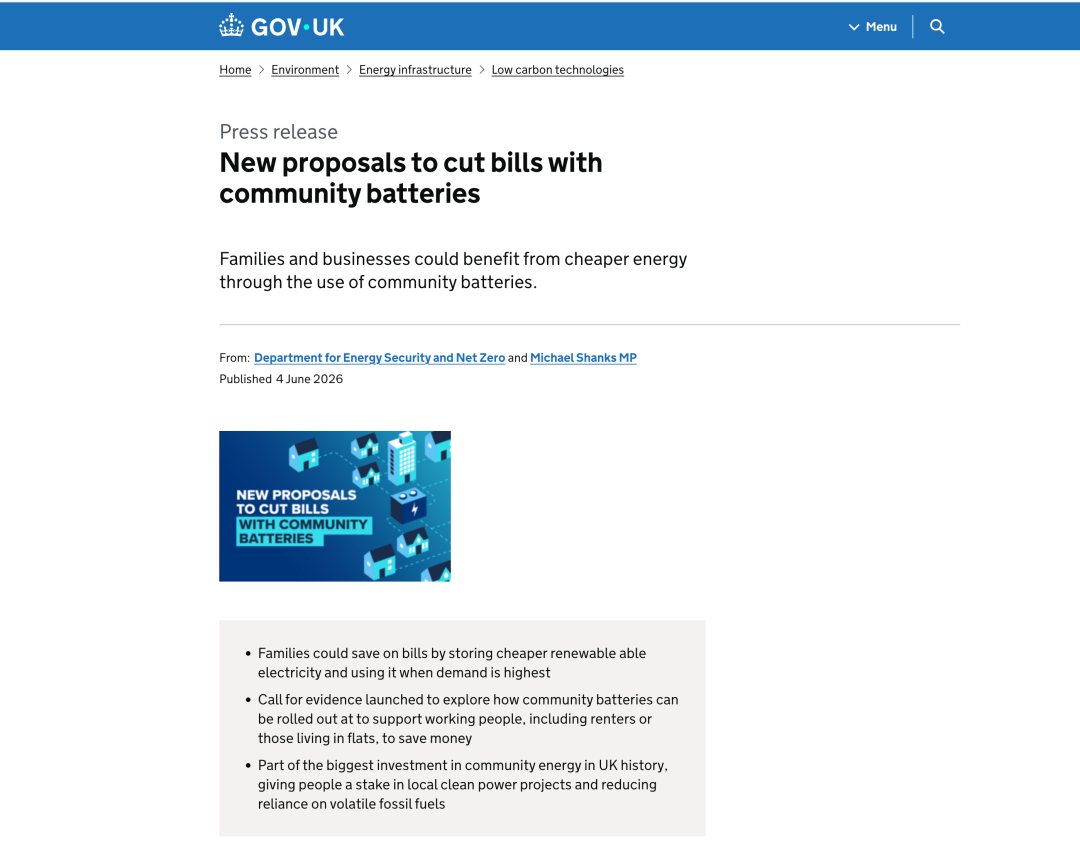
The timing of SolShare 2's launch in the UK is also noteworthy. On June 4, 2026, the UK government launched a consultation process aimed at promoting shared energy storage deployment in the country, with the goal of storing locally generated renewable energy and helping households reduce high energy costs.
This aligns closely with the logic behind SolShare 2. Solar PV is responsible for generation, batteries extend the usable time of energy, and SolShare ensures that electricity is distributed more fairly and efficiently across multiple households. In this way, the energy demand of an entire building can be coordinated and organized into a more flexible, localized energy unit.
▍Real, measurable savings
The impact of this solution is quite direct. Allume notes that, through SolShare's dynamic sharing technology, the Odet Court project not only reduced equipment footprint and overall system costs, but also enabled residents to access up to 75% of their electricity demand from clean energy.
In real-world operation, the project helped tenants reduce grid electricity consumption by approximately 60%–70%, with estimated annual savings of around £560 to £690 per household.
▍Improving building energy performance ratings
For landlords, developers, and housing associations, the value of SolShare 2 goes beyond simply reducing tenants' electricity bills—it also contributes to improving building energy performance ratings.
In the UK, top-floor and ground-floor apartments are often disadvantaged in energy efficiency assessments, as they are more exposed to heat loss and temperature fluctuations. SolShare can allocate different shares of solar capacity based on specific efficiency goals—for example, assigning a higher kWp share to less energy-efficient units—helping the entire building achieve a more balanced and improved overall energy performance rating.
This is why social housing providers are particularly interested in such solutions. It is not just about installing solar panels, but about simultaneously addressing electricity costs, energy efficiency ratings, and building retrofit challenges.
Community energy storage is becoming its new opportunity
Against the backdrop of increasing electricity price volatility and faster-moving wholesale electricity markets, this kind of flexibility is becoming increasingly valuable. Jack Taylor also noted that, as wholesale market fluctuations intensify, grid responsiveness is becoming more valuable—and this value is expected to continue growing. The business case for SolShare 2 is therefore not only about "helping residents save on electricity bills," but may also extend into grid flexibility, local energy management, and community battery revenue models.
In addition to capacity and battery integration improvements, SolShare 2 has also been upgraded in terms of installation and commissioning. The setup process for the new system is significantly simpler. Installation can now be carried out at any time of the day, and assembly time has been reduced from 8 hours to just 40 minutes. If installation and commissioning are too complex, large-scale deployment becomes difficult. By lowering the installation barrier, SolShare 2 is essentially preparing for scalable rollout.
If this model can truly scale, then residential solar-plus-storage will no longer be exclusive to villas and standalone houses. People living in apartment buildings will also be able to benefit. Of course, Allume is not the only company exploring shared solar distribution in apartment buildings. What makes SolShare 2 stand out is that it does not stop at "how to split the bill," but goes further to address "how electricity is actually distributed." This is what distinguishes it from conventional apartment solar projects.
What is truly interesting here is that the user base is being significantly expanded. Good products are not only about comparing specifications or maximizing capacity, but about identifying unmet needs in everyday life and translating technology into something truly usable and practical in a more grounded way.
The mini-program includes real-world case studies and data from some of the company’s community deployments. Interested users can view more details in the mini-program.
Featured News
All News →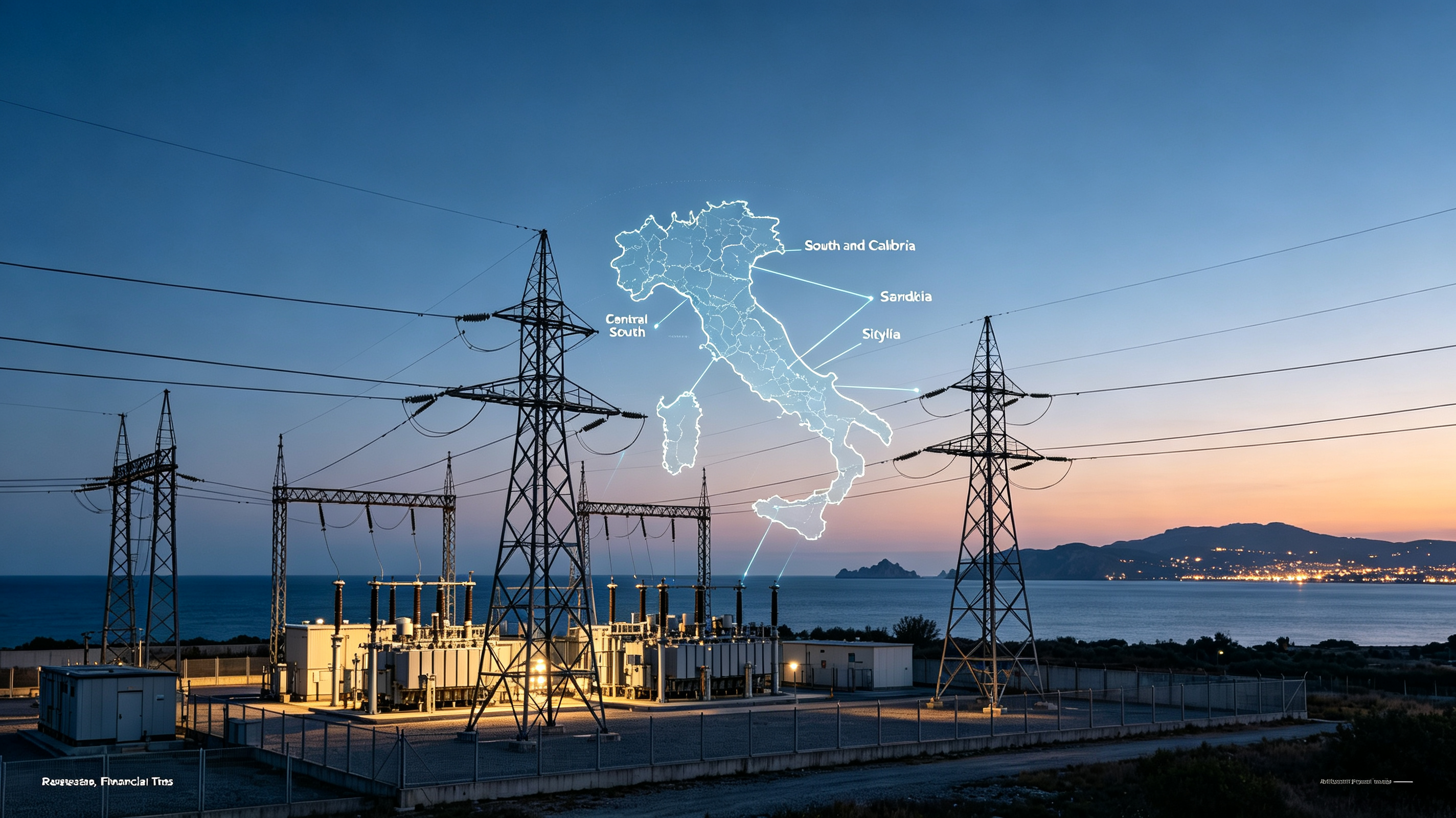
Italy Opens 16GWh Storage Auction Today as Second MACSE Round Expands by 60%
Italy will open its second MACSE energy storage auction on 24 November, procuring up to 16GWh of capacity from new projects scheduled for delivery in 2029. Compared with the first auction, procurement volume has increased by 60%, while the maximum permitted bid has been reduced from €37,000/MWh/year to €27,000/MWh/year. The results will provide a new indication of competition, regional deployment and current cost levels in Italy's energy storage market.

The Real Test Comes When the Grid Goes Down: 1,000 Witness MWh-Scale Diesel–Battery Microgrid Demonstration
A live MWh-scale demonstration at Sungrow GEPS 2026 showcased how battery storage, diesel generation and grid-forming technology can work together to deliver reliable power in off-grid applications. ENERGY PLANET joined the event to explore the technical highlights and their implications for future C&I energy storage projects.

Tesla Launches 7.4MW Powercore: Connecting Batteries Directly to the 34.5kV Grid and Medium Voltage to 800V Data Centres
Tesla has launched Powercore, a solid-state medium-voltage platform integrating transformer, bidirectional inverter and circuit-breaker functions. Rated at 7.4MW, it connects 800V–2,000V DC systems with 10kV–34.5kV AC networks, targeting battery storage, solar and 800V AI data centres. The first units are scheduled to operate in 2027, although Tesla has not disclosed pricing, customers or initial projects.
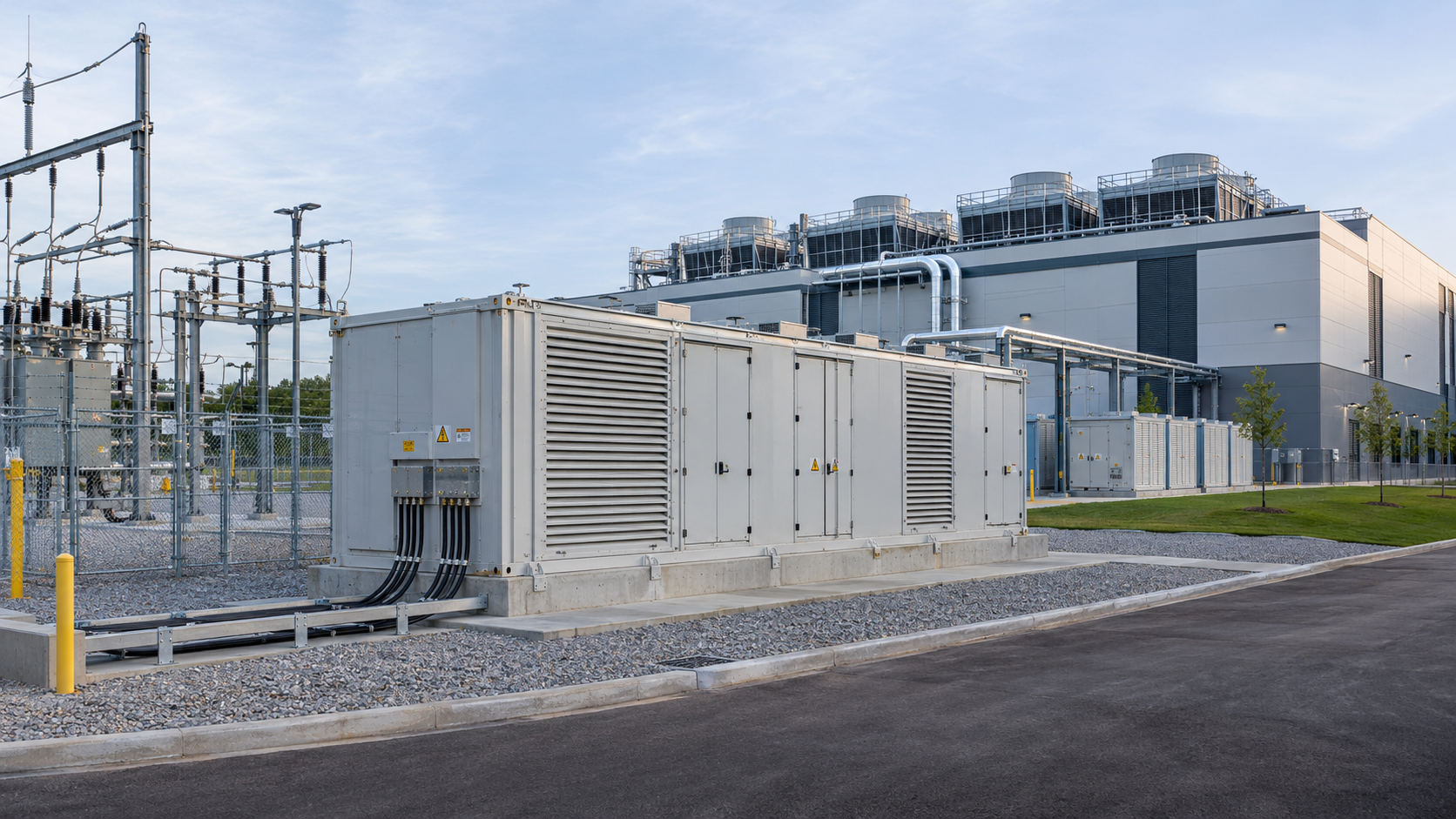
UPS Moves to the Grid Edge as Vertiv Launches 3 MVA Medium-Voltage System
Vertiv has launched the 3 MVA PowerNexus MV UPS, moving UPS functionality from the indoor low-voltage side to the outdoor 34.5kV grid connection point. Designed for new and expanding AI data centres, the system integrates fault ride-through, AI load smoothing, power-quality control and one-to-four-hour battery backup. Following a proof-of-concept demonstration in Bologna, commercial shipments are expected to begin in mid-2027.

Envision Gen 8 Selected for 442 MWh Grid Forming BESS in Germany Taking Partnership Close to 600 MWh
Envision Energy and German storage developer ju:niz Energy are advancing the 442 MWh Smareg 13 project in Bavaria. The four-hour, grid-forming development is planned next to the operational Smareg 12 site, while public records currently show a 100 MW/401 MWh configuration and a March 2028 target date.

CATL Delivers First 8-Hour EnerQB Systems for Quinbrook's 24GWh Australian Pipeline
CATL and Quinbrook Infrastructure Partners have completed production and delivery of the first EnerQB long-duration energy storage systems. Designed for eight-hour discharge, the initial units will undergo a 12-month trial at Stanwell Power Station in Queensland, Australia. Quinbrook has identified a potential 3GW/24GWh project pipeline, although wider deployment will depend on trial results, financing, grid connections and subsequent procurement.

1.24GWh! Sungrow Supplies Europe's Largest Operational Energy Storage Project
BW ESS’s Hams Hall project in the UK has officially brought its first phase online, with 350MW/1.243GWh of capacity, making it the largest operational battery storage project in Europe. Sungrow supplied the BESS, with Energy-IO and other partners involved in project delivery. The project also secured a 10-year optimisation agreement with EDF, debt financing from international banks and equity investment from AIP, highlighting the full value chain behind Europe’s GWh-scale storage projects, from equipment supply and project delivery to commercial operations and financing.

BNEF's Q4 Energy Storage Tier 1 List Shrinks 26% to 50 Manufacturers
BloombergNEF has named 50 manufacturers to its Q4 2026 Tier 1 Energy Storage list. Based on publicly available company disclosures, Energy Planet has confirmed 19 of the manufacturers and compiled historical inclusion records for 12 of them. While a single appearance shows that a supplier met the criteria for that quarter, repeat inclusion offers a stronger indication of its ability to maintain a pipeline of qualifying projects. Tier 1 remains a measure of market adoption, however, rather than a product-quality ranking, corporate credit rating or substitute for project-level technical and financial due diligence.