30-Year Service Life! Hithium Launches Next Generation 4 MWh Sodium-Ion BESS with 785 Ah Cells


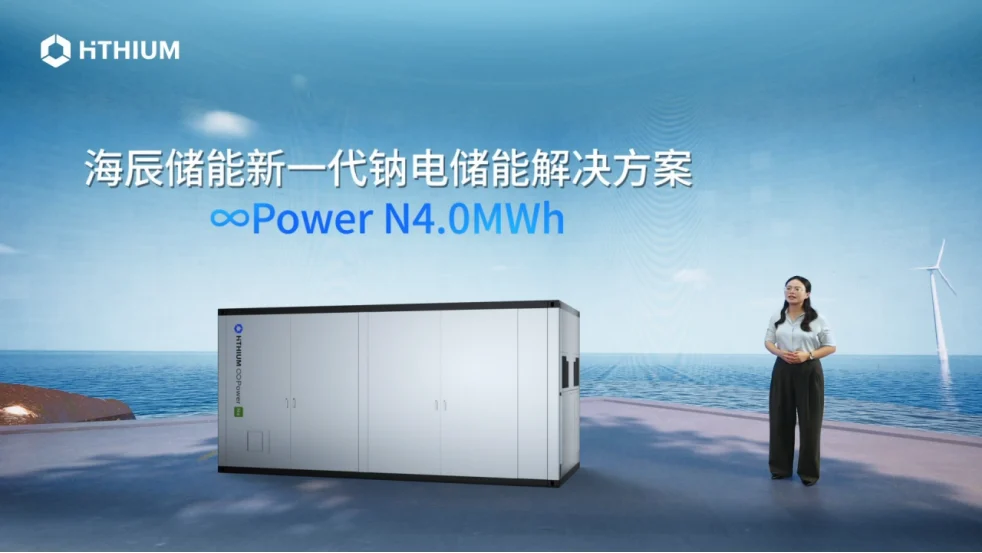
On 16 September, at its "Witnessed Day and Night" online product launch, Hithium officially unveiled its next-generation integrated sodium-ion solution purpose-built for energy storage. The company introduced the ∞Power N4.0MWh, a 4 MWh sodium-ion energy storage system equipped with the ∞Cell N785Ah large-capacity sodium-ion battery, and announced that full-chain mass production and delivery will begin in 2027. Notably, the system has a 30-year design service life, offering a new answer for the large-scale deployment of sodium-ion energy storage through infrastructure-grade longevity.
As a leading company in the global energy storage industry, Hithium ranked among the world’s top two suppliers by energy storage battery shipments in the first half of 2026. Building on its technological, manufacturing and industrialisation experience in lithium-ion batteries, Hithium has expanded further into sodium-ion technology. Drawing on integrated capabilities spanning materials, cells, manufacturing, system integration, power-station applications and lifecycle services, the company is advancing sodium-ion technology from technical validation to large-scale deployment and accelerating its industrialisation.
Opening with a Strategic Dialogue to Decode the Logic of Sodium-Ion Industrialisation
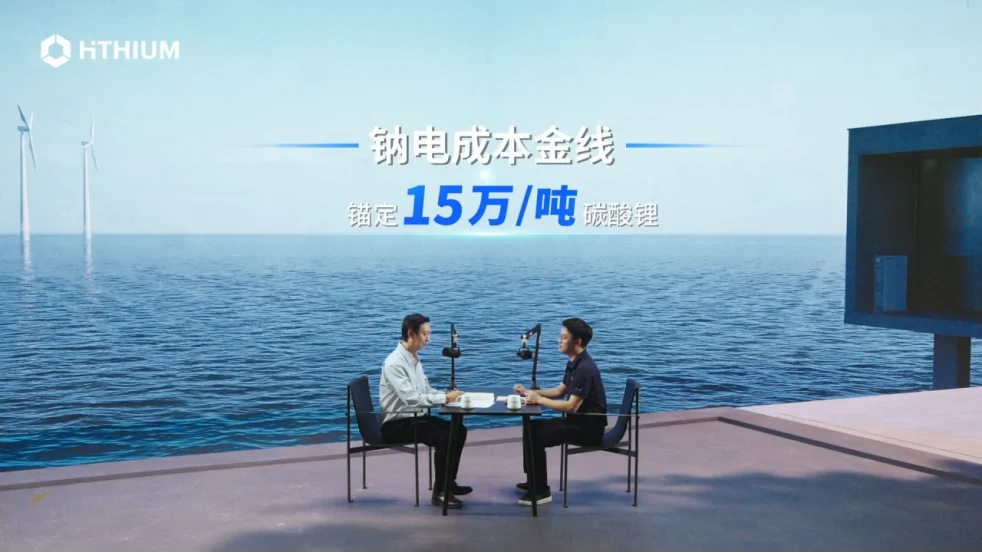
At the launch event, Dr Yi Ziqi, Director and Chief Technology Officer of Hithium, held an in-depth dialogue with Xie Rongbin, Party Secretary, Chairman and Editor-in-Chief of China Energy Automotive Communication Group Co., Ltd., as well as Editor-in-Chief of China Energy News. Their discussion examined Hithium’s strategic rationale for developing sodium-ion technology from the perspectives of industry trends, resource endowments and technological evolution.
Dr Yi said that for energy storage technology to achieve genuine large-scale adoption, it must cross two thresholds: first, affordability, meaning that prices must be accessible; and second, availability, meaning that resources must be obtainable over the long term and with stability. Sodium resources are abundant and widely distributed, creating new possibilities for strengthening resource security and supply-chain stability in the energy storage industry. Hithium has set a cost target for its next-generation sodium-ion energy storage system of at least matching the cost of lithium-ion batteries when lithium carbonate is priced at RMB 150,000 per tonne. As sodium-ion material systems, manufacturing processes and supply chains gradually mature, sodium-ion technology will move further from an energy technology towards infrastructure. At the same time, greater resource availability and supply-chain stability will also strengthen the long-term investment value of energy storage as a capital-intensive asset.
Industrialisation does not simply mean bringing one product into mass production. It requires complete, integrated industrial capabilities spanning materials, manufacturing, systems and applications. Drawing on its integrated capabilities in research and development, manufacturing, quality and supply chains accumulated in the lithium-ion sector, Hithium is transferring its mature experience to sodium-ion technology. The company is conducting integrated R&D and engineering practice from foundational materials through to end-use power stations, building a comprehensive capability base for the large-scale deployment of sodium-ion solutions.
Integrated Innovation from Materials to Manufacturing Creates the Next-Generation ∞Cell N785Ah Large-Capacity Sodium-Ion Battery
For the industrialisation of sodium-ion technology, the first challenge to solve is the battery cell. "Starting with the most fundamental chemical materials, we are retracing the 30-year development journey of the lithium-ion battery industry," Dr Wang Shiwen, President of the Hithium Battery Research Institute, said at the launch event.
Following this approach, Hithium began with foundational material systems including cathode and anode materials and electrolytes, while advancing integrated innovation in cell design and manufacturing processes. This work has resulted in the ∞Cell N785Ah, a large-capacity sodium-ion battery purpose-built for energy storage.
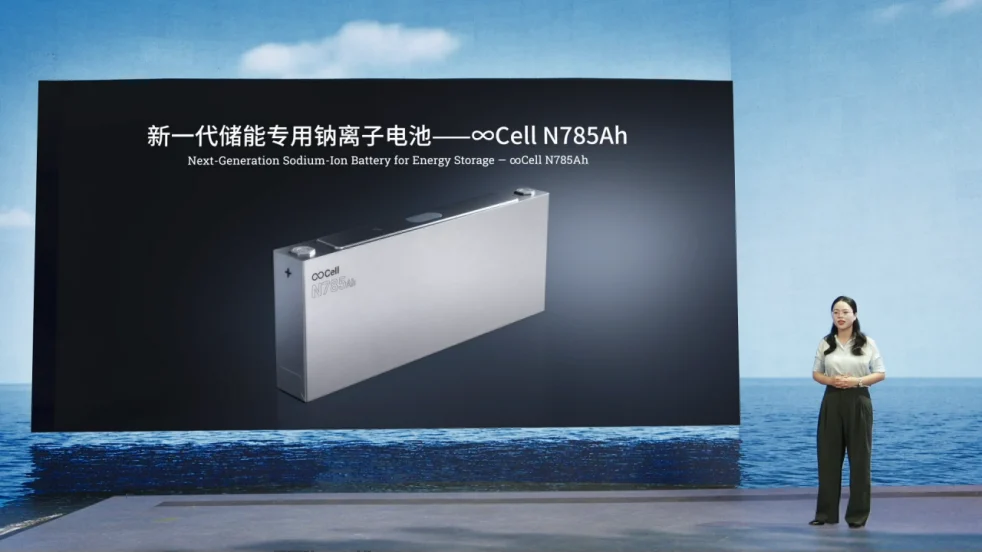
For the cathode, Hithium and its partners jointly developed an NFPP material with phase purity of up to 97%. For the anode, the company developed its own hard-carbon material, using pore-structure regulation and surface-defect repair to combine low expansion with high-rate capability and substantially improve battery calendar life. The electrolyte uses a dedicated "micro-bonding plus targeted repair" formulation to improve interphase stability and suppress electrolyte consumption.
At the cell-manufacturing level, Hithium achieved three major breakthroughs. Ultra-thick coated electrodes address the shortfall in energy density. Long-life structural components, including safety vents and welds that have passed more than 20,000 breathing tests, resolve fatigue caused by the accumulation of small deformations over very large numbers of cycles. Hithium also uses wide-format large-format stacking technology derived from its advanced lithium-ion production system to overcome bottlenecks in the mass production of sodium-ion batteries.
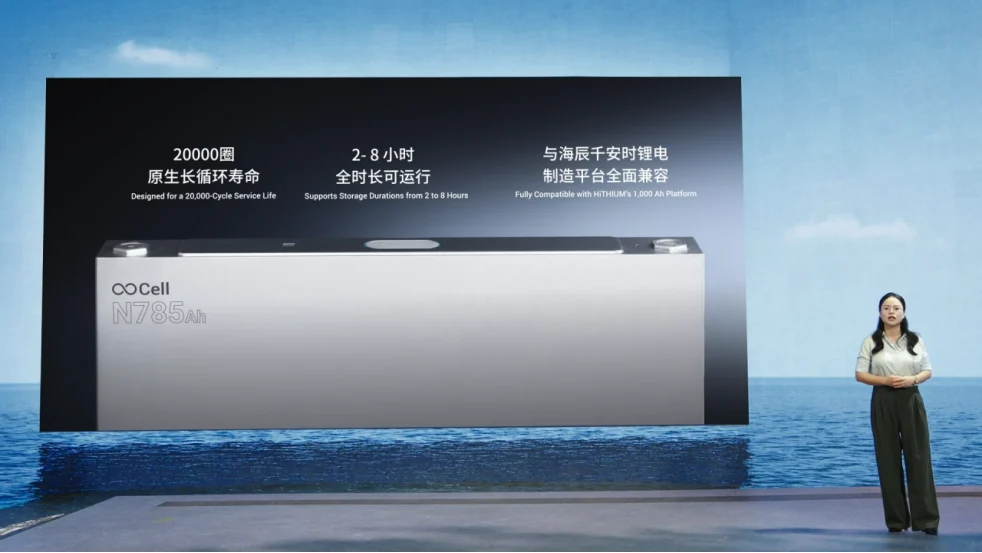
Through coordinated innovation in material systems and cell manufacturing, the ∞Cell N785Ah sodium-ion battery delivers a native cycle life of 20,000 cycles and supports durations of two to eight hours, covering the most mainstream duration requirements in today's power-storage market. The product is also fully compatible with the cell and system-integration lines of Hithium's common manufacturing platform for 1,000 Ah-class lithium-ion batteries, supporting the rapid introduction of sodium-ion technology into a mature manufacturing system and enabling large-scale production.
Storage System and Power Station with the Same Service Life: A 30-Year Operating Life Moves Sodium-Ion Energy Storage towards New Energy Infrastructure
As a next-generation sodium-ion energy storage solution, the ∞Power N4.0MWh integrates advantages spanning material systems, cell manufacturing, system integration and power-station applications. In addition to the ∞Cell N785Ah, it uses Hithium's self-developed battery management system designed specifically for sodium-ion batteries, with state-of-charge (SOC) estimation accuracy of ≤2.5% throughout operation. Its sodium-ion-specific architecture is compatible with energy storage power conversion systems (PCS) from 800 V to 1,500 V, allowing the existing ecosystem to be directly adopted. PCS rated-power utilisation is more than 20% higher than that of the previous-generation sodium-ion system, lowering the ecosystem barrier to large-scale sodium-ion deployment.
In terms of system efficiency and operations and maintenance, the ∞Power N4.0MWh reduces power-station land requirements by 30% through system-architecture optimisation and achieves all-weather comprehensive efficiency of more than 88%. It also employs Hithium’s proprietary air-liquid hybrid cooling system and AI-enabled intelligent thermal management system, together with an integrated weather monitoring and early-warning system. Based on real-time weather data, the system can intelligently select the most economical cooling mode, reducing operating auxiliary power consumption by 30% and standby auxiliary power consumption by 50%.
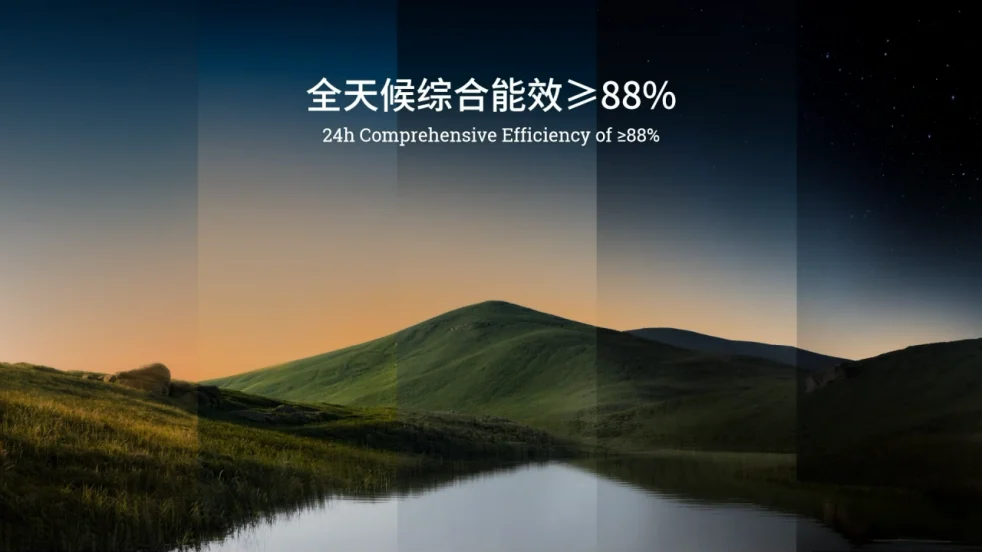
What ultimately determines the system’s long-term value, however, is the reliability design embedded throughout the product lifecycle. Hithium will draw on its integrated engineering capabilities spanning materials, cell manufacturing, systems and operations and maintenance. Together with a pre-modularised, simplified O&M design, these capabilities enable the ∞Power N4.0MWh to deliver an ultra-long 30-year service life aligned with that of conventional power equipment.
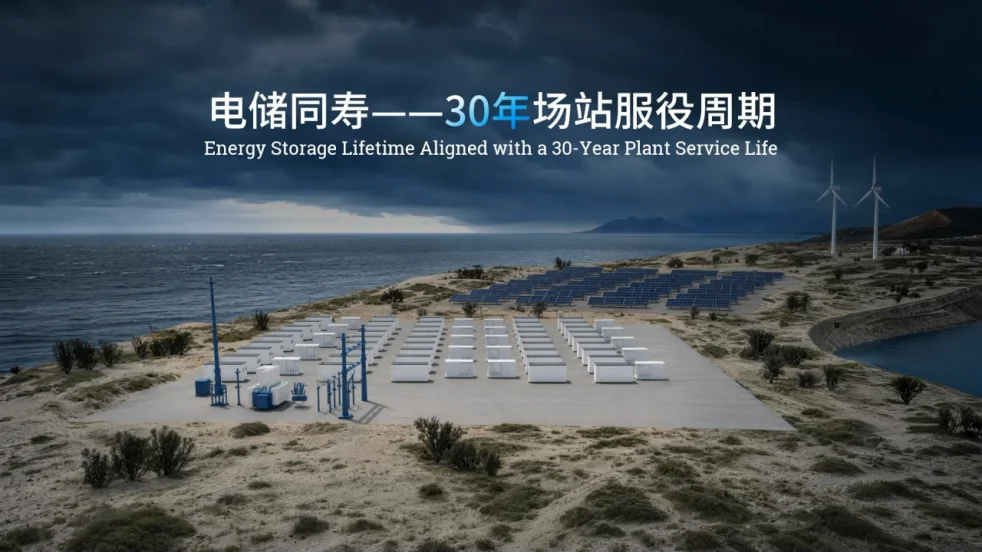
"Thirty years represents 10,950 days and nights of collective validation—and the long-term commitment we hope to deliver to our customers," Dr Wang said. "It means that, for the first time, electrochemical energy storage can truly be viewed through the lens of infrastructure, evaluated using the economics of infrastructure construction, and held to infrastructure standards for its service life."
Hithium's next-generation integrated sodium-ion energy storage solution will begin full-chain mass production and delivery in 2027. Starting with large-scale power-storage applications, Hithium's next-generation sodium-ion products will also expand into commercial and industrial applications, homes and inclusive energy access. By using different technologies and products to serve different application scenarios, the company will continue to build integrated energy storage solutions covering a full range of scenarios.
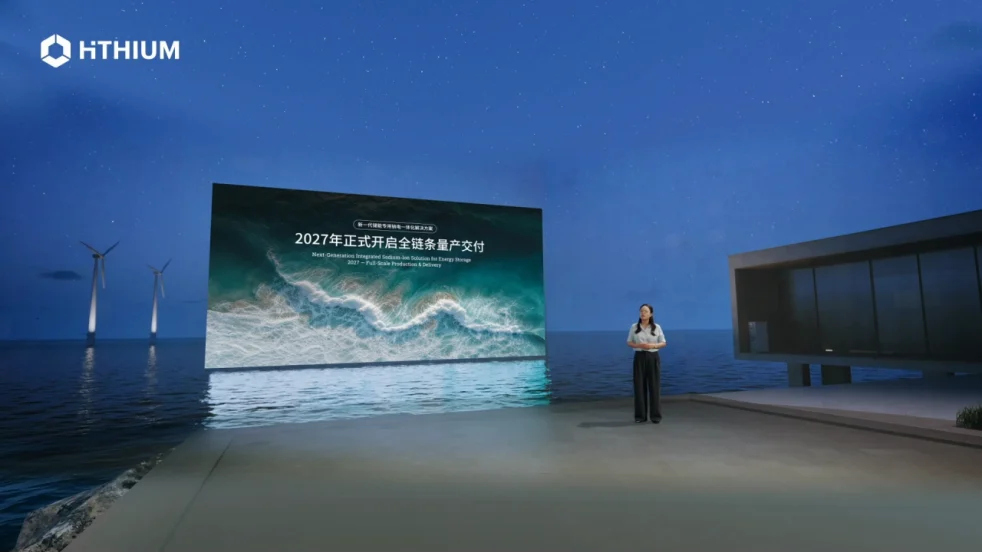
Moving forward towards the light, witnessed day and night. At the launch, Hithium also announced the launch of its "∞Edge" Pioneer Initiative. Over the next three years, the company will test different Hithium energy storage battery and system technologies and product formats in a range of extreme environments and continuously disclose progress. It will also gradually release a range of ∞Power Next extreme-scenario technology packages, continuing to advance electrochemical energy storage as more accessible and reliable energy infrastructure and driving the levelised cost of storage (LCOS) over the full lifecycle towards the era of RMB 0.10 per kilowatt-hour.
Featured News
All News →
Italy Opens 16GWh Storage Auction Today as Second MACSE Round Expands by 60%
Italy will open its second MACSE energy storage auction on 24 November, procuring up to 16GWh of capacity from new projects scheduled for delivery in 2029. Compared with the first auction, procurement volume has increased by 60%, while the maximum permitted bid has been reduced from €37,000/MWh/year to €27,000/MWh/year. The results will provide a new indication of competition, regional deployment and current cost levels in Italy's energy storage market.

The Real Test Comes When the Grid Goes Down: 1,000 Witness MWh-Scale Diesel–Battery Microgrid Demonstration
A live MWh-scale demonstration at Sungrow GEPS 2026 showcased how battery storage, diesel generation and grid-forming technology can work together to deliver reliable power in off-grid applications. ENERGY PLANET joined the event to explore the technical highlights and their implications for future C&I energy storage projects.

Tesla Launches 7.4MW Powercore: Connecting Batteries Directly to the 34.5kV Grid and Medium Voltage to 800V Data Centres
Tesla has launched Powercore, a solid-state medium-voltage platform integrating transformer, bidirectional inverter and circuit-breaker functions. Rated at 7.4MW, it connects 800V–2,000V DC systems with 10kV–34.5kV AC networks, targeting battery storage, solar and 800V AI data centres. The first units are scheduled to operate in 2027, although Tesla has not disclosed pricing, customers or initial projects.
UPS Moves to the Grid Edge as Vertiv Launches 3 MVA Medium-Voltage System
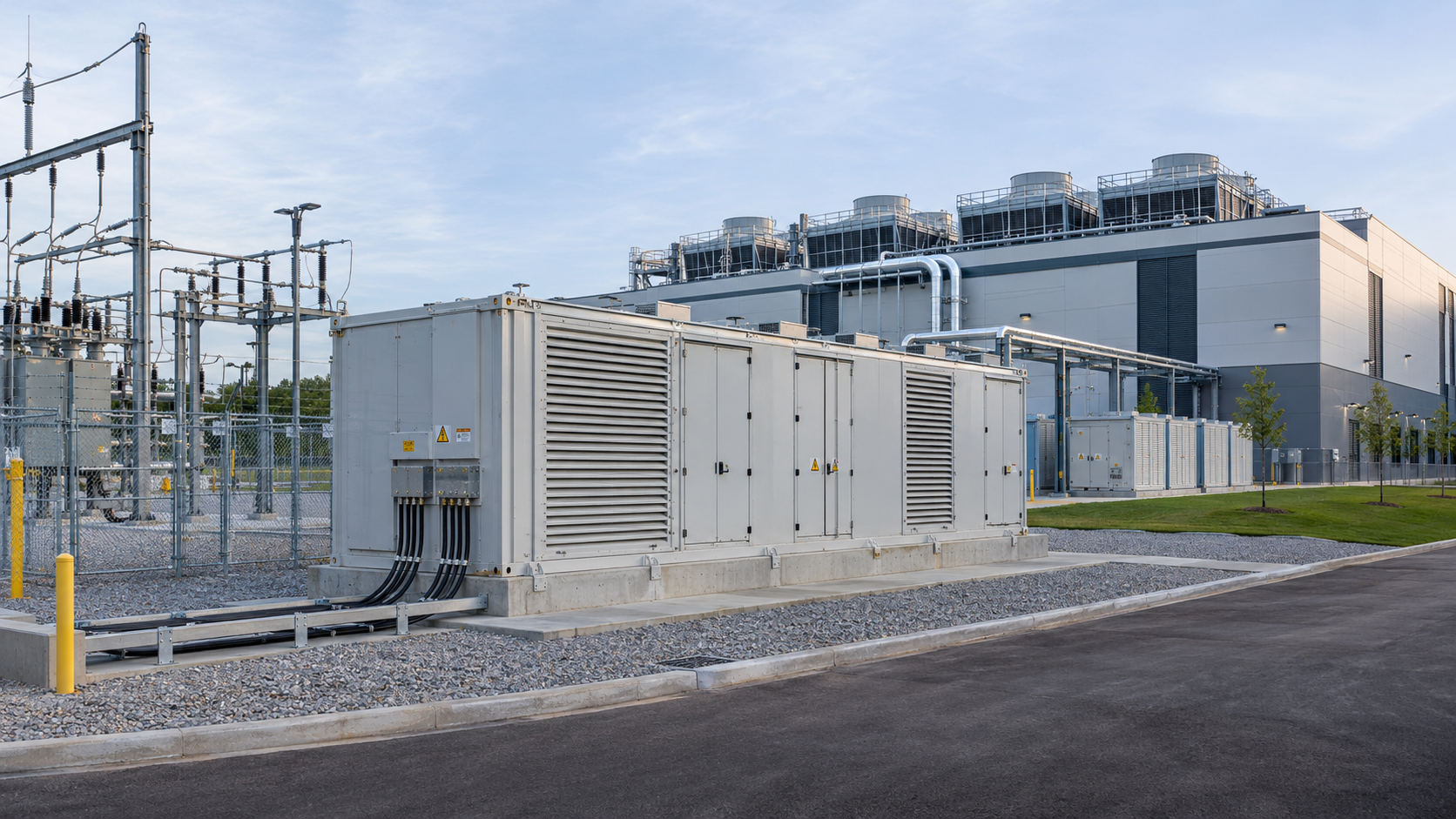
Vertiv has launched the 3 MVA PowerNexus MV UPS, moving UPS functionality from the indoor low-voltage side to the outdoor 34.5kV grid connection point. Designed for new and expanding AI data centres, the system integrates fault ride-through, AI load smoothing, power-quality control and one-to-four-hour battery backup. Following a proof-of-concept demonstration in Bologna, commercial shipments are expected to begin in mid-2027.

Envision Gen 8 Selected for 442 MWh Grid Forming BESS in Germany Taking Partnership Close to 600 MWh
Envision Energy and German storage developer ju:niz Energy are advancing the 442 MWh Smareg 13 project in Bavaria. The four-hour, grid-forming development is planned next to the operational Smareg 12 site, while public records currently show a 100 MW/401 MWh configuration and a March 2028 target date.

CATL Delivers First 8-Hour EnerQB Systems for Quinbrook's 24GWh Australian Pipeline
CATL and Quinbrook Infrastructure Partners have completed production and delivery of the first EnerQB long-duration energy storage systems. Designed for eight-hour discharge, the initial units will undergo a 12-month trial at Stanwell Power Station in Queensland, Australia. Quinbrook has identified a potential 3GW/24GWh project pipeline, although wider deployment will depend on trial results, financing, grid connections and subsequent procurement.

1.24GWh! Sungrow Supplies Europe's Largest Operational Energy Storage Project
BW ESS’s Hams Hall project in the UK has officially brought its first phase online, with 350MW/1.243GWh of capacity, making it the largest operational battery storage project in Europe. Sungrow supplied the BESS, with Energy-IO and other partners involved in project delivery. The project also secured a 10-year optimisation agreement with EDF, debt financing from international banks and equity investment from AIP, highlighting the full value chain behind Europe’s GWh-scale storage projects, from equipment supply and project delivery to commercial operations and financing.

BNEF's Q4 Energy Storage Tier 1 List Shrinks 26% to 50 Manufacturers
BloombergNEF has named 50 manufacturers to its Q4 2026 Tier 1 Energy Storage list. Based on publicly available company disclosures, Energy Planet has confirmed 19 of the manufacturers and compiled historical inclusion records for 12 of them. While a single appearance shows that a supplier met the criteria for that quarter, repeat inclusion offers a stronger indication of its ability to maintain a pipeline of qualifying projects. Tier 1 remains a measure of market adoption, however, rather than a product-quality ranking, corporate credit rating or substitute for project-level technical and financial due diligence.