Risen Energy's H1 2026: Energy Storage Gains Momentum as HJT Moves Toward Scale


In the first half of 2026, Risen Energy generated revenue of RMB 4.021 billion, down 45.97% year on year. Net loss attributable to shareholders of the parent company reached RMB 820 million, while net loss excluding non-recurring gains and losses amounted to RMB 877 million. However, a closer look at its business segments and quarterly performance reveals several positive changes worth noting.
Energy storage-related revenue grows by more than 40%
The most visible area of growth in Risen Energy's interim report came from its energy storage systems and related businesses.
In the first half of 2026, the company's "energy storage systems, lighting products and auxiliary photovoltaic products" segment generated revenue of RMB 674 million, up 41.63% year on year. Its operating costs were approximately RMB 441 million, increasing by only 13.27%. Revenue grew by more than 40%, while costs rose by just 13.27%. As revenue outpaced costs, the segment's gross margin improved accordingly.
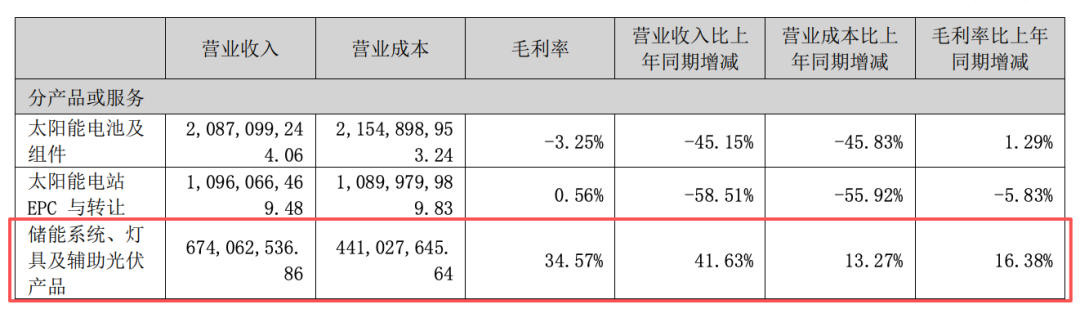
During the period, the segment recorded a gross margin of 34.57%, an increase of 16.38 percentage points from a year earlier. Based on the revenue and cost figures disclosed in the interim report, the segment generated approximately RMB 233 million in gross profit, compared with only about RMB 86.56 million in the same period last year—an increase of roughly 169%.
In other words, while revenue increased by 41.63%, gross profit grew by approximately 169%. At the same time, the segment's share of Risen Energy’s total revenue increased from 6.39% in the first half of 2025 to 16.76% in the first half of 2026.
Many businesses appear to be growing rapidly, but higher revenue does not necessarily translate into higher gross profit. The change in Risen Energy's energy storage-related business is different: not only has the business expanded, but it is also retaining significantly more gross profit.
In terms of its product portfolio, Risen Energy's controlled subsidiary Ningbo SYL has established a product system covering battery management systems (BMS), power conversion systems (PCS), energy management systems (EMS), DC-side integration and medium-voltage integration.
Its products cover utility-scale, commercial and industrial, and residential energy storage applications, including the eTron utility-scale energy storage system, the eFlex C&I all-in-one system and the RisenStack residential energy storage series.
These products are no longer confined to a product catalogue. By the end of the reporting period, the company's energy storage business had delivered more than 900 projects worldwide, including several utility-scale projects exceeding 100 MW. Its markets now cover Europe, the Americas, Asia-Pacific and Africa.
In the past, these products, projects and overseas markets were mainly evidence of business expansion. In this interim report, they are beginning to translate more clearly into revenue and gross profit.
Q2 gross margin recovers to 8.15%, with gross profit nearly doubling quarter on quarter
In addition to the growth of its energy storage business, Risen Energy's second-quarter performance is also worth examining separately. Based on calculations using data from the interim report and the first-quarter report:
This creates a clear contrast: second-quarter revenue was roughly half that of the first quarter, yet the gross profit generated was nearly twice as high. So where did the losses come from? In the first half of 2026, Risen Energy's financial expenses reached RMB 300 million, up 88.39% year on year. This included foreign-exchange losses of approximately RMB 88.07 million, compared with foreign-exchange gains of around RMB 119 million in the same period of 2025.
The shift from a gain to a loss created an adverse year-on-year change of approximately RMB 207 million in foreign-exchange gains and losses, directly weighing on profitability. A simple calculation based on profit before tax helps illustrate the impact.
In the first half of 2026, Risen Energy recorded a pre-tax loss of approximately RMB 949 million. Adding back the foreign-exchange loss results in an adjusted loss of around RMB 861 million. In the same period of 2025, the company recorded a pre-tax loss of approximately RMB 854 million. Excluding the foreign-exchange gain results in an adjusted loss of around RMB 973 million.
Comparing the two figures, the adjusted loss narrowed by approximately RMB 112 million. This calculation is intended only to illustrate the effect of foreign-exchange gains and losses on changes in profitability; it is not an adjusted performance measure disclosed by the company.
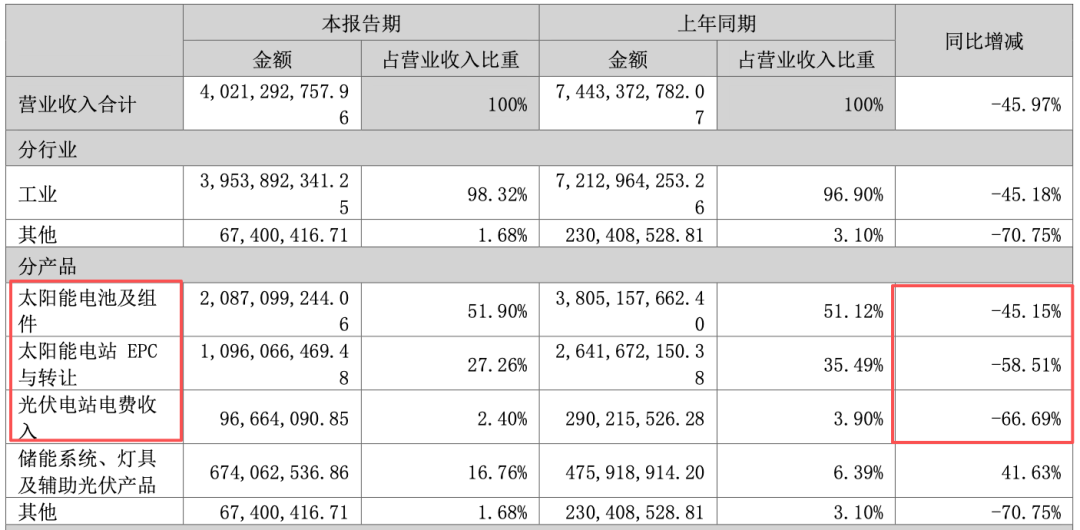
In addition, revenue from solar cells and modules reached RMB 2.087 billion, down 45.15% year on year. Revenue from solar power plant EPC and project transfers fell 58.51% to RMB 1.096 billion, while revenue from electricity sales by PV power plants declined 66.69% to approximately RMB 96.66 million. Revenue declined across all three traditional PV-related business segments.
Winning a 1 GW Datang tender puts HJT closer to a volume-growth window
According to the interim report, Risen Energy's heterojunction cell conversion efficiency has exceeded 27%, while its HJT module conversion efficiency has surpassed 24.70%. Through production-process optimization and continued improvements in core technologies, the company has reduced the non-silicon manufacturing cost of its HJT cells to RMB 0.15/W.
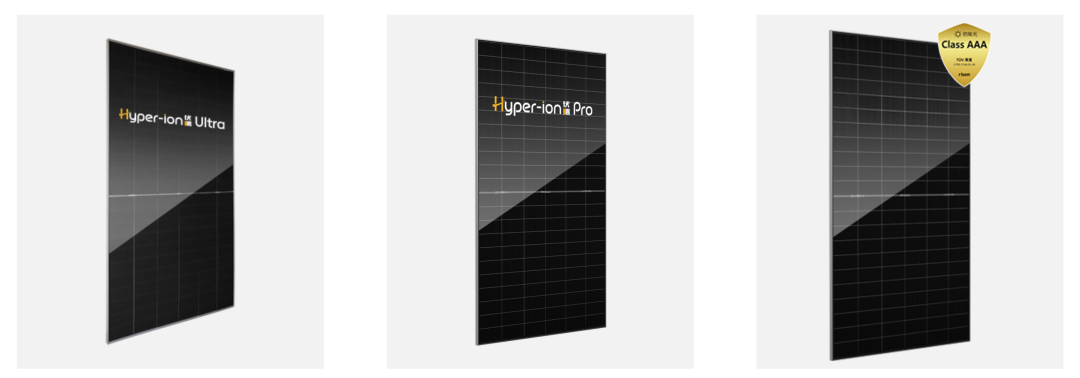
As of the first quarter of 2026, the mass-production output of Risen Energy's Hyper-ion Pro modules had reached more than 740 W, while the average cell efficiency of its best-performing production batches reached 26.4%.
Cumulative shipments of the series have exceeded 12 GW, covering more than 80 countries and regions worldwide. Tender results published in July showed that Risen Energy had successfully secured a lot under China Datang Corporation's 2026–2027 framework procurement for N-type HJT modules, with an estimated procurement volume of 1 GW. In the previously published candidate announcement, Risen Energy was ranked as the first-choice bidder.
In the second half of 2026, Risen Energy also plans to advance the commissioning of its next-generation capacity, including a 15 GW HJT cell and 15 GW module project in Ninghai, Zhejiang, as well as a 4 GW cell and 6 GW module project in Jintan, Jiangsu.
Taken together, Risen Energy's HJT business is developing a relatively clear path toward greater scale: technological efficiency and cost reductions at the front end, validation through a state-owned enterprise procurement programme and global customers in the middle, and new manufacturing capacity prepared to support future demand.
As these projects begin operations and gradually ramp up production, the company’s accumulated technological and market advantages in HJT may increasingly translate into larger shipment volumes and financial contributions.
The photovoltaic industry remains in an adjustment period, and the operating pressure facing Risen Energy has not been fully resolved. A broader business recovery will still require time.
For Risen Energy, however, the real "gear shift" is not simply about rebuilding the scale of its existing businesses. It is about allowing energy storage and HJT to take on a larger share of the company’s future growth.
That change is already visible in the interim report. The next question is whether it can continue to translate into shipments and profits.
Featured News
All News →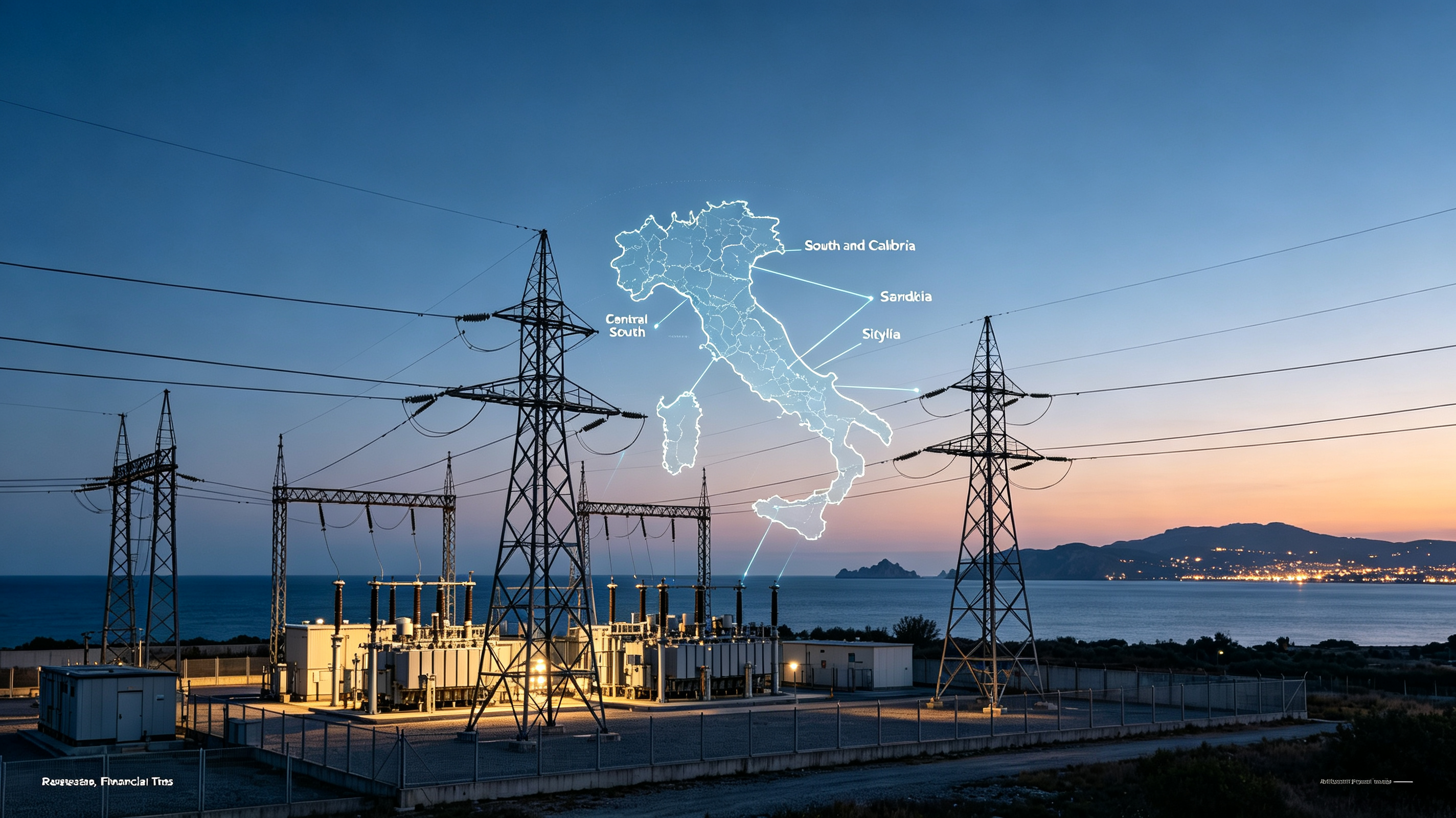
Italy Opens 16GWh Storage Auction Today as Second MACSE Round Expands by 60%
Italy will open its second MACSE energy storage auction on 24 November, procuring up to 16GWh of capacity from new projects scheduled for delivery in 2029. Compared with the first auction, procurement volume has increased by 60%, while the maximum permitted bid has been reduced from €37,000/MWh/year to €27,000/MWh/year. The results will provide a new indication of competition, regional deployment and current cost levels in Italy's energy storage market.

The Real Test Comes When the Grid Goes Down: 1,000 Witness MWh-Scale Diesel–Battery Microgrid Demonstration
A live MWh-scale demonstration at Sungrow GEPS 2026 showcased how battery storage, diesel generation and grid-forming technology can work together to deliver reliable power in off-grid applications. ENERGY PLANET joined the event to explore the technical highlights and their implications for future C&I energy storage projects.

Tesla Launches 7.4MW Powercore: Connecting Batteries Directly to the 34.5kV Grid and Medium Voltage to 800V Data Centres
Tesla has launched Powercore, a solid-state medium-voltage platform integrating transformer, bidirectional inverter and circuit-breaker functions. Rated at 7.4MW, it connects 800V–2,000V DC systems with 10kV–34.5kV AC networks, targeting battery storage, solar and 800V AI data centres. The first units are scheduled to operate in 2027, although Tesla has not disclosed pricing, customers or initial projects.
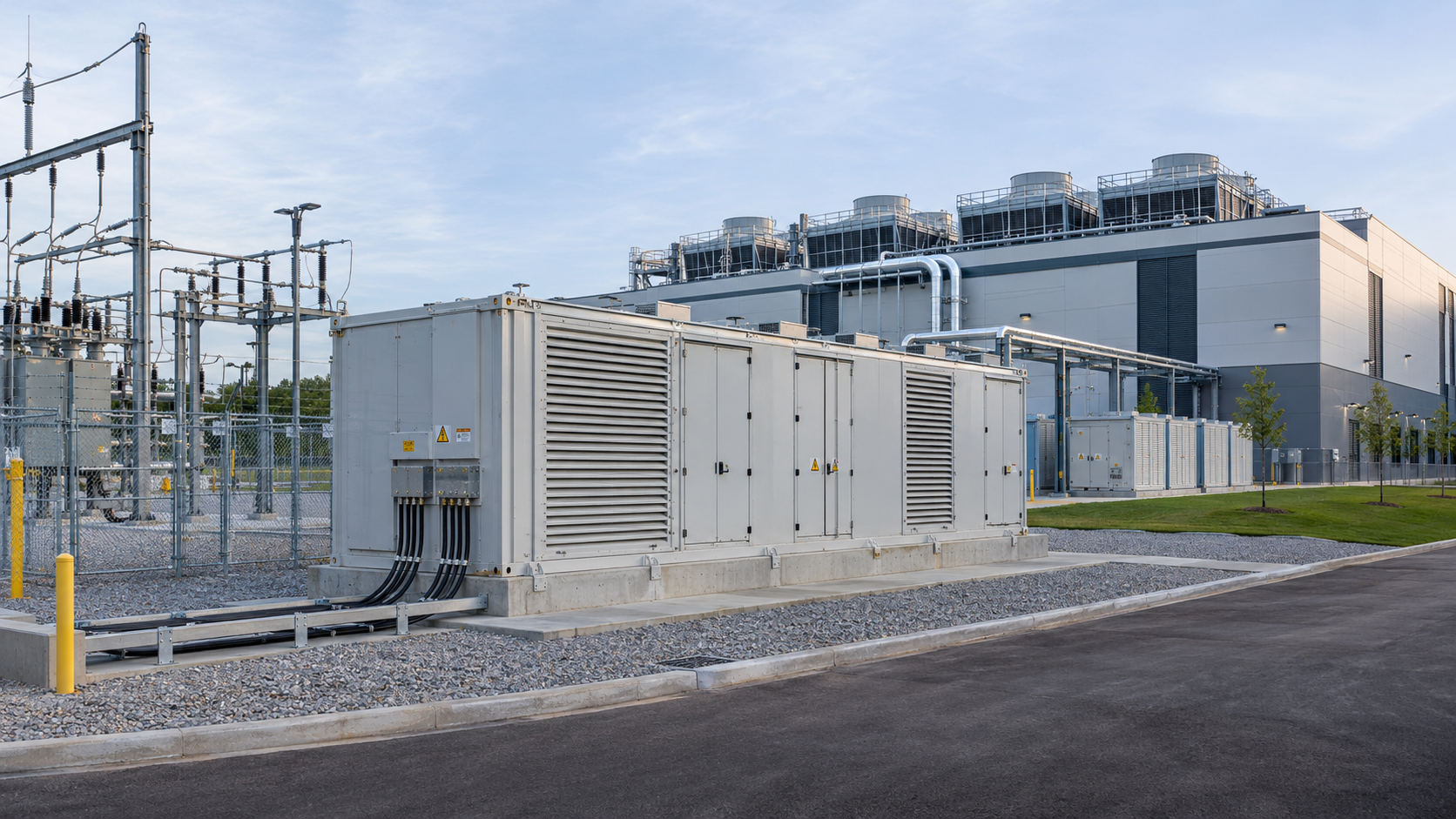
UPS Moves to the Grid Edge as Vertiv Launches 3 MVA Medium-Voltage System
Vertiv has launched the 3 MVA PowerNexus MV UPS, moving UPS functionality from the indoor low-voltage side to the outdoor 34.5kV grid connection point. Designed for new and expanding AI data centres, the system integrates fault ride-through, AI load smoothing, power-quality control and one-to-four-hour battery backup. Following a proof-of-concept demonstration in Bologna, commercial shipments are expected to begin in mid-2027.

Envision Gen 8 Selected for 442 MWh Grid Forming BESS in Germany Taking Partnership Close to 600 MWh
Envision Energy and German storage developer ju:niz Energy are advancing the 442 MWh Smareg 13 project in Bavaria. The four-hour, grid-forming development is planned next to the operational Smareg 12 site, while public records currently show a 100 MW/401 MWh configuration and a March 2028 target date.

CATL Delivers First 8-Hour EnerQB Systems for Quinbrook's 24GWh Australian Pipeline
CATL and Quinbrook Infrastructure Partners have completed production and delivery of the first EnerQB long-duration energy storage systems. Designed for eight-hour discharge, the initial units will undergo a 12-month trial at Stanwell Power Station in Queensland, Australia. Quinbrook has identified a potential 3GW/24GWh project pipeline, although wider deployment will depend on trial results, financing, grid connections and subsequent procurement.

1.24GWh! Sungrow Supplies Europe's Largest Operational Energy Storage Project
BW ESS’s Hams Hall project in the UK has officially brought its first phase online, with 350MW/1.243GWh of capacity, making it the largest operational battery storage project in Europe. Sungrow supplied the BESS, with Energy-IO and other partners involved in project delivery. The project also secured a 10-year optimisation agreement with EDF, debt financing from international banks and equity investment from AIP, highlighting the full value chain behind Europe’s GWh-scale storage projects, from equipment supply and project delivery to commercial operations and financing.

BNEF's Q4 Energy Storage Tier 1 List Shrinks 26% to 50 Manufacturers
BloombergNEF has named 50 manufacturers to its Q4 2026 Tier 1 Energy Storage list. Based on publicly available company disclosures, Energy Planet has confirmed 19 of the manufacturers and compiled historical inclusion records for 12 of them. While a single appearance shows that a supplier met the criteria for that quarter, repeat inclusion offers a stronger indication of its ability to maintain a pipeline of qualifying projects. Tier 1 remains a measure of market adoption, however, rather than a product-quality ranking, corporate credit rating or substitute for project-level technical and financial due diligence.