LG Energy Solution Shifts North American Capacity Toward ESS


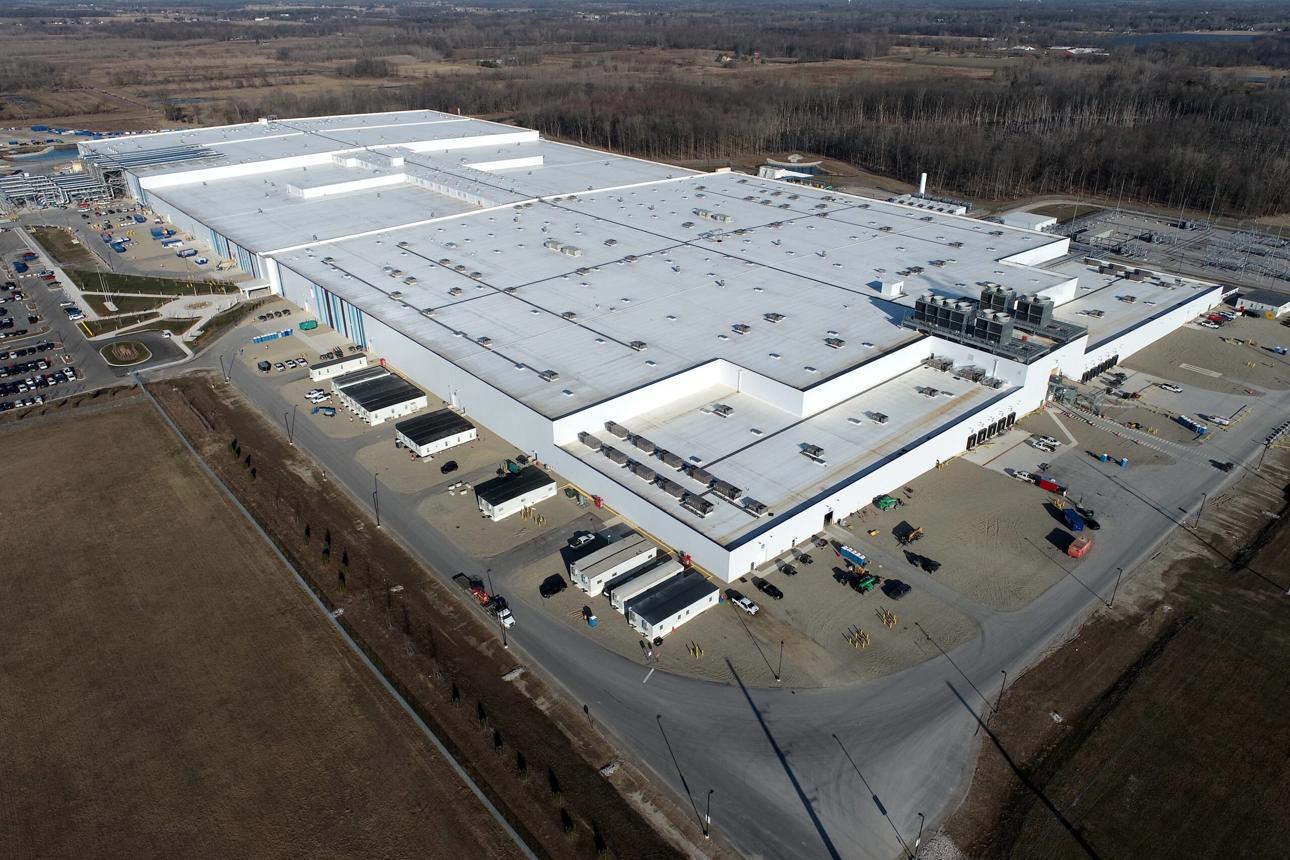
Recently, Reuters reported that LG Energy Solution (LGES) is shifting more of its North American battery manufacturing capacity toward energy storage system (ESS) batteries. Robert Lee, president of LG Energy Solution North America, said that as the construction of AI data centers drives rapid growth in electricity demand, energy storage is becoming an important growth area that the company had not previously anticipated. By the end of 2026, five of LG Energy Solution’s eight factories in North America are expected to be producing ESS batteries.
This development can easily be summarized as "LG Energy Solution is shifting from EV batteries to energy storage." However, when considered in the context of LG's more than a decade of business development and its financial performance over the past two years, this interpretation is not accurate. LG is not entering the ESS market for the first time. Rather, against a backdrop of EV battery demand growing more slowly than previously expected, the company is further increasing the strategic importance of ESS and using its established North American manufacturing footprint to allocate more capacity to a market that is growing faster and undergoing changes in its customer structure.
LG Energy Solution's ESS Business Is Not New
LG Energy Solution's ESS business was not a temporary move. As early as the LG Chem era, the company had already begun developing its ESS business and established a presence in Europe, particularly Germany, through residential energy storage products such as the RESU series. Therefore, energy storage has always been part of LG Energy Solution's battery business and did not emerge as a "Plan B" in response to current changes in the EV market. What has actually changed is the position of ESS within the company’s overall business.
Over the past decade, the primary growth driver of the global battery industry has centered on electric vehicles. As a result, LG Energy Solution invested heavily in nickel-based battery technologies such as high-nickel ternary batteries and built joint-venture factories in North America with automakers including General Motors, creating large-scale EV battery manufacturing capacity.
However, as the growth of the North American EV market has slowed, some battery capacity built on the assumption of high growth has begun to face pressure in terms of utilization and order structure. At the same time, data centers, AI infrastructure, grid expansion, and renewable energy integration are driving growth in U.S. stationary energy storage demand, making ESS an important direction for LG Energy Solution to reallocate its North American manufacturing assets.
Reuters, citing forecasts from Benchmark Mineral Intelligence, reported that North American demand for stationary batteries is expected to reach approximately 76 GWh in 2026 and increase to 125 GWh over the next five years. However, this increase will still not be sufficient to fully absorb the battery capacity previously built for the EV market.
Therefore, LG Energy Solution's current adjustment is not about "abandoning EVs and starting to make ESS batteries." Instead, the company is gradually moving from a model of "EVs as the main business, with ESS continuing to develop" toward a model in which EVs and ESS develop in parallel, while a greater share of North American capacity is allocated to ESS.
2025 Financial Results Already Signaled This Shift
In fact, LG Energy Solution's performance in 2025 had already reflected the increasing importance of its ESS business. In its full-year 2025 results released in January 2026, LG Energy Solution reported consolidated revenue of KRW 23.7 trillion, down 7.6% year on year, while operating profit reached KRW 1.3 trillion, up 133.9% year on year. In its 2026 business plan, the company explicitly stated that it aims to secure more than 90 GWh of new ESS battery orders in 2026 and increase global ESS battery production capacity to more than 60 GWh, with more than 80% of that capacity located in North America.
More importantly, these figures are not merely targets that exist on paper. LG Energy Solution had already disclosed in the third quarter of 2025 that its ESS battery order backlog had reached approximately 120 GWh, while the company subsequently raised its target for new ESS orders in 2026 to more than 90 GWh. Entering 2026, this trend accelerated further. In its first-quarter results, LG Energy Solution said that its North American ESS battery production network was already largely established and that it planned to increase North American ESS production capacity to more than 50 GWh by the end of 2026.
Why ESS Now Instead of Waiting for the EV Market to Recover?
One important reason is that the energy storage market is being driven by factors that are fundamentally different from those driving the EV market. In the past, energy storage demand was primarily driven by renewable energy integration, peak shaving and grid flexibility. Today, AI data centers are emerging as a new growth driver. Large data centers require a stable and continuously increasing supply of electricity, which is not only driving investment in the U.S. power grid but also increasing demand for large-scale battery energy storage systems.
For battery manufacturers such as LG Energy Solution, this means ESS is no longer simply a relatively mature but limited niche market. It is becoming more directly connected to U.S. power infrastructure investment, data center construction and the energy transition.
At the same time, the requirements for ESS batteries are not exactly the same as those for EV batteries. Electric vehicles place greater emphasis on energy density and lightweight design, while stationary energy storage is less sensitive to size and weight. As a result, safety, cycle life and cost are often more important, which is also making LFP an increasingly mainstream technology route for large-scale energy storage. This is precisely one of the most important aspects of LG Energy Solution's current transition.
From Nickel-Based Batteries to LFP, LG Needs to Close the Technology Gap for the Energy Storage Era
LG Energy Solution's long-standing technological strengths have been concentrated in high-energy-density nickel-based batteries, while the large-scale ESS market is increasingly relying on LFP technology. Although LFP has lower energy density than nickel-based batteries, it is better suited to stationary energy storage in terms of cost, safety and cycle life. At the same time, the LFP materials, equipment and manufacturing supply chains have long been dominated by Chinese companies.
This means that LG Energy Solution cannot expand its ESS business simply by switching customers or reallocating existing capacity. It also needs to build capabilities in LFP material systems, manufacturing processes, supply chains and large-scale production. Reuters also pointed out that transitioning from traditional nickel-based chemistries to LFP is far more complicated than simply adjusting a production line.
LG Energy Solution has already begun this transition. In March 2026, Ultium Cells, the joint venture between LG Energy Solution and General Motors, announced that it was adjusting the production line at its Spring Hill plant in Tennessee to increase LFP battery production capacity for energy storage systems. On the customer side, LG Energy Solution announced in February that it had signed a 5 GWh ESS battery supply agreement with Hanwha Qcells USA. The products use LFP cells and will be manufactured at LG Energy Solution's Holland plant in Michigan for large-scale grid energy storage projects in the United States.
North America Is Becoming the Core of LG Energy Solution's ESS Strategy
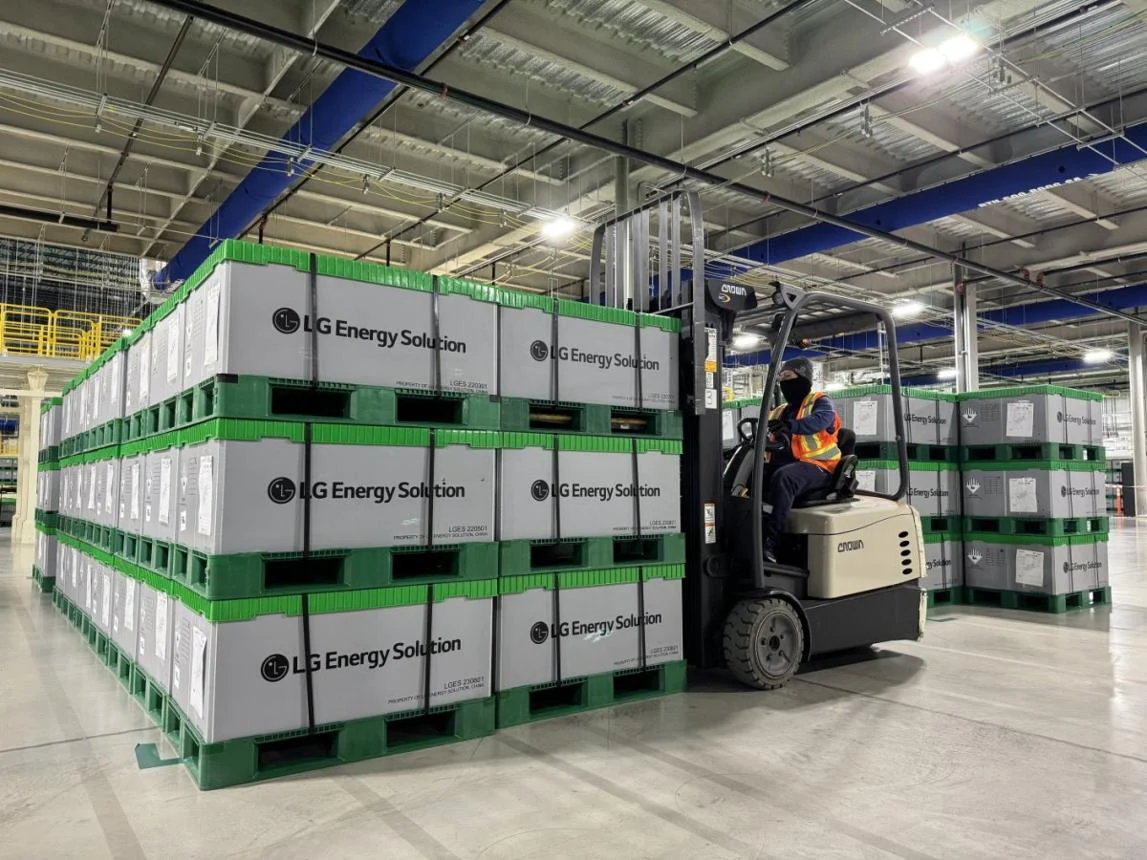
LG Energy Solution's increased focus on ESS is particularly concentrated in North America, and this is not accidental. On the one hand, the United States is one of the fastest-growing large-scale energy storage markets in the world. On the other hand, domestic manufacturing policies, supply chain security requirements and concerns over dependence on China's battery supply chain are all encouraging battery manufacturers to establish localized production capacity in the United States.
According to LG Energy Solution's plans, its global ESS production capacity will exceed 60 GWh in 2026, with more than 80% located in North America. The company has already established a production network including its Holland and Lansing plants in Michigan, the Ultium Cells plant in Tennessee, and NextStar Energy in Canada.
The changes at the Lansing plant are particularly noteworthy. According to the latest Reuters report, the plant is already producing energy storage batteries and will eventually also supply batteries to Tesla, which itself is a major participant in the global large-scale energy storage market.
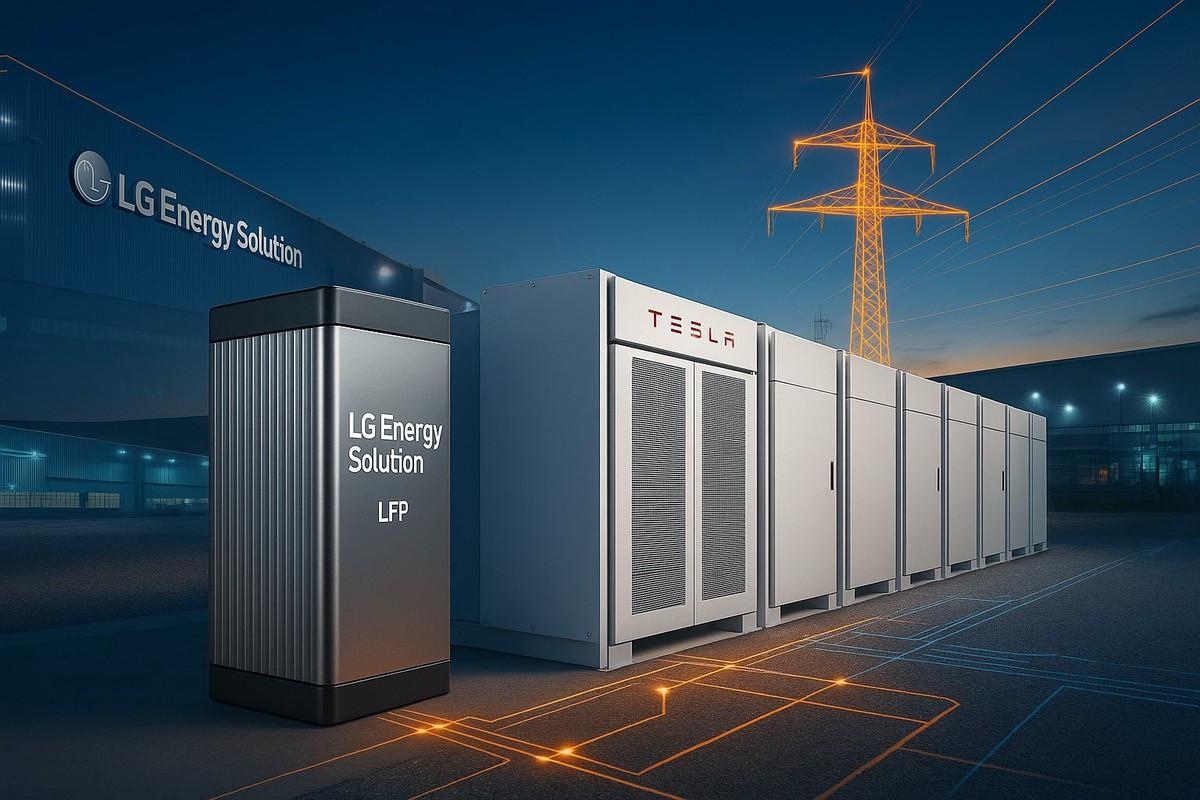
LG Energy Solution and Tesla have previously signed a $4.3 billion energy storage battery supply agreement under which LG Energy Solution will produce LFP prismatic cells in the United States for Tesla’s Megapack 3 energy storage system. This further demonstrates how LG Energy Solution is using major customer orders to drive the deployment of its North American ESS manufacturing capacity.
For LG Energy Solution, the rise of ESS is not about abandoning EV batteries, but about making better use of its existing manufacturing footprint while capturing a new wave of electricity demand. As AI data centers, grid modernization and renewable energy continue to drive demand for large-scale storage in North America, ESS is likely to play an increasingly important role in how global battery manufacturers allocate capacity, develop new chemistries and compete for customers.
LG Energy Solution’s next challenge will be turning its growing North American ESS capacity into a lasting competitive advantage, particularly as it expands into LFP and competes with established Chinese battery manufacturers. If it succeeds, ESS could become more than a temporary outlet for underutilized EV capacity—it could become one of LG Energy Solution’s most important growth engines in North America.
Featured News
All News →
Italy Opens 16GWh Storage Auction Today as Second MACSE Round Expands by 60%
Italy will open its second MACSE energy storage auction on 24 November, procuring up to 16GWh of capacity from new projects scheduled for delivery in 2029. Compared with the first auction, procurement volume has increased by 60%, while the maximum permitted bid has been reduced from €37,000/MWh/year to €27,000/MWh/year. The results will provide a new indication of competition, regional deployment and current cost levels in Italy's energy storage market.

The Real Test Comes When the Grid Goes Down: 1,000 Witness MWh-Scale Diesel–Battery Microgrid Demonstration
A live MWh-scale demonstration at Sungrow GEPS 2026 showcased how battery storage, diesel generation and grid-forming technology can work together to deliver reliable power in off-grid applications. ENERGY PLANET joined the event to explore the technical highlights and their implications for future C&I energy storage projects.

Tesla Launches 7.4MW Powercore: Connecting Batteries Directly to the 34.5kV Grid and Medium Voltage to 800V Data Centres
Tesla has launched Powercore, a solid-state medium-voltage platform integrating transformer, bidirectional inverter and circuit-breaker functions. Rated at 7.4MW, it connects 800V–2,000V DC systems with 10kV–34.5kV AC networks, targeting battery storage, solar and 800V AI data centres. The first units are scheduled to operate in 2027, although Tesla has not disclosed pricing, customers or initial projects.
UPS Moves to the Grid Edge as Vertiv Launches 3 MVA Medium-Voltage System
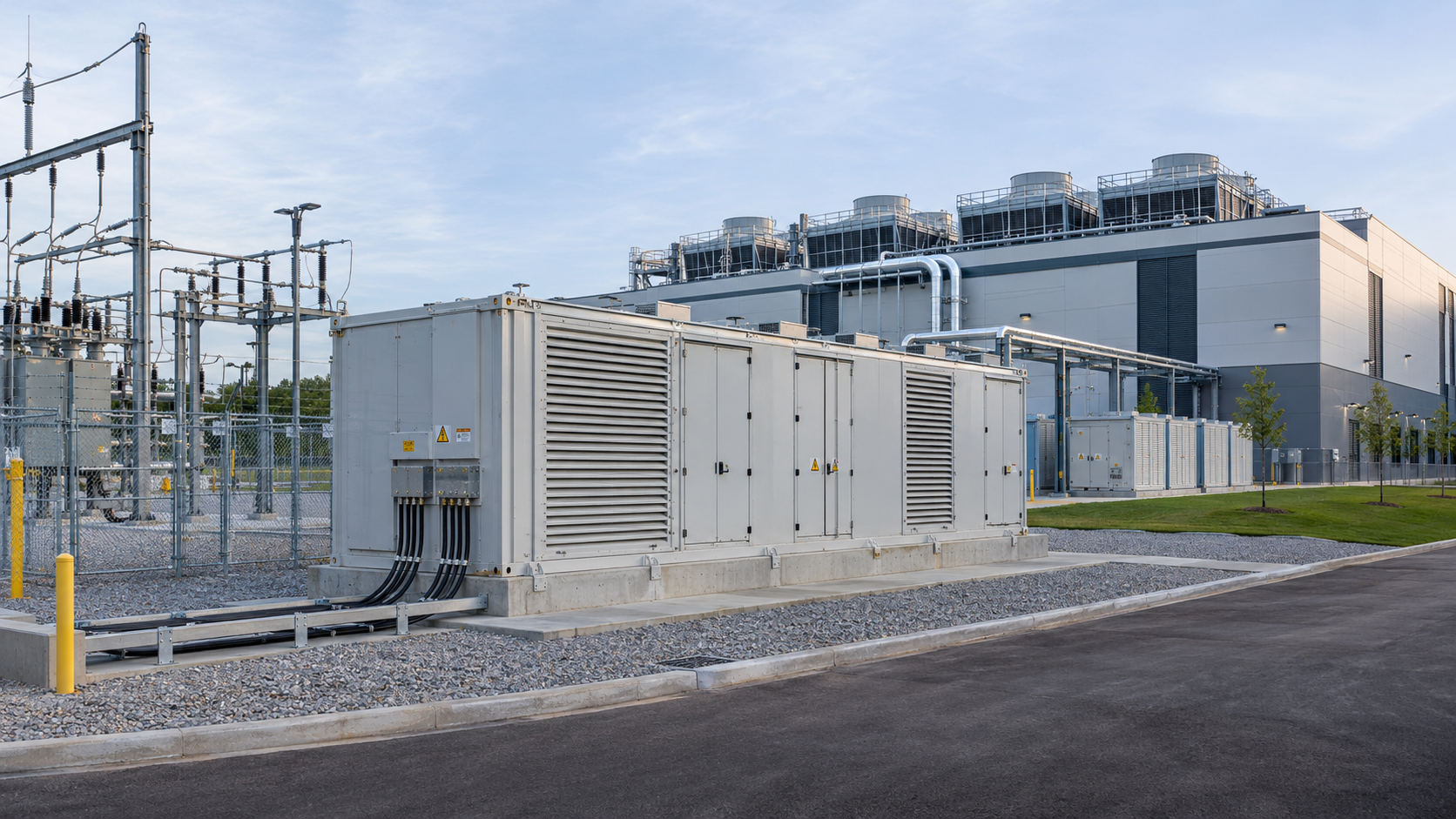
Vertiv has launched the 3 MVA PowerNexus MV UPS, moving UPS functionality from the indoor low-voltage side to the outdoor 34.5kV grid connection point. Designed for new and expanding AI data centres, the system integrates fault ride-through, AI load smoothing, power-quality control and one-to-four-hour battery backup. Following a proof-of-concept demonstration in Bologna, commercial shipments are expected to begin in mid-2027.

Envision Gen 8 Selected for 442 MWh Grid Forming BESS in Germany Taking Partnership Close to 600 MWh
Envision Energy and German storage developer ju:niz Energy are advancing the 442 MWh Smareg 13 project in Bavaria. The four-hour, grid-forming development is planned next to the operational Smareg 12 site, while public records currently show a 100 MW/401 MWh configuration and a March 2028 target date.

CATL Delivers First 8-Hour EnerQB Systems for Quinbrook's 24GWh Australian Pipeline
CATL and Quinbrook Infrastructure Partners have completed production and delivery of the first EnerQB long-duration energy storage systems. Designed for eight-hour discharge, the initial units will undergo a 12-month trial at Stanwell Power Station in Queensland, Australia. Quinbrook has identified a potential 3GW/24GWh project pipeline, although wider deployment will depend on trial results, financing, grid connections and subsequent procurement.

1.24GWh! Sungrow Supplies Europe's Largest Operational Energy Storage Project
BW ESS’s Hams Hall project in the UK has officially brought its first phase online, with 350MW/1.243GWh of capacity, making it the largest operational battery storage project in Europe. Sungrow supplied the BESS, with Energy-IO and other partners involved in project delivery. The project also secured a 10-year optimisation agreement with EDF, debt financing from international banks and equity investment from AIP, highlighting the full value chain behind Europe’s GWh-scale storage projects, from equipment supply and project delivery to commercial operations and financing.

BNEF's Q4 Energy Storage Tier 1 List Shrinks 26% to 50 Manufacturers
BloombergNEF has named 50 manufacturers to its Q4 2026 Tier 1 Energy Storage list. Based on publicly available company disclosures, Energy Planet has confirmed 19 of the manufacturers and compiled historical inclusion records for 12 of them. While a single appearance shows that a supplier met the criteria for that quarter, repeat inclusion offers a stronger indication of its ability to maintain a pipeline of qualifying projects. Tier 1 remains a measure of market adoption, however, rather than a product-quality ranking, corporate credit rating or substitute for project-level technical and financial due diligence.