500 MW/1 GWh! Europe's Largest Operational Energy Storage Project Is Now Online


On August 12, Danish infrastructure investment firm Copenhagen Infrastructure Partners (CIP) announced that the Coalburn 1 energy storage project in Scotland had officially entered commercial operation.
The project has a capacity of 500 MW/1 GWh. According to CIP, Coalburn 1 has now become the largest operational energy storage system in Europe, and is directly connected to the UK transmission network. It is important to note that the key point behind "Europe's largest" is that the project is already operational. There are currently several larger energy storage projects in Europe that are still in the planning or construction stages, but Coalburn 1 has already officially entered commercial operation. What is also worth noting is that the project was built on the site of a former coal mine. Today, the operation of a GWh-scale energy storage system at the site has become a reflection of the region’s energy transition.
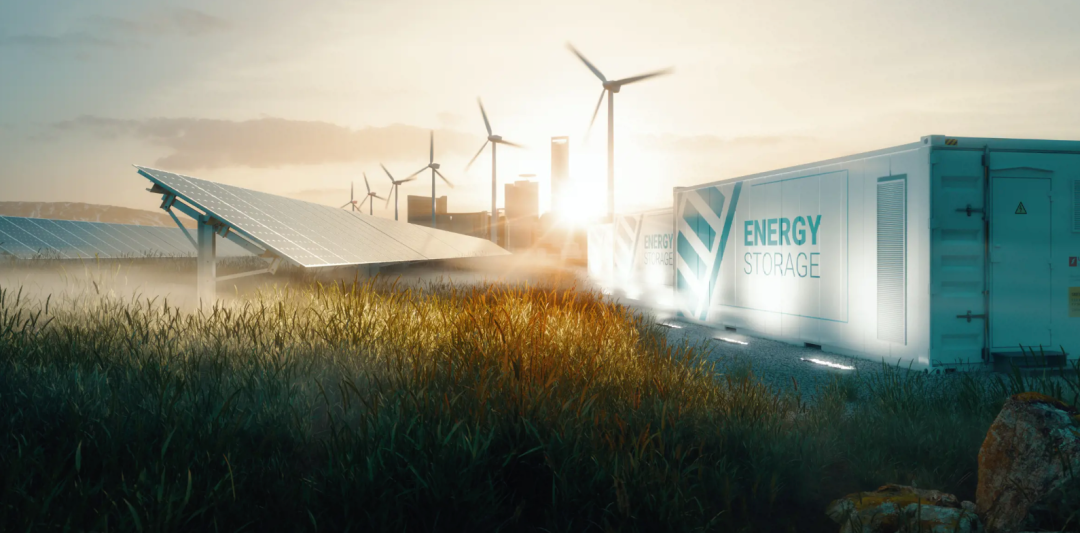
Another 2 GWh of Energy Storage Is Coming
Coalburn 1 is not CIP's only large-scale energy storage project in Scotland. According to CIP's latest disclosures, the company is currently advancing three transmission-connected energy storage projects in the region: Coalburn 1, Coalburn 2, and Devilla. In other words, the Coalburn 1 project that has now entered commercial operation is only the first 500 MW/1 GWh project. Once Coalburn 2 and Devilla are fully developed, they will add another approximately 1 GW/2 GWh of energy storage capacity.
From a single 500 MW project to a 1.5 GW storage cluster made up of three projects, CIP's presence in the UK's large-scale energy storage market is no longer simply about building "Europe's largest project," but is gradually forming a GW-scale energy storage asset portfolio. In the past, the market focused more on how large a single project could become. Now, more and more infrastructure funds and energy investors are beginning to approach energy storage through a portfolio-based strategy.
Large Institutional Capital Is Also Moving Into Energy Storage Assets
Another noteworthy change behind Coalburn 1 is that more and more large institutional investors are starting to invest directly in energy storage assets. In April 2025, AXA IM Alts announced that it had acquired a 50% stake in Coalburn 1 from CIP, officially entering the UK battery energy storage market.
AXA IM Alts: Essentially a large institutional investment platform focused on alternative asset investment and management.
This also shows that Coalburn 1 is no longer following a model in which the developer “develops and holds the project from start to finish.” Instead, large institutional investors have already been brought in to co-own the asset during the project’s construction and operation stages.
As projects continue to grow—from tens of MW to hundreds of MW and then to GW scale—the capital requirements are also rising rapidly. It is becoming increasingly difficult for developers to shoulder the entire burden themselves if the market is to continue expanding. As a result, long-term capital from infrastructure funds, insurance companies, and other institutional investors is gradually becoming an important source of funding for the large-scale development of energy storage.
CIP also has a particularly interesting view on this. In its official project description, CIP refers to large-scale battery energy storage as "a new asset class." CIP is no longer simply treating energy storage as a battery system. Instead, it wants to develop storage more like infrastructure assets such as wind farms and solar power plants—assets that can be invested in and held for the long term, and operated over many years.
But this also raises another question. If energy storage is truly going to become a long-term asset class, simply building the project is not enough. Investors also need to see how the storage system will make money over the next decade or more.
Stable Revenue Is Critical
According to information previously disclosed by AXA, Coalburn 1 already has a 10-year long-term agreement, as well as two UK Capacity Market contracts. One of the Capacity Market contracts runs for 15 years and covers 300 MW, while the other runs for 7 years and covers 75 MW.
Therefore, Coalburn 1's business model is not simply betting on daily electricity price spreads. Instead, it combines long-term contracted revenue with market-based trading revenue, providing the project with a relatively stable source of income.
This is particularly important for large-scale energy storage projects. The larger the investment, the more investors need to see a relatively clear long-term revenue outlook. If revenues depend entirely on short-term fluctuations in electricity prices, it is difficult for investors to determine how much the project could earn over the next decade or more. Mechanisms such as Capacity Market contracts and long-term agreements can help secure part of the project’s baseline revenue first. The remaining portion can then be generated through electricity market trading to pursue higher returns.
Someone Also Has to Manage When the Battery Charges and Discharges
Once the project is built, deciding when to charge and when to discharge is not something the project owner simply handles by watching electricity prices every day. According to information previously released by SSE, SSE Energy Markets has secured a 10-year optimization contract for the Coalburn 500 MW energy storage project.
This means the battery is centrally optimized based on electricity prices, grid demand, and revenue opportunities across different electricity markets. When is it more profitable to charge? When is it more profitable to discharge? Should the battery participate in ancillary services?
SSE Energy Markets: It is not an independent energy storage company, but the energy trading and asset optimization business/division under UK energy group SSE plc. It can be understood as a team specialized in trading, dispatching, and revenue optimization for energy assets.
So for large-scale energy storage, what ultimately determines whether a project can make money is no longer just the battery itself. Trading capabilities, forecasting capabilities, and dispatch capabilities are becoming increasingly important as well.
Meanwhile, RES is responsible for the long-term asset management of the Coalburn project, including operations management, performance monitoring, and maintaining the long-term value of the asset.
RES: A global renewable energy company originally founded in the UK. It does not focus solely on energy storage, but covers the development, construction, operations, and asset management of renewable energy projects including wind, solar PV, and energy storage.
Looking at the project this way, the division of responsibilities behind a large-scale energy storage project is becoming increasingly clear. CIP is responsible for development and investment, bringing in long-term capital such as AXA to co-own the asset. SSE is responsible for entering electricity markets and optimizing trading, while RES is responsible for long-term asset management. Different companies each take responsibility for the part they are best at.
Final Thoughts
So, what really deserves attention to Coalburn 1 may not simply be the title of "Europe's largest operational energy storage system." Once the 500 MW/1 GWh battery is actually running, the question is no longer simply "Can it be built?" Instead, it becomes "How will it be operated, how will it participate in the market, and how will it continue making money over the next decade or more?"
Looking at Coalburn 1, the answer is becoming increasingly clear. Someone develops the project, long-term capital comes in to hold the asset, professional teams are responsible for trading and dispatch, and another team handles ongoing operations. After all, the first half of the energy storage game is about building the battery. The second half is about making the battery actually make money.
Featured News
All News →
Italy Opens 16GWh Storage Auction Today as Second MACSE Round Expands by 60%
Italy will open its second MACSE energy storage auction on 24 November, procuring up to 16GWh of capacity from new projects scheduled for delivery in 2029. Compared with the first auction, procurement volume has increased by 60%, while the maximum permitted bid has been reduced from €37,000/MWh/year to €27,000/MWh/year. The results will provide a new indication of competition, regional deployment and current cost levels in Italy's energy storage market.

The Real Test Comes When the Grid Goes Down: 1,000 Witness MWh-Scale Diesel–Battery Microgrid Demonstration
A live MWh-scale demonstration at Sungrow GEPS 2026 showcased how battery storage, diesel generation and grid-forming technology can work together to deliver reliable power in off-grid applications. ENERGY PLANET joined the event to explore the technical highlights and their implications for future C&I energy storage projects.

Tesla Launches 7.4MW Powercore: Connecting Batteries Directly to the 34.5kV Grid and Medium Voltage to 800V Data Centres
Tesla has launched Powercore, a solid-state medium-voltage platform integrating transformer, bidirectional inverter and circuit-breaker functions. Rated at 7.4MW, it connects 800V–2,000V DC systems with 10kV–34.5kV AC networks, targeting battery storage, solar and 800V AI data centres. The first units are scheduled to operate in 2027, although Tesla has not disclosed pricing, customers or initial projects.
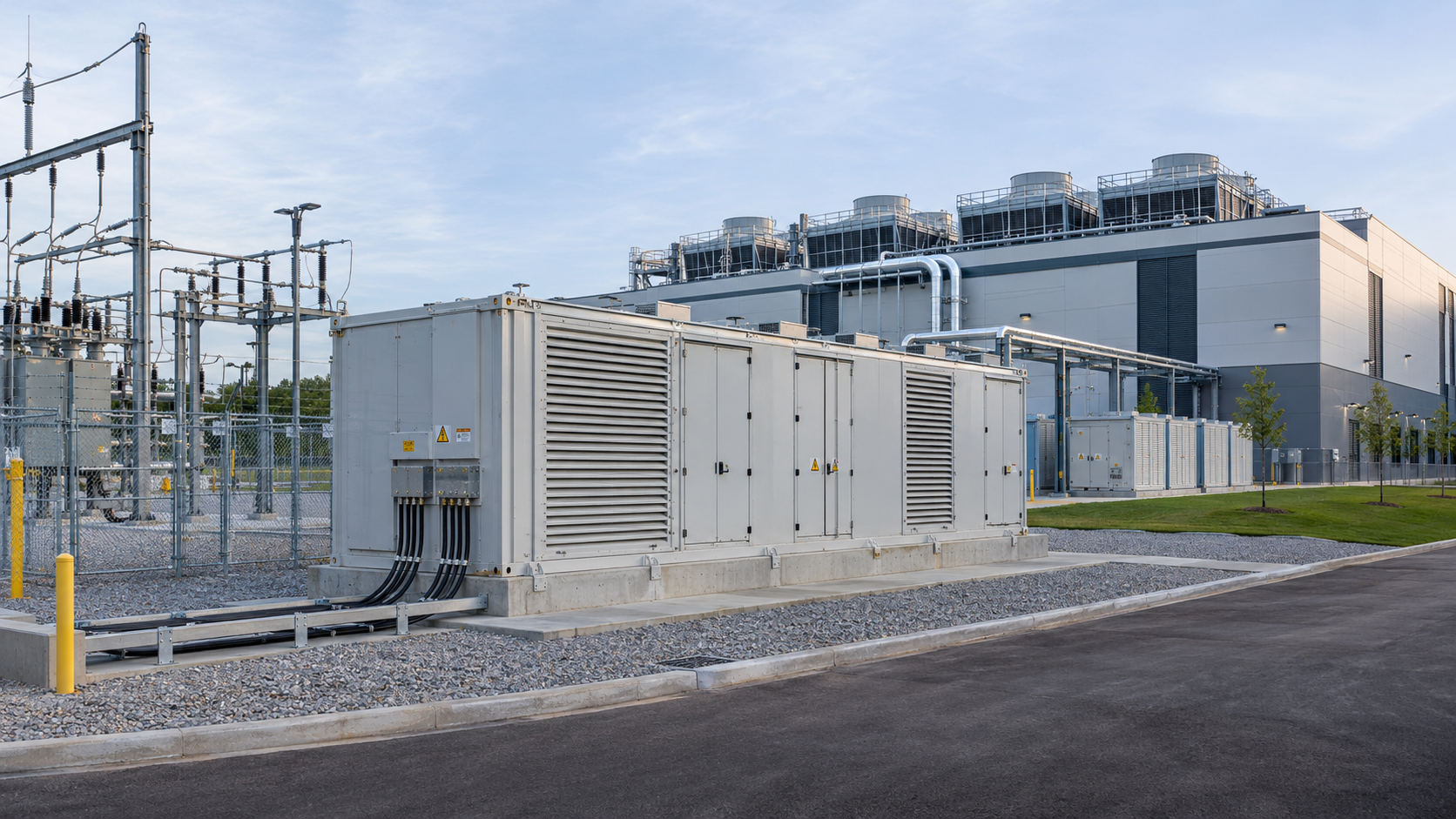
UPS Moves to the Grid Edge as Vertiv Launches 3 MVA Medium-Voltage System
Vertiv has launched the 3 MVA PowerNexus MV UPS, moving UPS functionality from the indoor low-voltage side to the outdoor 34.5kV grid connection point. Designed for new and expanding AI data centres, the system integrates fault ride-through, AI load smoothing, power-quality control and one-to-four-hour battery backup. Following a proof-of-concept demonstration in Bologna, commercial shipments are expected to begin in mid-2027.

Envision Gen 8 Selected for 442 MWh Grid Forming BESS in Germany Taking Partnership Close to 600 MWh
Envision Energy and German storage developer ju:niz Energy are advancing the 442 MWh Smareg 13 project in Bavaria. The four-hour, grid-forming development is planned next to the operational Smareg 12 site, while public records currently show a 100 MW/401 MWh configuration and a March 2028 target date.

CATL Delivers First 8-Hour EnerQB Systems for Quinbrook's 24GWh Australian Pipeline
CATL and Quinbrook Infrastructure Partners have completed production and delivery of the first EnerQB long-duration energy storage systems. Designed for eight-hour discharge, the initial units will undergo a 12-month trial at Stanwell Power Station in Queensland, Australia. Quinbrook has identified a potential 3GW/24GWh project pipeline, although wider deployment will depend on trial results, financing, grid connections and subsequent procurement.

1.24GWh! Sungrow Supplies Europe's Largest Operational Energy Storage Project
BW ESS’s Hams Hall project in the UK has officially brought its first phase online, with 350MW/1.243GWh of capacity, making it the largest operational battery storage project in Europe. Sungrow supplied the BESS, with Energy-IO and other partners involved in project delivery. The project also secured a 10-year optimisation agreement with EDF, debt financing from international banks and equity investment from AIP, highlighting the full value chain behind Europe’s GWh-scale storage projects, from equipment supply and project delivery to commercial operations and financing.

BNEF's Q4 Energy Storage Tier 1 List Shrinks 26% to 50 Manufacturers
BloombergNEF has named 50 manufacturers to its Q4 2026 Tier 1 Energy Storage list. Based on publicly available company disclosures, Energy Planet has confirmed 19 of the manufacturers and compiled historical inclusion records for 12 of them. While a single appearance shows that a supplier met the criteria for that quarter, repeat inclusion offers a stronger indication of its ability to maintain a pipeline of qualifying projects. Tier 1 remains a measure of market adoption, however, rather than a product-quality ranking, corporate credit rating or substitute for project-level technical and financial due diligence.