A Staggering Valuation? What Justifies This Residential Storage Startup's $13 Billion Price Tag


On August 3, U.S. residential energy storage company Base Power announced the completion of a new $1 billion funding round, bringing its valuation to $13 billion. The round was co-led by Ribbit Capital, Addition, Valor Equity Partners, and J.P. Morgan's Strategic Investments group. On the same day, Base Power also unveiled its next-generation, American-made home battery product, the Base Core, and announced that the product has already entered production at its Austin, Texas factory.
A single $1 billion funding round, a new domestically manufactured product, and a rapidly expanding residential storage network—what Base Power is demonstrating to the market is no longer just a new home battery product, but an entire electricity service model built around residential energy storage.
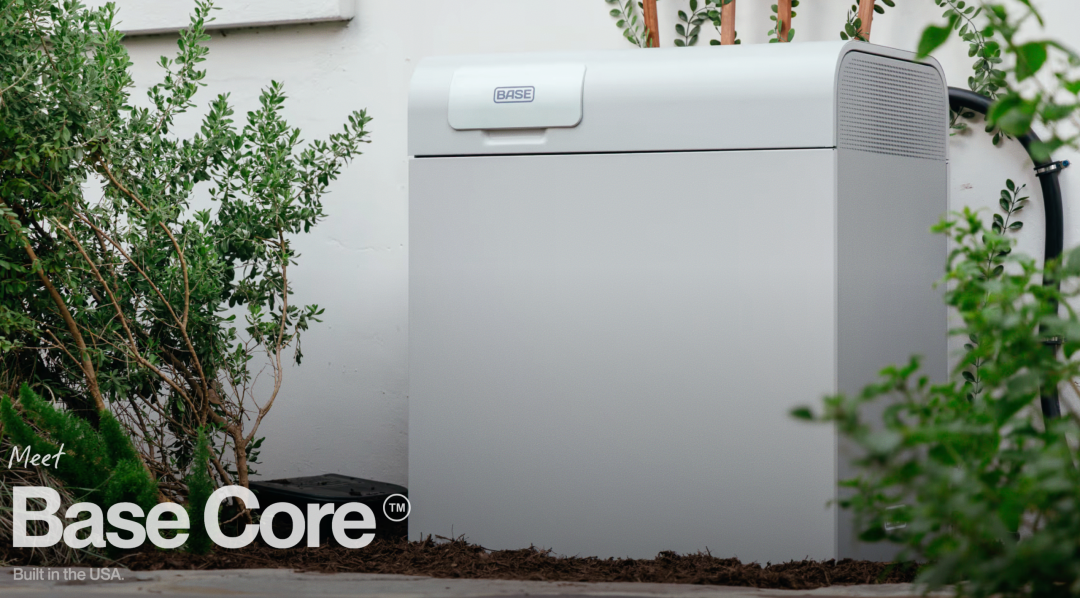
A 39.2 kWh Home Battery, Already in Production in the U.S.
Let's start with the newly launched product. The Base Core has a total energy storage capacity of 39.2 kWh per system. According to Base Power's official data, under typical electricity usage conditions for an average American household, this system can provide approximately 12–18 hours of backup power; if users actively reduce consumption during an outage, backup duration can extend up to 36 hours.
The system can automatically switch to battery power within approximately 50 milliseconds of detecting a grid outage, operates within a temperature range of –30°C to 50°C, and is primarily designed for whole-home backup, extreme weather events, and prolonged power outages. Compared to Base Power's previously deployed residential storage systems, the new product places greater emphasis on American-made manufacturing and rapid installation capability. According to information the company disclosed to Reuters, the Base Core has already entered production at the Austin factory, with current monthly output reaching several thousand units, and on-site installation time can be kept within one hour. The new system has also been strengthened for extreme weather and extended outages.
That said, the 39.2 kWh new product is only part of this announcement. More noteworthy than the launch of a new home battery is the fact that capital has once again poured $1 billion into Base Power.
Valuation Surges from ~$4 Billion to $13 Billion in Under 10 Months
The speed at which Base Power's valuation has risen is uncommon in the energy storage industry.
- In October 2025, Base Power completed a $1 billion funding round at a post-money valuation of approximately $4 billion.
- By August 2026, the company secured another $1 billion in funding, with its valuation climbing to $13 billion.
In other words, in less than 10 months, Base Power's valuation has surged from roughly $4 billion to $13 billion—more than three times its previous post-money valuation. What capital is betting on is clearly more than just a home battery.
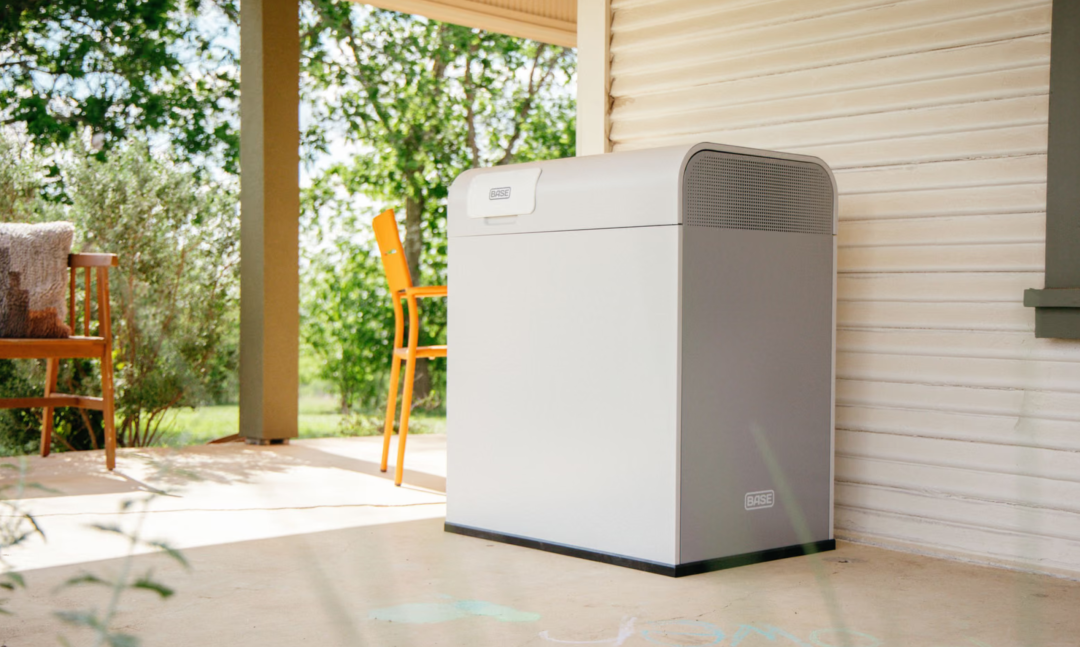
What Capital Sees Is More Than a Simple Storage Device
On the product level alone, Base Power is a home battery seller, but its business model is not entirely the same as that of traditional residential storage equipment vendors. Traditional home storage companies primarily earn one-time revenue by selling equipment. Customers purchase batteries, pay installation fees, and once the equipment is delivered, the battery typically belongs to the household.
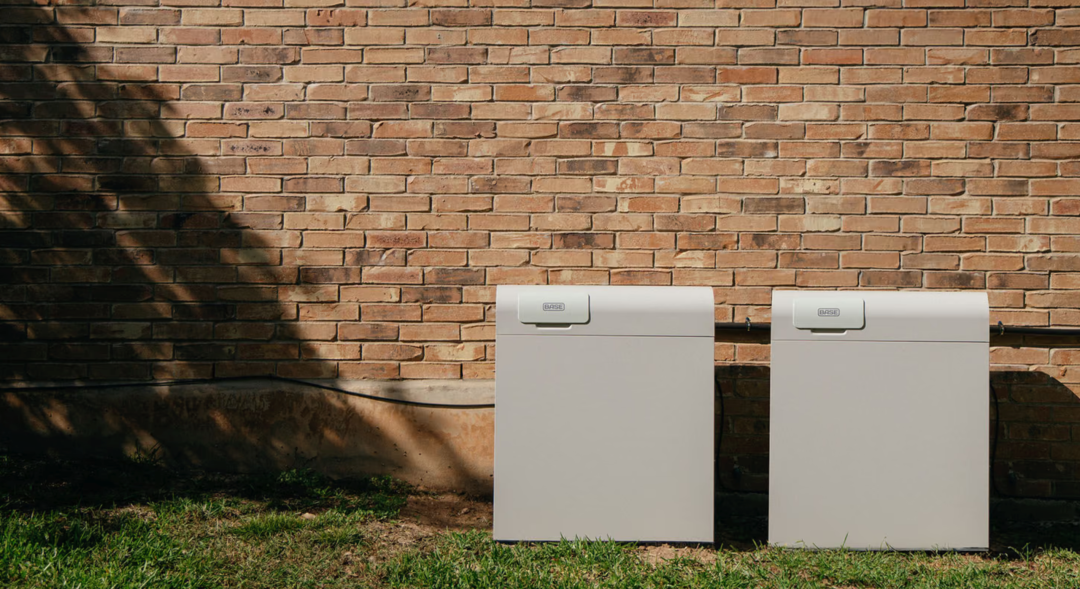
Base Power, by contrast, adopts a more capital-intensive operating model. After a household has a storage system installed, the battery remains owned and operated by Base Power. The company handles equipment maintenance, repairs, and necessary replacements, while managing battery charge and discharge schedules through software. When the grid is operating normally, batteries can charge when electricity supply is abundant and prices are low, and discharge during periods of high grid load, helping to balance supply and demand.
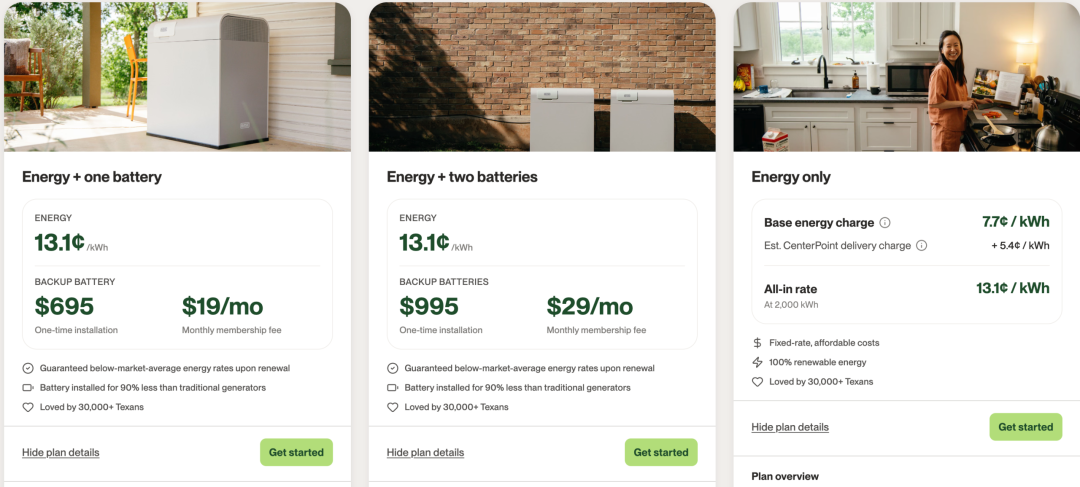
Taking the CenterPoint service area in Texas as an example, customers pay a one-time installation fee of $695 and a monthly membership fee of $19, which provides them with a 39.2 kWh home battery and long-term maintenance service. Customers still pay Base Power for their daily electricity usage, while Base Power retains ownership and dispatch control of the battery assets. During normal grid operations, Base Power can leverage these distributed batteries to participate in grid regulation and energy trading, thereby forming a closed business loop: "households pay for affordable backup power, while Base Power monetizes the long-term operation of battery assets."
When a power outage occurs, the home battery disconnects from the public grid and switches to supplying backup power to the household. When thousands or even tens of thousands of home batteries are connected together, Base Power can aggregate these distributed devices into a virtual power plant (VPP), participating in grid regulation and earning corresponding revenue. In other words, Base Power does not simply sell home batteries to households and end the relationship—instead, it installs batteries in customers' homes and retains long-term operational and dispatch rights over these assets.
For every new household added, Base Power gains not just a customer, but also: a storage node already connected to the distribution grid; a battery asset that can be dispatched over the long term; an electricity service subscriber; and a gateway to future participation in capacity markets, grid regulation, and energy trading. This is also the biggest difference between Base Power and an ordinary residential storage installer.
Over 500 MWh of Residential Storage Deployed; Utility Partnerships Exceed 200 MW
Sustained large-scale funding would not be possible without the rapidly growing deployment scale that Base Power is achieving. To date, Base Power's residential storage network has cumulatively deployed or is operating over 500 MWh of home storage capacity. The company also collaborates with utilities including El Paso Electric, Austin Energy, and CoServ, with related partnership projects collectively representing more than 200 MW of dispatchable capacity.
According to Base Power's official website, over 20,000 households currently use its energy services. In regions with open retail electricity markets, Base Power can simultaneously offer households both electricity plans and backup batteries; in areas served by vertically integrated utilities, the company partners with local power companies to deploy residential storage as a distributed grid resource.
This model is generating two primary revenue streams. One comes from household customers, including installation fees, electricity sales, and membership services. The other comes from the grid and utility companies, encompassing battery dispatch, capacity services, peak shaving, and grid balancing revenue. The same battery can provide households with outage backup while simultaneously participating in grid services during normal operations. Base Power aims to increase the utilization rate of its battery assets to offset the upfront costs of manufacturing, installation, and asset ownership.
$1 Billion in Funding to Fuel Continued Capital-Intensive Expansion
Of course, this model also means that Base Power needs to continuously invest substantial capital. The company must not only design and manufacture batteries but also bear the costs of customer acquisition, site surveys, installation, equipment ownership, software-based dispatch, repairs, and long-term operations. These capital expenditures often occur before batteries are installed and generating revenue, while the associated returns may take years to recoup over the service period.
Therefore, the faster Base Power wants to scale, the more upfront capital it needs to deploy. The fact that this $1 billion funding round was announced simultaneously with the Base Core's production launch also indicates that the new capital already has fairly clear allocation priorities: expanding Austin factory capacity, improving installation efficiency, and replicating the residential storage business across more U.S. markets.
From this perspective, Base Power's $13 billion valuation is not because capital views it as an ordinary battery manufacturer. What investors are truly betting on is whether Base Power can build, ahead of competitors, a distributed energy network covering a large number of households. When the batteries of tens of thousands or even hundreds of thousands of homes are connected and centrally dispatched, this network could gradually become a new form of infrastructure within the U.S. power system.
Final Thoughts
Base Power does not position itself as a home battery manufacturer, but rather as an electricity company providing reliable, affordable energy to American households. This also explains why Base Power is not only building battery products but also developing home energy services and grid partnerships.
The Base Core is the hardware foundation of this business model, but what will truly determine Base Power's future value may not be how much energy a single battery can store—rather, it is how many residential storage nodes the company ultimately controls. The more storage devices connected to the platform, the richer the accumulated data on customer load profiles, battery performance, and electricity market dynamics becomes, which theoretically helps improve forecasting and dispatch capabilities.
That said, a capital-intensive model also entails greater financial pressure and execution risk. Whether the factory can sustainably increase output, whether installation costs can decline, and whether battery assets can generate stable returns will all determine whether the company's high valuation can truly be justified.
What is certain is that Base Power is attempting to redefine the business model of residential storage companies. In the future, home storage companies may not need to rely solely on one-time equipment sales for revenue. By connecting home batteries, providing energy services, and participating in grid regulation, companies can also transition from equipment manufacturers to distributed energy network operators.
Featured News
All News →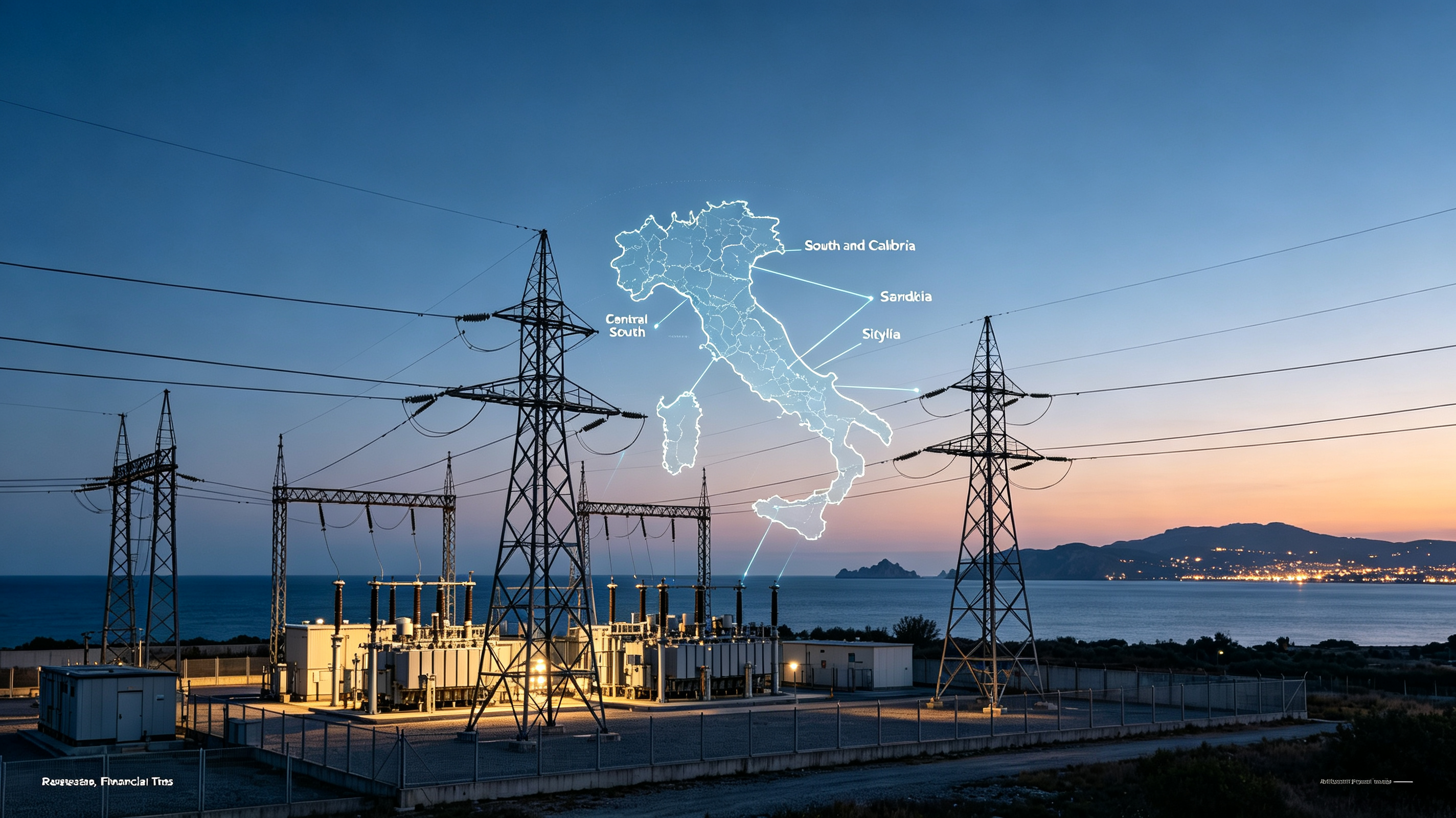
Italy Opens 16GWh Storage Auction Today as Second MACSE Round Expands by 60%
Italy will open its second MACSE energy storage auction on 24 November, procuring up to 16GWh of capacity from new projects scheduled for delivery in 2029. Compared with the first auction, procurement volume has increased by 60%, while the maximum permitted bid has been reduced from €37,000/MWh/year to €27,000/MWh/year. The results will provide a new indication of competition, regional deployment and current cost levels in Italy's energy storage market.

The Real Test Comes When the Grid Goes Down: 1,000 Witness MWh-Scale Diesel–Battery Microgrid Demonstration
A live MWh-scale demonstration at Sungrow GEPS 2026 showcased how battery storage, diesel generation and grid-forming technology can work together to deliver reliable power in off-grid applications. ENERGY PLANET joined the event to explore the technical highlights and their implications for future C&I energy storage projects.

Tesla Launches 7.4MW Powercore: Connecting Batteries Directly to the 34.5kV Grid and Medium Voltage to 800V Data Centres
Tesla has launched Powercore, a solid-state medium-voltage platform integrating transformer, bidirectional inverter and circuit-breaker functions. Rated at 7.4MW, it connects 800V–2,000V DC systems with 10kV–34.5kV AC networks, targeting battery storage, solar and 800V AI data centres. The first units are scheduled to operate in 2027, although Tesla has not disclosed pricing, customers or initial projects.
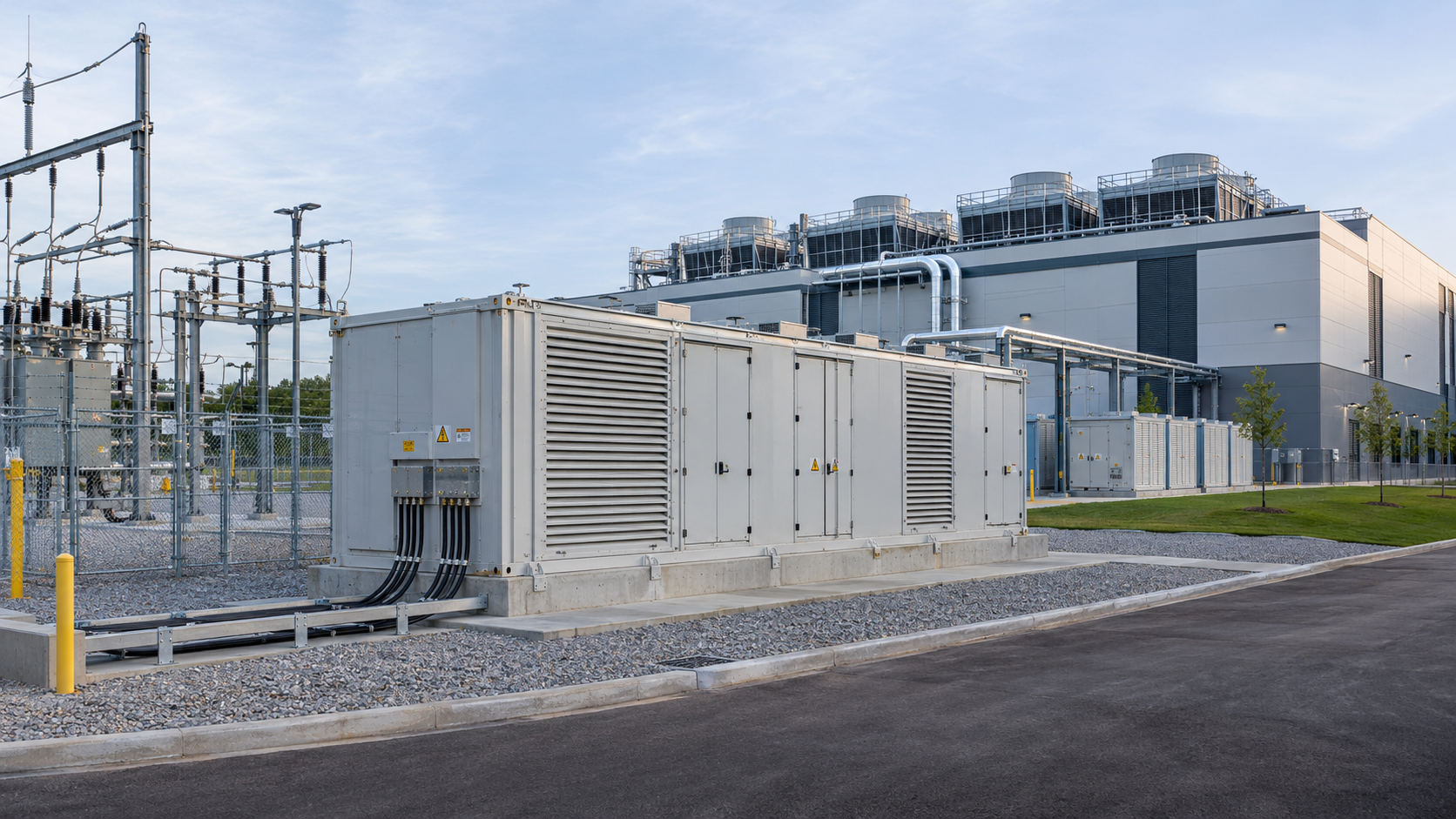
UPS Moves to the Grid Edge as Vertiv Launches 3 MVA Medium-Voltage System
Vertiv has launched the 3 MVA PowerNexus MV UPS, moving UPS functionality from the indoor low-voltage side to the outdoor 34.5kV grid connection point. Designed for new and expanding AI data centres, the system integrates fault ride-through, AI load smoothing, power-quality control and one-to-four-hour battery backup. Following a proof-of-concept demonstration in Bologna, commercial shipments are expected to begin in mid-2027.

Envision Gen 8 Selected for 442 MWh Grid Forming BESS in Germany Taking Partnership Close to 600 MWh
Envision Energy and German storage developer ju:niz Energy are advancing the 442 MWh Smareg 13 project in Bavaria. The four-hour, grid-forming development is planned next to the operational Smareg 12 site, while public records currently show a 100 MW/401 MWh configuration and a March 2028 target date.

CATL Delivers First 8-Hour EnerQB Systems for Quinbrook's 24GWh Australian Pipeline
CATL and Quinbrook Infrastructure Partners have completed production and delivery of the first EnerQB long-duration energy storage systems. Designed for eight-hour discharge, the initial units will undergo a 12-month trial at Stanwell Power Station in Queensland, Australia. Quinbrook has identified a potential 3GW/24GWh project pipeline, although wider deployment will depend on trial results, financing, grid connections and subsequent procurement.

1.24GWh! Sungrow Supplies Europe's Largest Operational Energy Storage Project
BW ESS’s Hams Hall project in the UK has officially brought its first phase online, with 350MW/1.243GWh of capacity, making it the largest operational battery storage project in Europe. Sungrow supplied the BESS, with Energy-IO and other partners involved in project delivery. The project also secured a 10-year optimisation agreement with EDF, debt financing from international banks and equity investment from AIP, highlighting the full value chain behind Europe’s GWh-scale storage projects, from equipment supply and project delivery to commercial operations and financing.

BNEF's Q4 Energy Storage Tier 1 List Shrinks 26% to 50 Manufacturers
BloombergNEF has named 50 manufacturers to its Q4 2026 Tier 1 Energy Storage list. Based on publicly available company disclosures, Energy Planet has confirmed 19 of the manufacturers and compiled historical inclusion records for 12 of them. While a single appearance shows that a supplier met the criteria for that quarter, repeat inclusion offers a stronger indication of its ability to maintain a pipeline of qualifying projects. Tier 1 remains a measure of market adoption, however, rather than a product-quality ranking, corporate credit rating or substitute for project-level technical and financial due diligence.