€59 Million! Slovenia Steps Up Energy Storage Support


The European energy storage market has welcomed another new national-level support scheme.
Recently, the European Commission formally approved a €59 million state aid scheme in Slovenia to support the construction of energy storage systems.
According to the plan submitted by Slovenia to the European Commission, the funding is intended to drive the addition of at least 370MWh of local energy storage capacity, improve power system flexibility, and support the integration of more renewable energy into the grid.
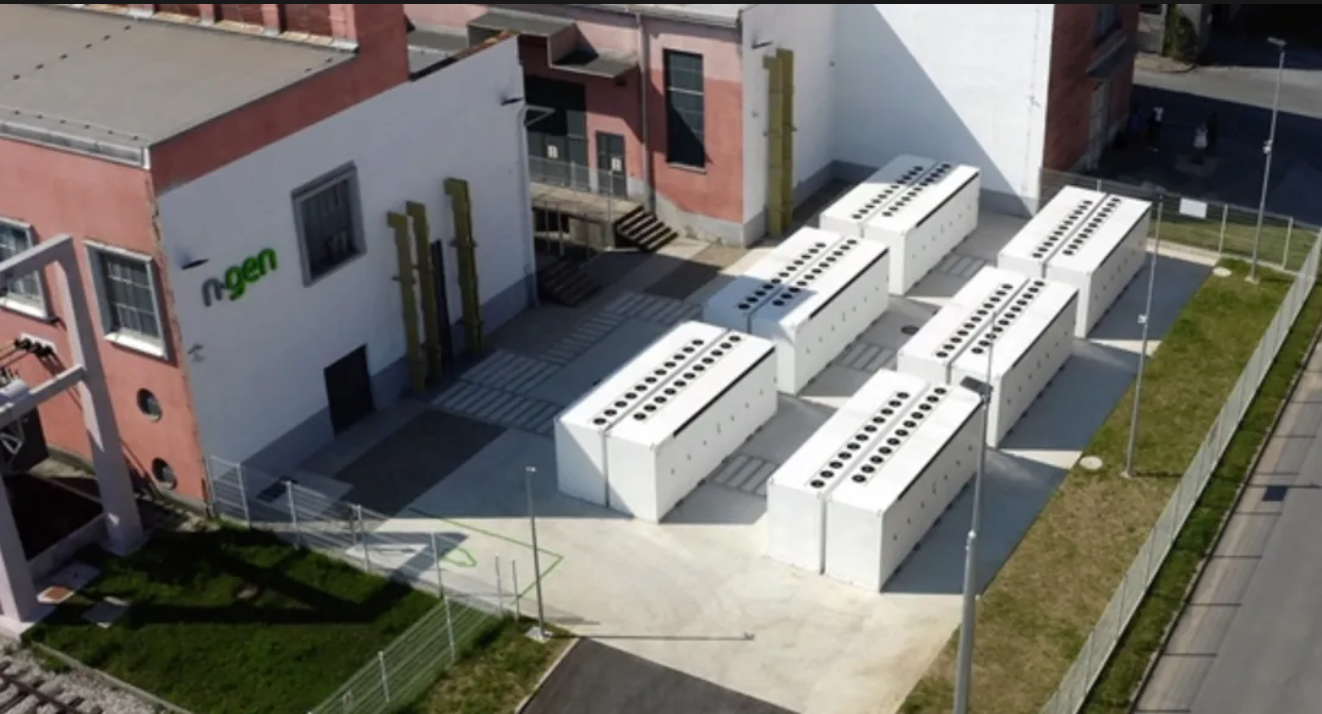
€59 Million to Support at Least 370MWh of Energy Storage
According to information released by the European Commission, the €59 million in funding will be provided by the EU Just Transition Fund and the Modernisation Fund.
It should be noted that the 370 MWh does not refer to a single energy storage project that has already been confirmed for construction. Rather, it is the minimum additional storage capacity that the overall state aid scheme aims to promote.
At present, the European Commission has not disclosed information such as the number of specific projects, construction locations, the power capacity of individual projects, storage duration, or equipment suppliers.
Therefore, more precisely, what has been approved is an energy storage support mechanism. Which projects will ultimately receive funding and in what form they will be implemented will depend on Slovenia’s subsequent release of application, selection, and implementation rules.
Small Slovenia Has Already Begun Deploying Energy Storage
Slovenia is located in Central Europe, with a population of approximately 2.13 million and a land area of around 20,300 square kilometres. It is a relatively small electricity market within the European Union.
However, the country did not start late in terms of power system digitalisation and energy storage applications.
Slovenia’s electricity mix is mainly composed of nuclear power, hydropower, and thermal power. According to data released by the local transmission system operator ELES, in 2024, the Krško Nuclear Power Plant and hydropower plants together contributed more than three-quarters of Slovenia’s electricity. As installed capacity of solar power and other renewable energy sources increases, demand for peak regulation, frequency regulation, and short-term supply-demand balancing in the power system is also continuing to rise.
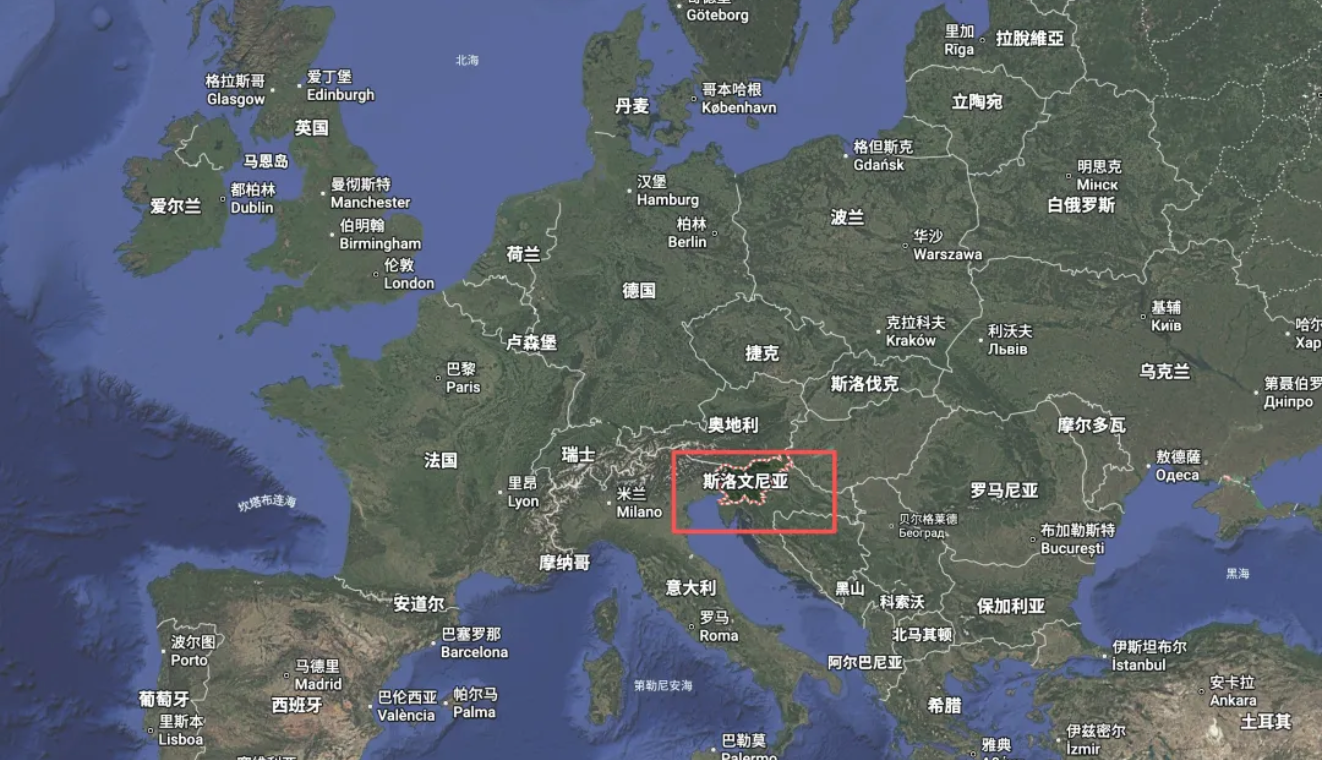
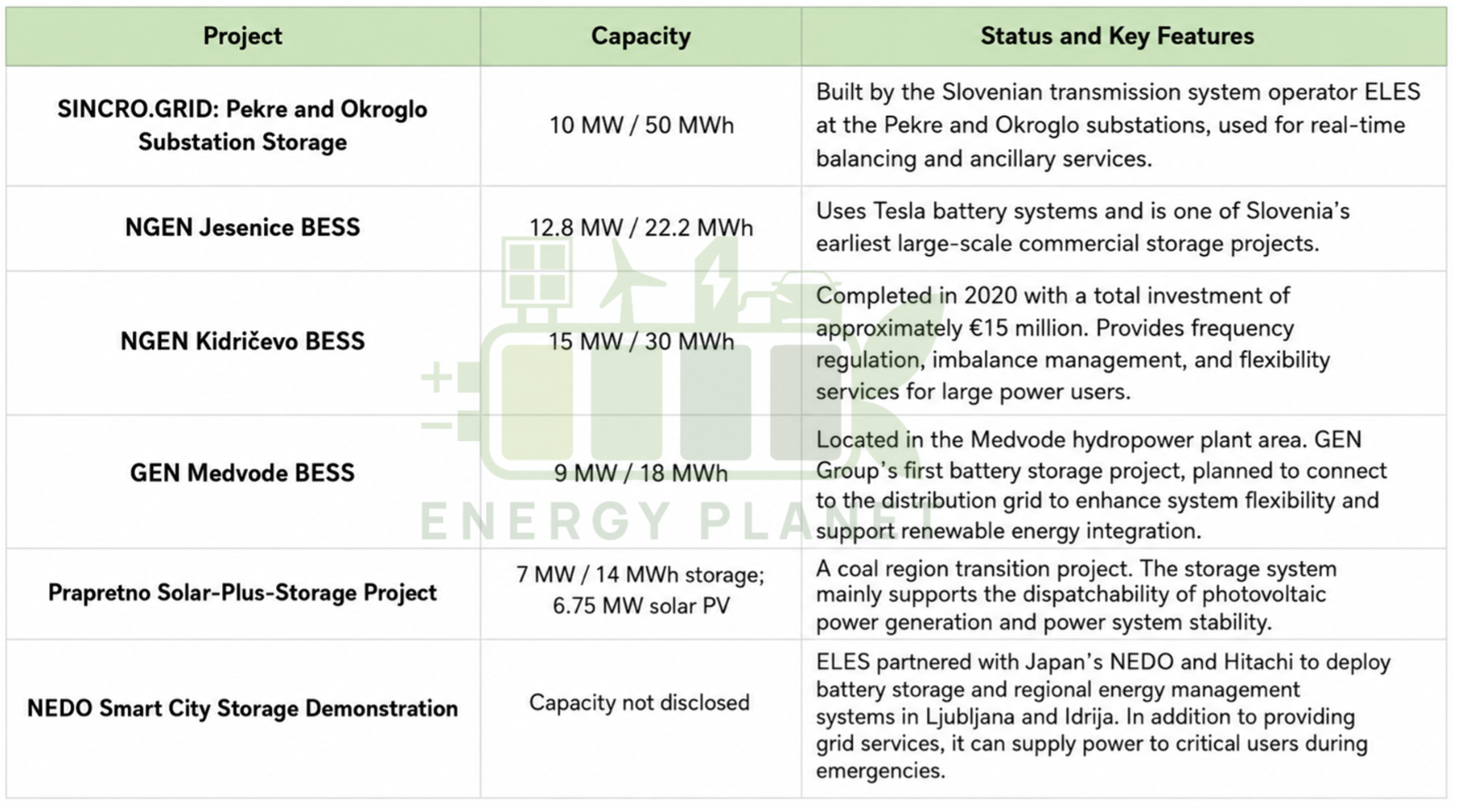
Before the approval of this €59 million state aid scheme, Slovenia had already implemented several energy storage projects.
Therefore, the €59 million aid scheme approved by the European Commission is not Slovenia’s first deployment of energy storage. Rather, it is intended to promote the further scaling-up of local battery energy storage on the basis of existing demonstration projects and market experience. The following are some examples of energy storage projects in Slovenia.
For a country such as Slovenia, whose electricity market is relatively limited in size, the target of adding at least 370 MWh of energy storage capacity is by no means small. As the funding application and project selection mechanisms are gradually implemented, Slovenia is also expected to become a new growth market worth watching in the Central and Eastern European energy storage sector.
Featured News
All News →
Italy Opens 16GWh Storage Auction Today as Second MACSE Round Expands by 60%
Italy will open its second MACSE energy storage auction on 24 November, procuring up to 16GWh of capacity from new projects scheduled for delivery in 2029. Compared with the first auction, procurement volume has increased by 60%, while the maximum permitted bid has been reduced from €37,000/MWh/year to €27,000/MWh/year. The results will provide a new indication of competition, regional deployment and current cost levels in Italy's energy storage market.

The Real Test Comes When the Grid Goes Down: 1,000 Witness MWh-Scale Diesel–Battery Microgrid Demonstration
A live MWh-scale demonstration at Sungrow GEPS 2026 showcased how battery storage, diesel generation and grid-forming technology can work together to deliver reliable power in off-grid applications. ENERGY PLANET joined the event to explore the technical highlights and their implications for future C&I energy storage projects.

Tesla Launches 7.4MW Powercore: Connecting Batteries Directly to the 34.5kV Grid and Medium Voltage to 800V Data Centres
Tesla has launched Powercore, a solid-state medium-voltage platform integrating transformer, bidirectional inverter and circuit-breaker functions. Rated at 7.4MW, it connects 800V–2,000V DC systems with 10kV–34.5kV AC networks, targeting battery storage, solar and 800V AI data centres. The first units are scheduled to operate in 2027, although Tesla has not disclosed pricing, customers or initial projects.
UPS Moves to the Grid Edge as Vertiv Launches 3 MVA Medium-Voltage System
Vertiv has launched the 3 MVA PowerNexus MV UPS, moving UPS functionality from the indoor low-voltage side to the outdoor 34.5kV grid connection point. Designed for new and expanding AI data centres, the system integrates fault ride-through, AI load smoothing, power-quality control and one-to-four-hour battery backup. Following a proof-of-concept demonstration in Bologna, commercial shipments are expected to begin in mid-2027.

Envision Gen 8 Selected for 442 MWh Grid Forming BESS in Germany Taking Partnership Close to 600 MWh
Envision Energy and German storage developer ju:niz Energy are advancing the 442 MWh Smareg 13 project in Bavaria. The four-hour, grid-forming development is planned next to the operational Smareg 12 site, while public records currently show a 100 MW/401 MWh configuration and a March 2028 target date.

CATL Delivers First 8-Hour EnerQB Systems for Quinbrook's 24GWh Australian Pipeline
CATL and Quinbrook Infrastructure Partners have completed production and delivery of the first EnerQB long-duration energy storage systems. Designed for eight-hour discharge, the initial units will undergo a 12-month trial at Stanwell Power Station in Queensland, Australia. Quinbrook has identified a potential 3GW/24GWh project pipeline, although wider deployment will depend on trial results, financing, grid connections and subsequent procurement.

1.24GWh! Sungrow Supplies Europe's Largest Operational Energy Storage Project
BW ESS’s Hams Hall project in the UK has officially brought its first phase online, with 350MW/1.243GWh of capacity, making it the largest operational battery storage project in Europe. Sungrow supplied the BESS, with Energy-IO and other partners involved in project delivery. The project also secured a 10-year optimisation agreement with EDF, debt financing from international banks and equity investment from AIP, highlighting the full value chain behind Europe’s GWh-scale storage projects, from equipment supply and project delivery to commercial operations and financing.

BNEF's Q4 Energy Storage Tier 1 List Shrinks 26% to 50 Manufacturers
BloombergNEF has named 50 manufacturers to its Q4 2026 Tier 1 Energy Storage list. Based on publicly available company disclosures, Energy Planet has confirmed 19 of the manufacturers and compiled historical inclusion records for 12 of them. While a single appearance shows that a supplier met the criteria for that quarter, repeat inclusion offers a stronger indication of its ability to maintain a pipeline of qualifying projects. Tier 1 remains a measure of market adoption, however, rather than a product-quality ranking, corporate credit rating or substitute for project-level technical and financial due diligence.