US FCC Policy Update: Foreign-Produced Power Inverters Added to Covered List


On July 28 local time, the Public Safety and Homeland Security Bureau (PSHSB) of the U.S. Federal Communications Commission (FCC) issued an announcement updating the FCC “Covered List” and adding foreign-produced power inverters to the list.
According to the FCC announcement, this adjustment was based on a national security determination submitted by U.S. executive branch interagency agencies. The FCC believes that certain foreign-produced power inverters may pose supply chain security and cybersecurity risks, and therefore decided to add relevant equipment to the Covered List.
Foreign-Produced Power Inverters Added to the Covered List
The FCC has long maintained a Covered List, which includes equipment and services considered by the United States to pose unacceptable risks to national security or the safety of individuals.
Following this update, foreign-produced power inverters have been added as a new equipment category under the Covered List. The updated list published by the FCC in Appendix A states: “Foreign-produced power inverters” Date added: July 28, 2026
FCC Highlights Supply Chain and Cybersecurity Risks Associated with Inverters
In the national security determination, the U.S. side stated: “The lack of a secure U.S. inverter supply chain, as well as the continued influx of foreign-produced or foreign-controlled inverters and inverter components, poses a threat to the U.S. economy and national security.”
At the same time, the FCC pointed out that as inverter resources continue to increase across the U.S. power grid, the remote connectivity capabilities of inverters may create additional vulnerabilities.
Potential risks identified by the FCC include:
- Foreign companies remotely shutting down inverters;
- Collecting and exporting data;
- Providing remote access;
- Exploiting systems through cyberattacks.
Inclusion in the Covered List Will Affect FCC Equipment Authorization
The core impact of this policy change is not a traditional change to FCC technical certification requirements. According to existing FCC rules, once equipment is added to the Covered List, relevant “covered equipment” will be prohibited from receiving FCC equipment authorization.
At the same time, all products applying for FCC equipment authorization must demonstrate that they are not equipment prohibited from authorization due to the Covered List. This means that foreign-produced inverters falling within the scope of this rule may face new FCC authorization restrictions when entering the U.S. market in the future.
The Criteria Are Based on Production Location, Not Company Nationality
It is worth noting that the FCC did not classify products based on company names or corporate nationality. The announcement clearly states that the newly added equipment category is identified based on production location, rather than the identity of the corporate entity.
Meanwhile, in the national security determination, the U.S. side stated that the scope covers foreign-produced power inverters regardless of the nationality of the manufacturer.
Companies Can Apply for Conditional Approval
The FCC has also established an exception mechanism. According to the announcement, foreign companies producing relevant equipment may apply for evaluation. If the products are determined not to pose unacceptable security risks, they may receive:
Conditional Approval. For power inverters, such evaluations may be conducted by the U.S. Department of War or the Department of Homeland Security.
FCC Expands Oversight of Smart Energy Equipment
This FCC adjustment marks a further expansion of U.S. regulatory oversight of smart energy equipment. Previously, inverters mainly needed to meet product performance requirements, grid connection standards, and FCC technical certification requirements. The key change this time is that FCC has added foreign-produced power inverters to the Covered List, making the production origin of equipment an important factor affecting FCC equipment authorization.
Featured News
All News →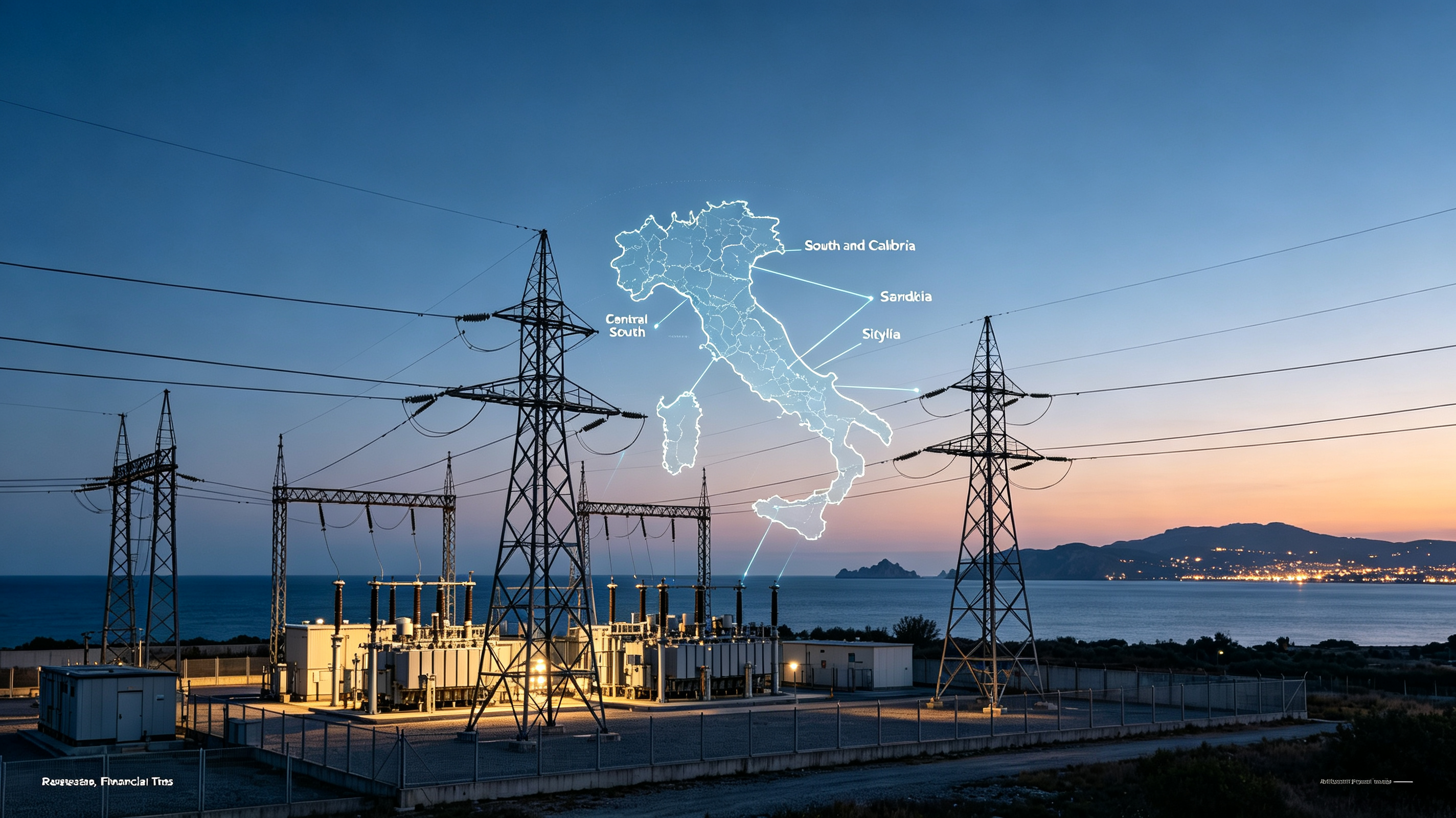
Italy Opens 16GWh Storage Auction Today as Second MACSE Round Expands by 60%
Italy will open its second MACSE energy storage auction on 24 November, procuring up to 16GWh of capacity from new projects scheduled for delivery in 2029. Compared with the first auction, procurement volume has increased by 60%, while the maximum permitted bid has been reduced from €37,000/MWh/year to €27,000/MWh/year. The results will provide a new indication of competition, regional deployment and current cost levels in Italy's energy storage market.

The Real Test Comes When the Grid Goes Down: 1,000 Witness MWh-Scale Diesel–Battery Microgrid Demonstration
A live MWh-scale demonstration at Sungrow GEPS 2026 showcased how battery storage, diesel generation and grid-forming technology can work together to deliver reliable power in off-grid applications. ENERGY PLANET joined the event to explore the technical highlights and their implications for future C&I energy storage projects.

Tesla Launches 7.4MW Powercore: Connecting Batteries Directly to the 34.5kV Grid and Medium Voltage to 800V Data Centres
Tesla has launched Powercore, a solid-state medium-voltage platform integrating transformer, bidirectional inverter and circuit-breaker functions. Rated at 7.4MW, it connects 800V–2,000V DC systems with 10kV–34.5kV AC networks, targeting battery storage, solar and 800V AI data centres. The first units are scheduled to operate in 2027, although Tesla has not disclosed pricing, customers or initial projects.
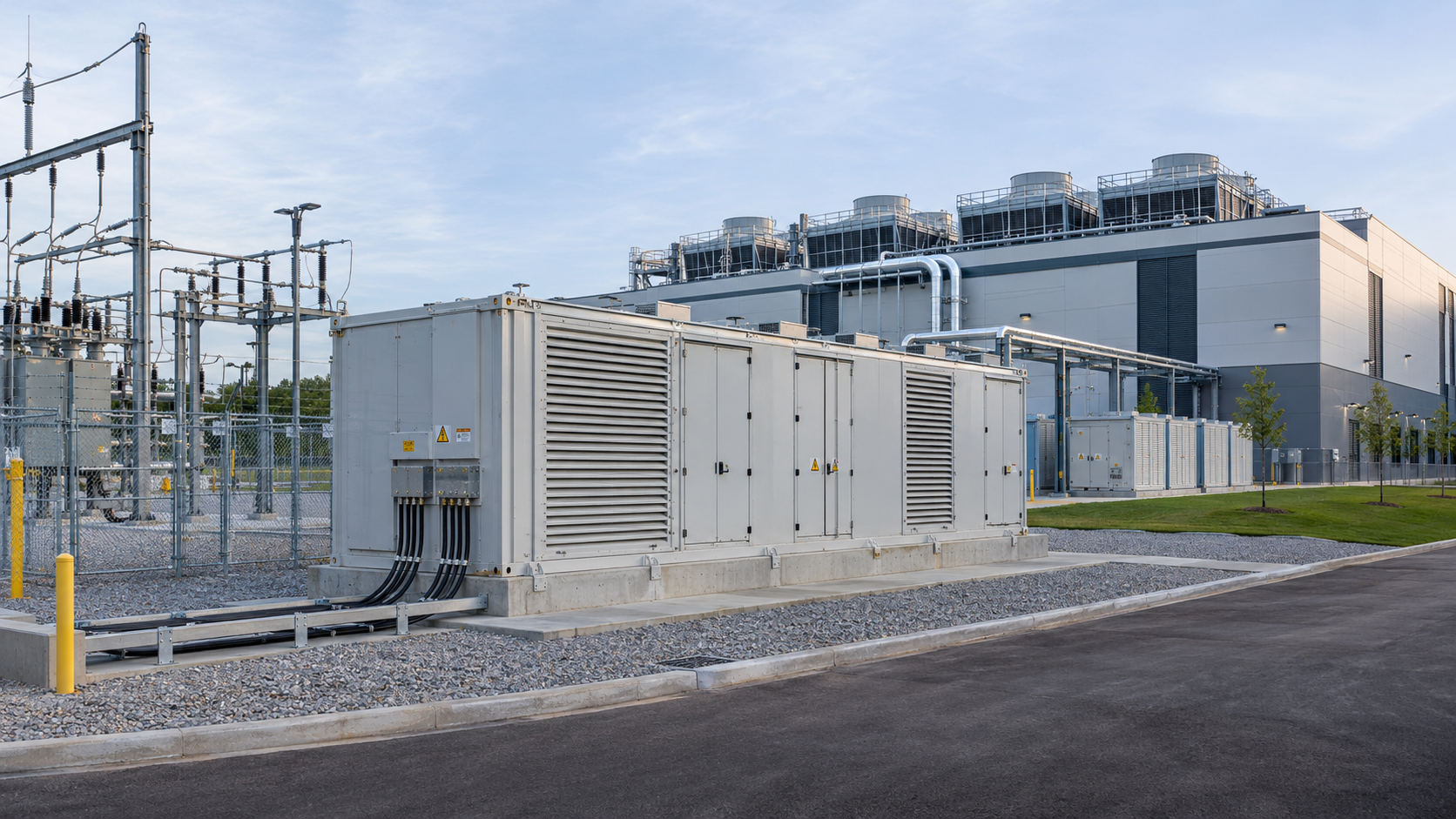
UPS Moves to the Grid Edge as Vertiv Launches 3 MVA Medium-Voltage System
Vertiv has launched the 3 MVA PowerNexus MV UPS, moving UPS functionality from the indoor low-voltage side to the outdoor 34.5kV grid connection point. Designed for new and expanding AI data centres, the system integrates fault ride-through, AI load smoothing, power-quality control and one-to-four-hour battery backup. Following a proof-of-concept demonstration in Bologna, commercial shipments are expected to begin in mid-2027.

Envision Gen 8 Selected for 442 MWh Grid Forming BESS in Germany Taking Partnership Close to 600 MWh
Envision Energy and German storage developer ju:niz Energy are advancing the 442 MWh Smareg 13 project in Bavaria. The four-hour, grid-forming development is planned next to the operational Smareg 12 site, while public records currently show a 100 MW/401 MWh configuration and a March 2028 target date.

CATL Delivers First 8-Hour EnerQB Systems for Quinbrook's 24GWh Australian Pipeline
CATL and Quinbrook Infrastructure Partners have completed production and delivery of the first EnerQB long-duration energy storage systems. Designed for eight-hour discharge, the initial units will undergo a 12-month trial at Stanwell Power Station in Queensland, Australia. Quinbrook has identified a potential 3GW/24GWh project pipeline, although wider deployment will depend on trial results, financing, grid connections and subsequent procurement.

1.24GWh! Sungrow Supplies Europe's Largest Operational Energy Storage Project
BW ESS’s Hams Hall project in the UK has officially brought its first phase online, with 350MW/1.243GWh of capacity, making it the largest operational battery storage project in Europe. Sungrow supplied the BESS, with Energy-IO and other partners involved in project delivery. The project also secured a 10-year optimisation agreement with EDF, debt financing from international banks and equity investment from AIP, highlighting the full value chain behind Europe’s GWh-scale storage projects, from equipment supply and project delivery to commercial operations and financing.

BNEF's Q4 Energy Storage Tier 1 List Shrinks 26% to 50 Manufacturers
BloombergNEF has named 50 manufacturers to its Q4 2026 Tier 1 Energy Storage list. Based on publicly available company disclosures, Energy Planet has confirmed 19 of the manufacturers and compiled historical inclusion records for 12 of them. While a single appearance shows that a supplier met the criteria for that quarter, repeat inclusion offers a stronger indication of its ability to maintain a pipeline of qualifying projects. Tier 1 remains a measure of market adoption, however, rather than a product-quality ranking, corporate credit rating or substitute for project-level technical and financial due diligence.