The 'Large' Trend in Energy Storage Cells is Set: Envision AESC's 790Ah Cells Secure Multiple Overse


Over the past two years, the mainstream specification for energy storage cells has transitioned from 280Ah to 314/315Ah, with the industry generally expecting the next generation of products to move toward 500+Ah. However, as the market entered 2026, new changes emerged; orders for 700+Ah large-capacity cells in high-end scenarios have accelerated significantly, and the pace of iteration has exceeded earlier industry judgments.
On July 15, Envision AESC's Yichang Super Factory officially commenced production, mass-producing the world's largest prismatic wound energy storage cell, the 790Ah. The first batch will be shipped to Germany. According to disclosures, over half of this factory's 790Ah cell production capacity has already been secured by overseas customers, serving as the latest concrete proof of the accelerated implementation of large-capacity energy storage cells.
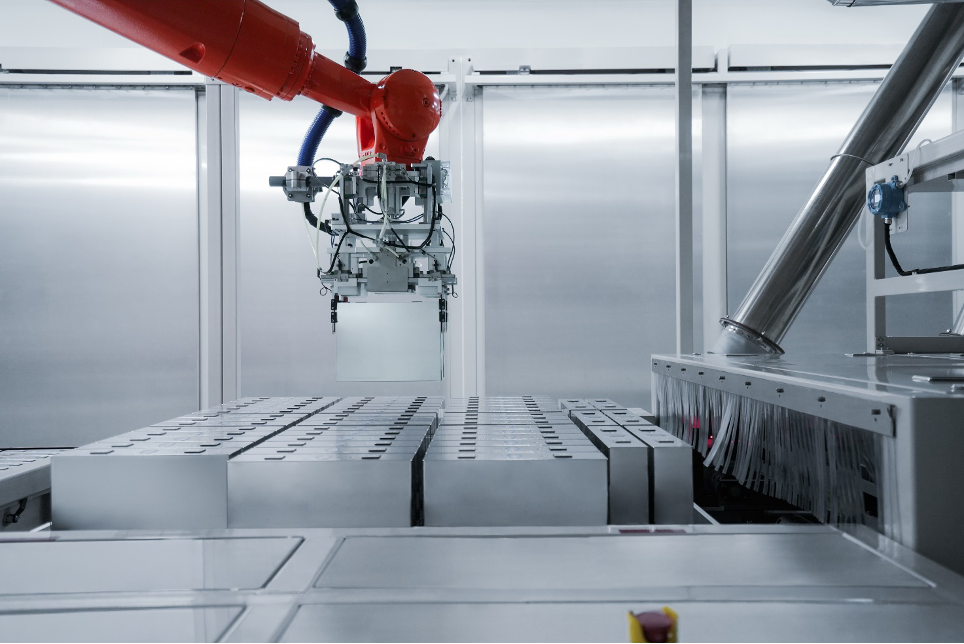
The overseas deployment of 790Ah cells has been evidenced by multiple public projects. During Intersolar Europe earlier this month, Envision announced a series of overseas energy storage orders. Among them were a 140.6 MWh project signed with Germany's ju:niz Energy and the Stadorf 400MW/1600MWh project in Germany signed with Elements Green—currently Germany's largest single-capacity energy storage project. Both projects utilize the Envision Gen 8 energy storage system, and all core cells employ the 790Ah product, marking that this product has passed the inspection of the high-end market in terms of technical reliability.
The upgrade in overseas energy storage demand is the core driving force for the iteration of large cells. Currently, the high penetration of new energy overseas is pushing storage durations to over four hours. Coupled with diverse revenue streams in the electricity market, the levelized cost of electricity (LCOE), efficiency, and lifespan have become key factors in model selection. Additionally, with the capacity expansion for high-requirement scenarios such as data center backup power, industrial microgrids, and grid regulation, large cells have become the mainstream choice for large-scale overseas high-end energy storage.
Regarding the domestic market, rule changes in the centralized procurement markets of central state-owned enterprises have long reflected the accelerated iteration of large cells.
In the first half of 2026, energy storage centralized procurement projects by central state-owned enterprises such as China Huaneng and China Energy Storage Technology successively established independent bid packages and exclusive procurement shares for large cells above 450Ah and 500Ah, clarifying the procurement requirements for large-capacity cells. This signals a shift for large cells from being a bonus option to becoming a mainstream market selection direction.
Data from third-party institutions shows that the market penetration rate of large cells is rising rapidly. According to statistics from InfoLink Consulting, the penetration rate of large cells above 500Ah in China was close to 5% in the first quarter of 2026, and is expected to reach 20% for the full year. GGII predicts that within this year, shipments of cells above 500Ah will exceed 140GWh, with a penetration rate exceeding 20%.
On the policy front, two new energy storage safety regulations have officially come into effect, which will serve as a significant catalyst for the accelerated substitution of large cells.
On July 1, the national standard 'General Safety Specifications for Grid-connected Energy Storage Systems' (GB/T 46957-2025) and the National Development and Reform Commission's Order No. 41 'Judgment Standards and Governance Supervision and Management Regulations for Major Power Grid Accident Hazards' were implemented simultaneously, establishing quantitative safety indicators surrounding thermal runaway prevention and fault isolation. Although the two new regulations do not directly limit cell capacity, they impose restrictions on the number of series connections in a single cluster. Traditional 300+Ah cells require a large number of series connections to achieve standard energy storage cluster capacity, making them prone to hitting management upper limits; whereas 500+Ah and 700+Ah cells can effectively reduce the number of series connections, offering more obvious compliance advantages.
The industry has reached a general consensus: simply expanding cell size physically is only a basic engineering challenge. The stable, safe, and consistent mass production and implementation of ultra-large cells is a complex subject involving the superposition of materials, processes, equipment, and system integration. As the world's largest prismatic wound energy storage cell, the safety control difficulty of the 790Ah cell is further elevated.
In response, Envision has made targeted underlying technology breakthroughs: self-developed high-safety electrolyte paired with a thermal gradient reaction design enables the cell to achieve graded energy release in high-temperature environments, reducing total gas generation from thermal runaway by 35% and peak gas generation rate by 65%. Supplemented by directional pressure relief and heat dissipation channels, this systematically resolves the risk of thermal runaway in ultra-large cells. Addressing the thermal runaway risks of ultra-large cells, Envision has made targeted improvements from material selection to structural design. By creating a unique thermal gradient reaction design, it has achieved graded energy release and non-propagation of heat, while simultaneously optimizing cell cycle life and long-term operational stability.
Regarding product parameters, the rated energy of a single Envision 790Ah cell exceeds 2.5kWh, with a volumetric energy density reaching 440Wh/L, a cycle life exceeding 12,000 times, a DC energy conversion efficiency of no less than 96%, and a calendar life that can reach 30 years. The product has passed multiple safety tests, including nail penetration, overcharge, and thermal runaway, and has obtained market access certifications covering over 20 countries and regions.
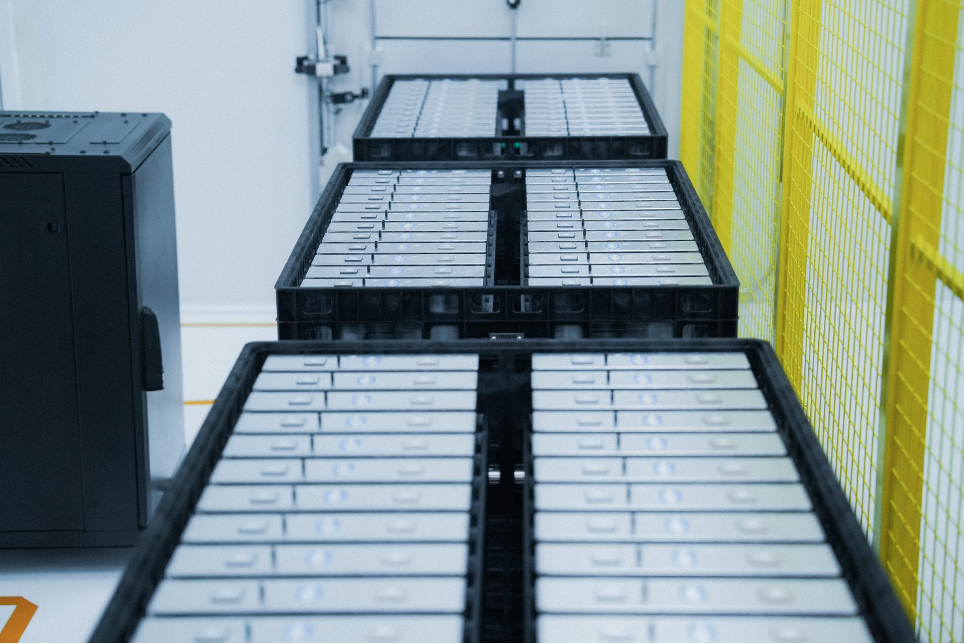
Xu Zhonghua, Chief Engineer of Envision Energy Storage Products, stated that during the R&D process of the 790Ah cell, the comprehensive optimal solution derived and verified included the system globally, encompassing materials, processes, equipment, grid-friendliness, station-friendliness, national standards, and other aspects. For example, between the strict fire safety red line (controlling the footprint of a single set of equipment to within 50 square meters) and ultimate BOS (Balance of System) cost optimization, the 12.5MWh solution can not only significantly reduce project footprint but also achieve a greater degree of full-lifecycle cost reduction than current mainstream systems.
Economic advantages are the core competitive strength for the large-scale implementation of large cells. The Envision 12.5MWh AI energy storage system, equipped with 790Ah cells, integrates full-link intelligent scheduling functions such as electricity trading, power generation forecasting, and grid demand analysis, capable of increasing the Internal Rate of Return (IRR) over the entire lifecycle of the power station by 4% to 8%. For large-scale energy storage investment projects, this level of improvement can directly affect the feasibility of project implementation, propelling the industry from a model of equipment cost procurement to one oriented towards asset revenue configuration.
Addressing the industry's perception that 500+Ah is the capacity bottleneck for the winding process, Xu Zhonghua stated that through more than three years of systematic R&D, with full-chain verification from materials and processes to equipment and system applications, Envision confirmed that the 790Ah cell possesses the conditions for engineering implementation. Combined with self-developed upstream equipment innovation, rigorous testing, and large-scale overseas delivery practices, technical feasibility and market confidence are provided for this world's largest wound cell.
As the first advocate for large-capacity cells, Envision AESC continues to hold its position in the large-capacity cell upgrade race, taking the lead in completing the product iteration from 300Ah+, 500Ah+, to 790Ah. Behind this is not a single product capability, but the construction of a complete chain of 'cell—system—energy management—full-lifecycle service.' This system elevates the competitive threshold for large cells from formulated materials to a competition of comprehensive capabilities in data, algorithms, processes, and system delivery, providing a referenceable practice path for capacity segments above the 700Ah level to move from technical exploration to engineering application.
According to public data, as of now, Envision AESC has established 14 major manufacturing bases and multiple R&D and engineering centers in China, Japan, the United States, the United Kingdom, France, and Spain, accumulating deliveries of over 100GWh of energy storage cells. Project applications cover over 20 countries with over 400 projects. Relying on globalized delivery experience and full-stack technical capabilities, the enterprise continues to lead the upgrade trend towards large-capacity energy storage cells.
Looking at the industry as a whole, with the rising proportion of new energy grid-connection and the deepening of electricity market reforms, ultra-large capacity cells represented by the 790Ah will continue to expand market share, becoming the core direction for the upgrading of the energy storage industry."
Featured News
All News →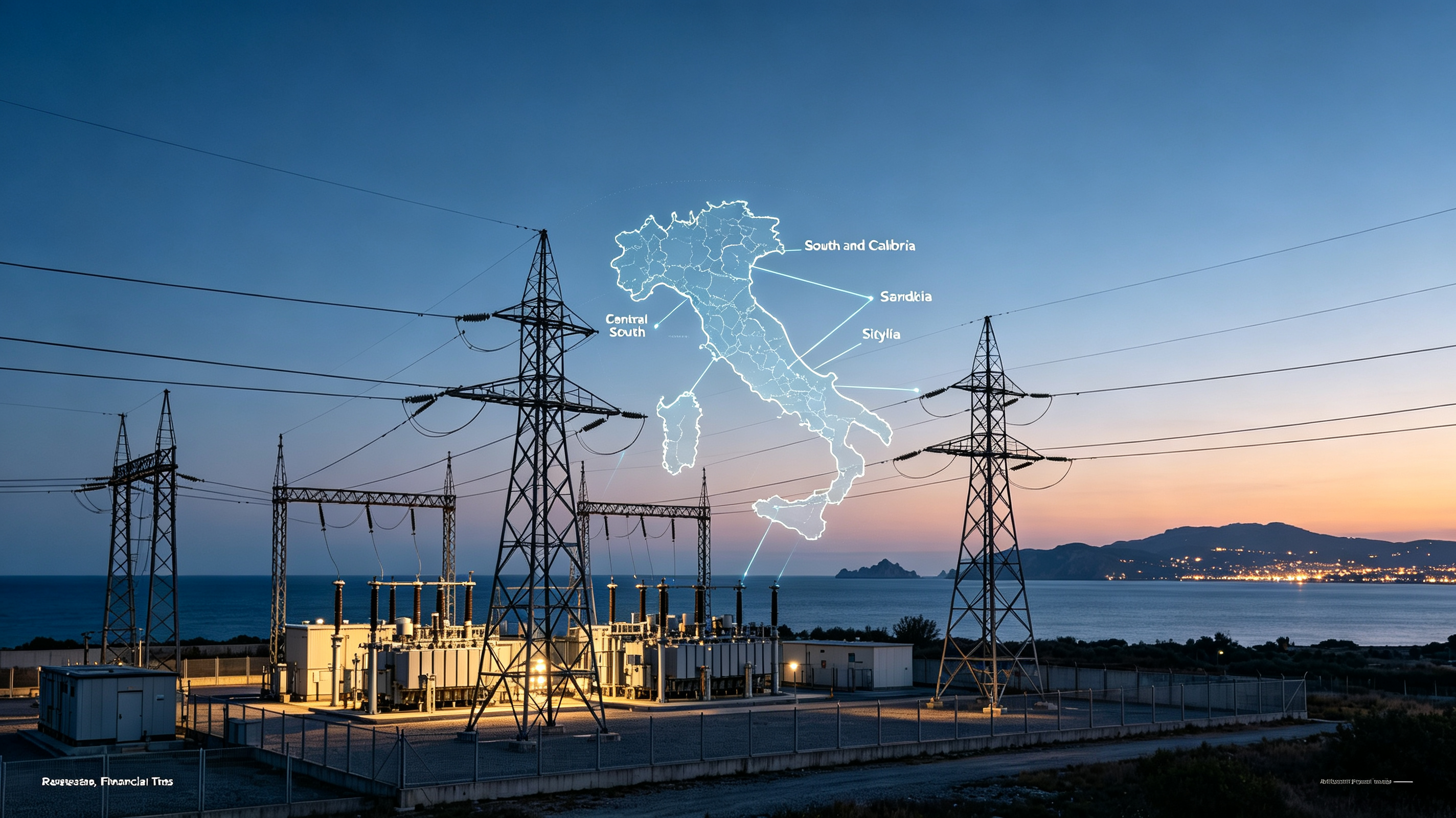
Italy Opens 16GWh Storage Auction Today as Second MACSE Round Expands by 60%
Italy will open its second MACSE energy storage auction on 24 November, procuring up to 16GWh of capacity from new projects scheduled for delivery in 2029. Compared with the first auction, procurement volume has increased by 60%, while the maximum permitted bid has been reduced from €37,000/MWh/year to €27,000/MWh/year. The results will provide a new indication of competition, regional deployment and current cost levels in Italy's energy storage market.

The Real Test Comes When the Grid Goes Down: 1,000 Witness MWh-Scale Diesel–Battery Microgrid Demonstration
A live MWh-scale demonstration at Sungrow GEPS 2026 showcased how battery storage, diesel generation and grid-forming technology can work together to deliver reliable power in off-grid applications. ENERGY PLANET joined the event to explore the technical highlights and their implications for future C&I energy storage projects.

Tesla Launches 7.4MW Powercore: Connecting Batteries Directly to the 34.5kV Grid and Medium Voltage to 800V Data Centres
Tesla has launched Powercore, a solid-state medium-voltage platform integrating transformer, bidirectional inverter and circuit-breaker functions. Rated at 7.4MW, it connects 800V–2,000V DC systems with 10kV–34.5kV AC networks, targeting battery storage, solar and 800V AI data centres. The first units are scheduled to operate in 2027, although Tesla has not disclosed pricing, customers or initial projects.
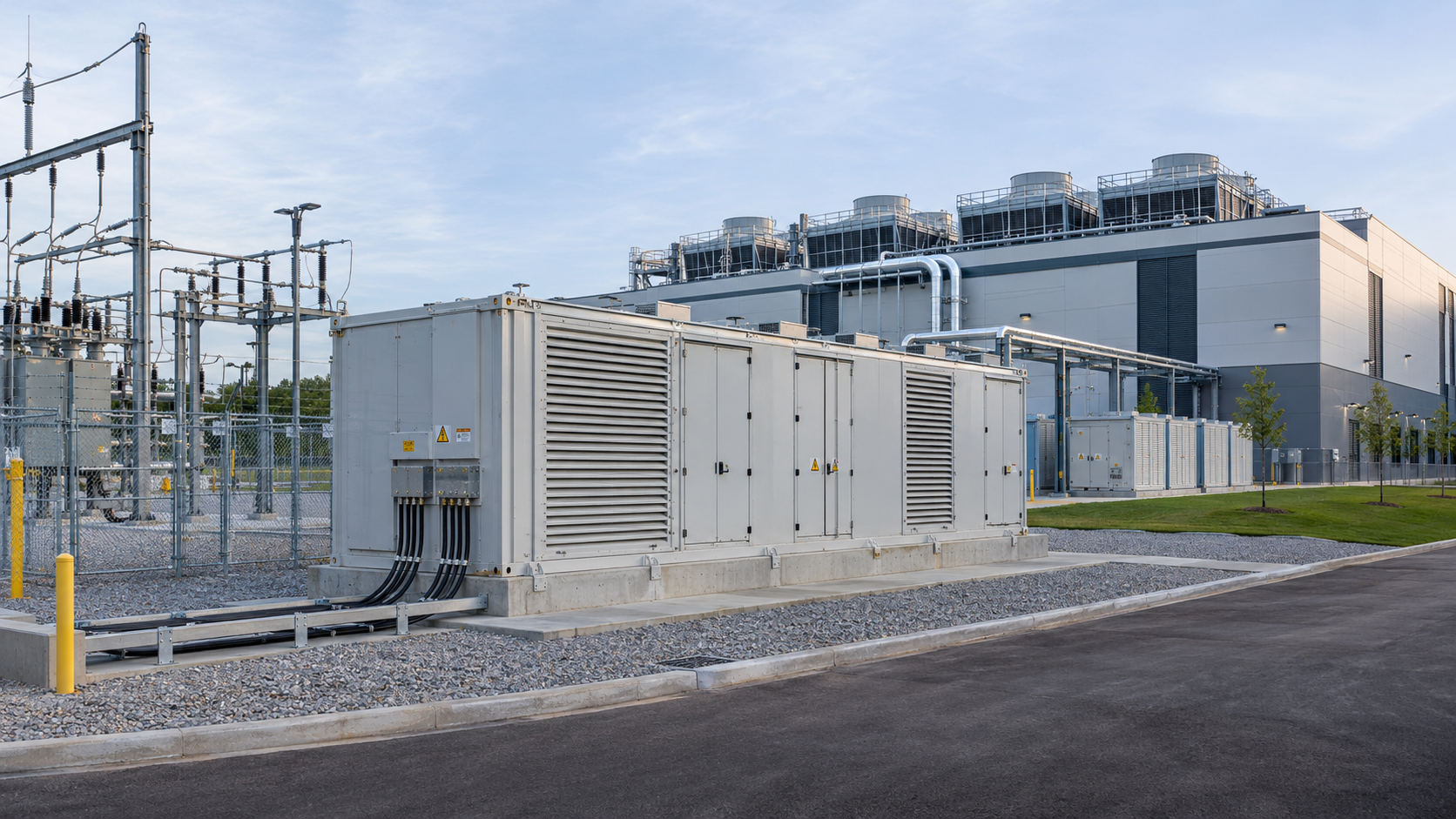
UPS Moves to the Grid Edge as Vertiv Launches 3 MVA Medium-Voltage System
Vertiv has launched the 3 MVA PowerNexus MV UPS, moving UPS functionality from the indoor low-voltage side to the outdoor 34.5kV grid connection point. Designed for new and expanding AI data centres, the system integrates fault ride-through, AI load smoothing, power-quality control and one-to-four-hour battery backup. Following a proof-of-concept demonstration in Bologna, commercial shipments are expected to begin in mid-2027.

Envision Gen 8 Selected for 442 MWh Grid Forming BESS in Germany Taking Partnership Close to 600 MWh
Envision Energy and German storage developer ju:niz Energy are advancing the 442 MWh Smareg 13 project in Bavaria. The four-hour, grid-forming development is planned next to the operational Smareg 12 site, while public records currently show a 100 MW/401 MWh configuration and a March 2028 target date.

CATL Delivers First 8-Hour EnerQB Systems for Quinbrook's 24GWh Australian Pipeline
CATL and Quinbrook Infrastructure Partners have completed production and delivery of the first EnerQB long-duration energy storage systems. Designed for eight-hour discharge, the initial units will undergo a 12-month trial at Stanwell Power Station in Queensland, Australia. Quinbrook has identified a potential 3GW/24GWh project pipeline, although wider deployment will depend on trial results, financing, grid connections and subsequent procurement.

1.24GWh! Sungrow Supplies Europe's Largest Operational Energy Storage Project
BW ESS’s Hams Hall project in the UK has officially brought its first phase online, with 350MW/1.243GWh of capacity, making it the largest operational battery storage project in Europe. Sungrow supplied the BESS, with Energy-IO and other partners involved in project delivery. The project also secured a 10-year optimisation agreement with EDF, debt financing from international banks and equity investment from AIP, highlighting the full value chain behind Europe’s GWh-scale storage projects, from equipment supply and project delivery to commercial operations and financing.

BNEF's Q4 Energy Storage Tier 1 List Shrinks 26% to 50 Manufacturers
BloombergNEF has named 50 manufacturers to its Q4 2026 Tier 1 Energy Storage list. Based on publicly available company disclosures, Energy Planet has confirmed 19 of the manufacturers and compiled historical inclusion records for 12 of them. While a single appearance shows that a supplier met the criteria for that quarter, repeat inclusion offers a stronger indication of its ability to maintain a pipeline of qualifying projects. Tier 1 remains a measure of market adoption, however, rather than a product-quality ranking, corporate credit rating or substitute for project-level technical and financial due diligence.