At Least 2.174 GWh to Be Deployed! Romania Launches €150 Million Standalone Energy Storage Program


Recently, Romanian Prime Minister and Acting Minister of Energy Ilie Bolojan announced that he has signed two energy financing programs, both funded entirely by the EU Modernisation Fund, with a total budget of €250 million. Of this amount, €100 million will be allocated to smart meter upgrades, while €150 million will be dedicated to supporting the construction of standalone energy storage projects. According to the plan, Romania aims to facilitate the deployment of at least 2.174 GWh of new standalone energy storage capacity through this funding.
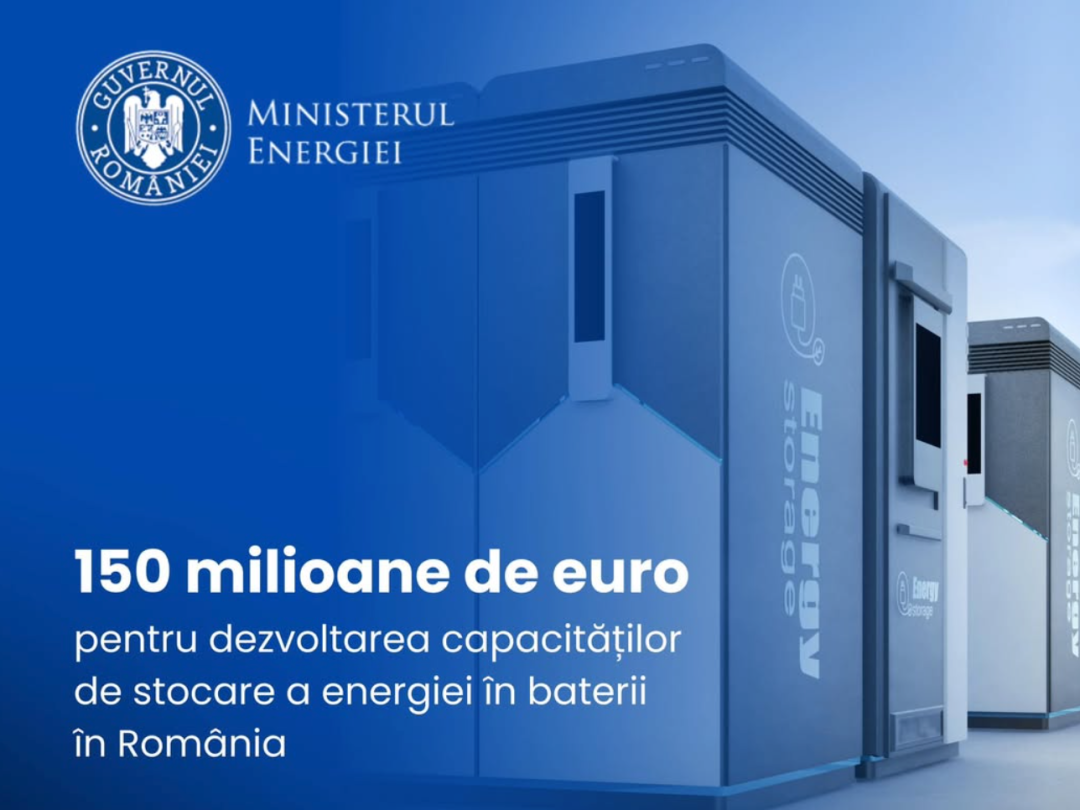
€150 Million to Support Standalone Energy Storage Projects
The storage subsidy is available for new standalone energy storage projects and will be awarded through a competitive bidding process. According to the information released so far, one of the key evaluation criteria will be the subsidy requested per unit of storage capacity, in other words, how much public funding is requested for each MWh of storage capacity installed. Simply put, provided that technical, construction and compliance requirements are met, projects requesting a lower subsidy per MWh will have a greater chance of receiving funding.
The subsidy rules include:
- The maximum subsidy is €69,000 per MWh for each project;
- The cumulative subsidy received by a single company may not exceed €15 million;
- The overall target is to deploy at least 2,174 MWh of standalone energy storage capacity.
Based on the maximum subsidy level of €69,000/MWh, the €150 million budget is sufficient to support approximately 2,174 MWh of storage capacity, which is broadly in line with Romania's minimum deployment target. However, 2,174 MWh represents only the minimum capacity required under the program.
Since projects will compete based on the subsidy requested per unit of storage capacity, if some applicants request less than the maximum subsidy, the same budget could support an even larger amount of storage capacity, potentially resulting in a greater overall deployment.
Romanian authorities stated that once these storage projects are commissioned, they will help improve grid stability and ease electricity price pressure during evening peak demand periods. It is worth noting that this €150 million storage program was not introduced on a temporary basis. In March 2026, the European Commission approved Romania's state aid scheme for energy storage, which clearly proposed providing direct investment grants for standalone energy storage facilities through the EU Modernisation Fund.
The signing of the relevant documents indicates that the program is moving from the EU approval and policy design stage toward project applications and actual implementation.
Another €100 Million to Install More Than 800,000 Smart Meters
In addition to energy storage, Romania will invest €100 million to upgrade its national electricity metering system by installing more than 800,000 smart meters. The program is primarily targeted at Romania's licensed electricity distribution operators.
Compared with conventional electricity meters, smart meters can automatically record and transmit electricity consumption data, reducing the delays and measurement errors associated with manual meter readings and allowing electricity billing to better reflect actual consumption. At the same time, smart meters enable distribution companies to identify abnormal electricity usage, network losses and potential faults more efficiently, improving the digitalization and refined management of the power distribution network.
According to Romania's plan, the installation of these smart meters is expected to be completed by the end of 2029.
Final Thoughts
The most noteworthy aspect of Romania's latest policy is not simply the €150 million subsidy itself, but the fact that Romania is clearly positioning standalone energy storage as an important part of its national power infrastructure.
The target of deploying at least 2.174 GWh of storage capacity will directly create new demand for project development, equipment procurement and engineering construction. For energy storage system integrators, battery manufacturers, PCS suppliers and EPC contractors, Romania is expected to become a new growth market within the European energy storage sector.
However, this does not mean that every company will be able to enter the market easily. Under the competitive bidding mechanism, projects will compete not only on technical solutions, but also on investment costs per unit of capacity and subsidy requirements. This means that companies with strong cost control capabilities, proven experience in European projects and well-established local service networks will be better positioned to secure opportunities during this market expansion.
For companies planning to enter the Romanian and Central & Eastern European energy storage markets, now is also an important window to establish local partnerships, connect with project opportunities and develop business channels.
We are currently promoting sponsorship and partnership opportunities for an upcoming Romanian Renewable Energy & Energy Storage Summit, welcoming cooperation with energy storage system integrators, battery and cell manufacturers, PCS and inverter suppliers, EPC contractors, project developers, as well as other renewable energy equipment and technology service providers.
If you are exploring opportunities in the Romanian and Central & Eastern European energy storage market, or looking to connect with local customers, channels and project partners through the event, feel free to contact us for more information about the sponsorship packages, partnership benefits and event brochure.
Featured News
All News →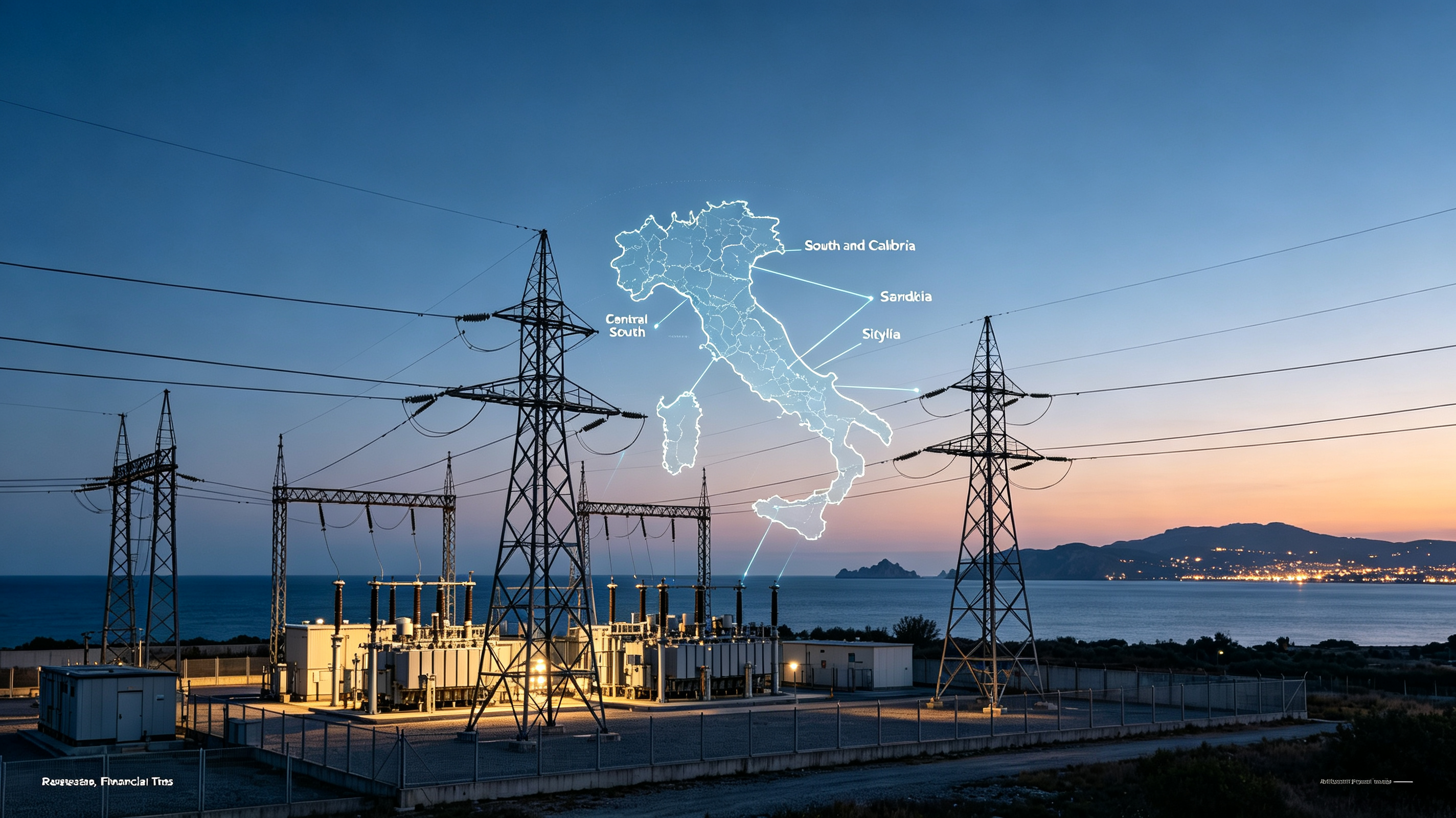
Italy Opens 16GWh Storage Auction Today as Second MACSE Round Expands by 60%
Italy will open its second MACSE energy storage auction on 24 November, procuring up to 16GWh of capacity from new projects scheduled for delivery in 2029. Compared with the first auction, procurement volume has increased by 60%, while the maximum permitted bid has been reduced from €37,000/MWh/year to €27,000/MWh/year. The results will provide a new indication of competition, regional deployment and current cost levels in Italy's energy storage market.

The Real Test Comes When the Grid Goes Down: 1,000 Witness MWh-Scale Diesel–Battery Microgrid Demonstration
A live MWh-scale demonstration at Sungrow GEPS 2026 showcased how battery storage, diesel generation and grid-forming technology can work together to deliver reliable power in off-grid applications. ENERGY PLANET joined the event to explore the technical highlights and their implications for future C&I energy storage projects.

Tesla Launches 7.4MW Powercore: Connecting Batteries Directly to the 34.5kV Grid and Medium Voltage to 800V Data Centres
Tesla has launched Powercore, a solid-state medium-voltage platform integrating transformer, bidirectional inverter and circuit-breaker functions. Rated at 7.4MW, it connects 800V–2,000V DC systems with 10kV–34.5kV AC networks, targeting battery storage, solar and 800V AI data centres. The first units are scheduled to operate in 2027, although Tesla has not disclosed pricing, customers or initial projects.
UPS Moves to the Grid Edge as Vertiv Launches 3 MVA Medium-Voltage System
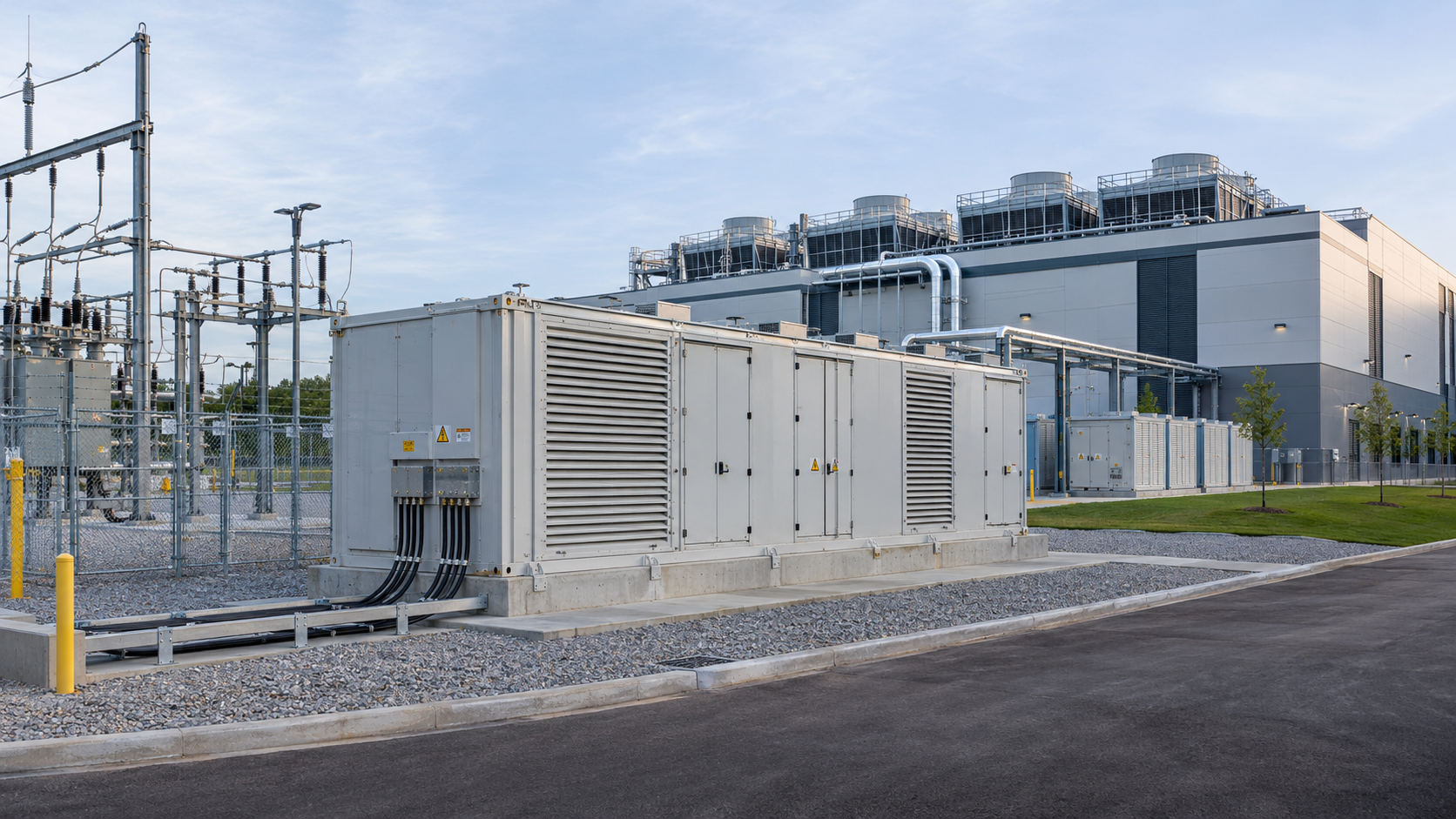
Vertiv has launched the 3 MVA PowerNexus MV UPS, moving UPS functionality from the indoor low-voltage side to the outdoor 34.5kV grid connection point. Designed for new and expanding AI data centres, the system integrates fault ride-through, AI load smoothing, power-quality control and one-to-four-hour battery backup. Following a proof-of-concept demonstration in Bologna, commercial shipments are expected to begin in mid-2027.

Envision Gen 8 Selected for 442 MWh Grid Forming BESS in Germany Taking Partnership Close to 600 MWh
Envision Energy and German storage developer ju:niz Energy are advancing the 442 MWh Smareg 13 project in Bavaria. The four-hour, grid-forming development is planned next to the operational Smareg 12 site, while public records currently show a 100 MW/401 MWh configuration and a March 2028 target date.

CATL Delivers First 8-Hour EnerQB Systems for Quinbrook's 24GWh Australian Pipeline
CATL and Quinbrook Infrastructure Partners have completed production and delivery of the first EnerQB long-duration energy storage systems. Designed for eight-hour discharge, the initial units will undergo a 12-month trial at Stanwell Power Station in Queensland, Australia. Quinbrook has identified a potential 3GW/24GWh project pipeline, although wider deployment will depend on trial results, financing, grid connections and subsequent procurement.

1.24GWh! Sungrow Supplies Europe's Largest Operational Energy Storage Project
BW ESS’s Hams Hall project in the UK has officially brought its first phase online, with 350MW/1.243GWh of capacity, making it the largest operational battery storage project in Europe. Sungrow supplied the BESS, with Energy-IO and other partners involved in project delivery. The project also secured a 10-year optimisation agreement with EDF, debt financing from international banks and equity investment from AIP, highlighting the full value chain behind Europe’s GWh-scale storage projects, from equipment supply and project delivery to commercial operations and financing.

BNEF's Q4 Energy Storage Tier 1 List Shrinks 26% to 50 Manufacturers
BloombergNEF has named 50 manufacturers to its Q4 2026 Tier 1 Energy Storage list. Based on publicly available company disclosures, Energy Planet has confirmed 19 of the manufacturers and compiled historical inclusion records for 12 of them. While a single appearance shows that a supplier met the criteria for that quarter, repeat inclusion offers a stronger indication of its ability to maintain a pipeline of qualifying projects. Tier 1 remains a measure of market adoption, however, rather than a product-quality ranking, corporate credit rating or substitute for project-level technical and financial due diligence.