Greece Opens the Door to Balcony Solar and Standalone Energy Storage for the First Time


On July 10, Greece's Ministry of Environment and Energy released a draft Ministerial Decision on self-consumption and opened it for public consultation until July 20.
According to the draft, Greece will, for the first time, allow households and businesses to install balcony solar systems with a maximum capacity of up to 800W, while also allowing users to deploy standalone electricity storage systems. These systems are primarily intended to meet the user's own electricity demand and, in principle, are not allowed to export electricity back to the public grid.

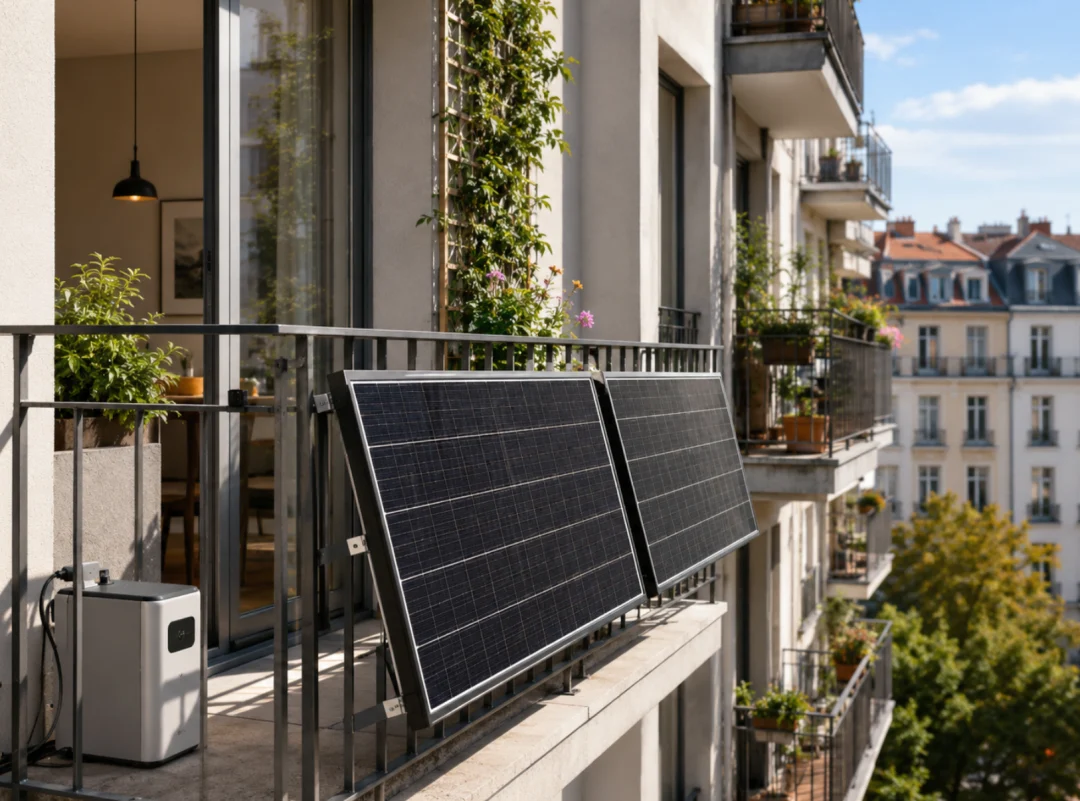
800W Balcony Solar: Targeting Apartment Residents
Compared with traditional residential solar, the biggest change brought by balcony solar is that it further lowers the barrier for ordinary households to participate in distributed energy.
In the past, apartment residents were often limited by roof availability, grid connection procedures, and property ownership issues. In the future, they will also have the opportunity to participate in the residential energy market through balcony solar and small-scale energy storage. By installing compact solar modules on balconies or terraces, users can provide part of the electricity needed for household loads.
This model is particularly well suited to Greece. A large proportion of urban housing in Greece consists of apartment buildings, and many households do not have access to independent rooftop space. Even when residents wish to reduce their electricity bills through solar power, they are often constrained by building ownership, the use of shared areas, and grid connection approval procedures.
The introduction of balcony solar effectively opens a new pathway for these users. Although an 800W system is relatively small, its value does not lie in covering all household electricity consumption. Instead, it helps reduce daytime base loads such as refrigerators, routers, lighting, televisions, and some household appliances. For ordinary households, this represents a lighter and more accessible way to achieve self-consumption of electricity.
Standalone Energy Storage Also Included in the Policy Framework
Another notable change in the draft is that Greece has, for the first time, explicitly allowed households and businesses to install standalone electricity storage systems. These standalone storage systems do not necessarily have to be installed together with a solar system.
Users can charge the battery from the grid during off-peak electricity price periods and discharge it during peak-price periods according to their electricity tariffs and consumption patterns, thereby reducing electricity purchases during expensive peak hours. In markets with time-of-use electricity pricing and significant peak-to-valley price differences, standalone residential energy storage can provide tangible economic value.
When balcony solar is combined with energy storage, users can also store surplus solar electricity generated during the day and continue using it at night. This transforms balcony solar from a simple power generation device into a small-scale residential energy system.
The Balcony Solar + Storage Market Is Expanding Across Southern Europe
Germany has been one of the fastest-growing markets for balcony solar in Europe. In recent years, related products have gradually evolved from a niche solution into a mainstream option for households. Now, as Greece moves to legalize balcony solar and standalone energy storage, the balcony solar + storage model is expanding beyond Central Europe into Southern Europe.
Compared with traditional residential energy storage systems, balcony solar + storage solutions place greater emphasis on lightweight design, modularity, and plug-and-play installation. Products do not require large power ratings or storage capacities, but they do need to offer simpler installation, lower barriers to use, and more flexible energy management capabilities. Looking ahead, microinverters, balcony solar modules, plug-in battery storage systems, battery packs, and home energy management systems (HEMS) could all find new growth opportunities in this market.
Of course, the document released by Greece is still a draft for public consultation. The final policy text, together with detailed technical standards, installation requirements, and regulatory procedures, has yet to be finalized. As Greece gradually implements its balcony solar and standalone energy storage policy, local distribution channels may be among the first to experience growing demand for related products.
Featured News
All News →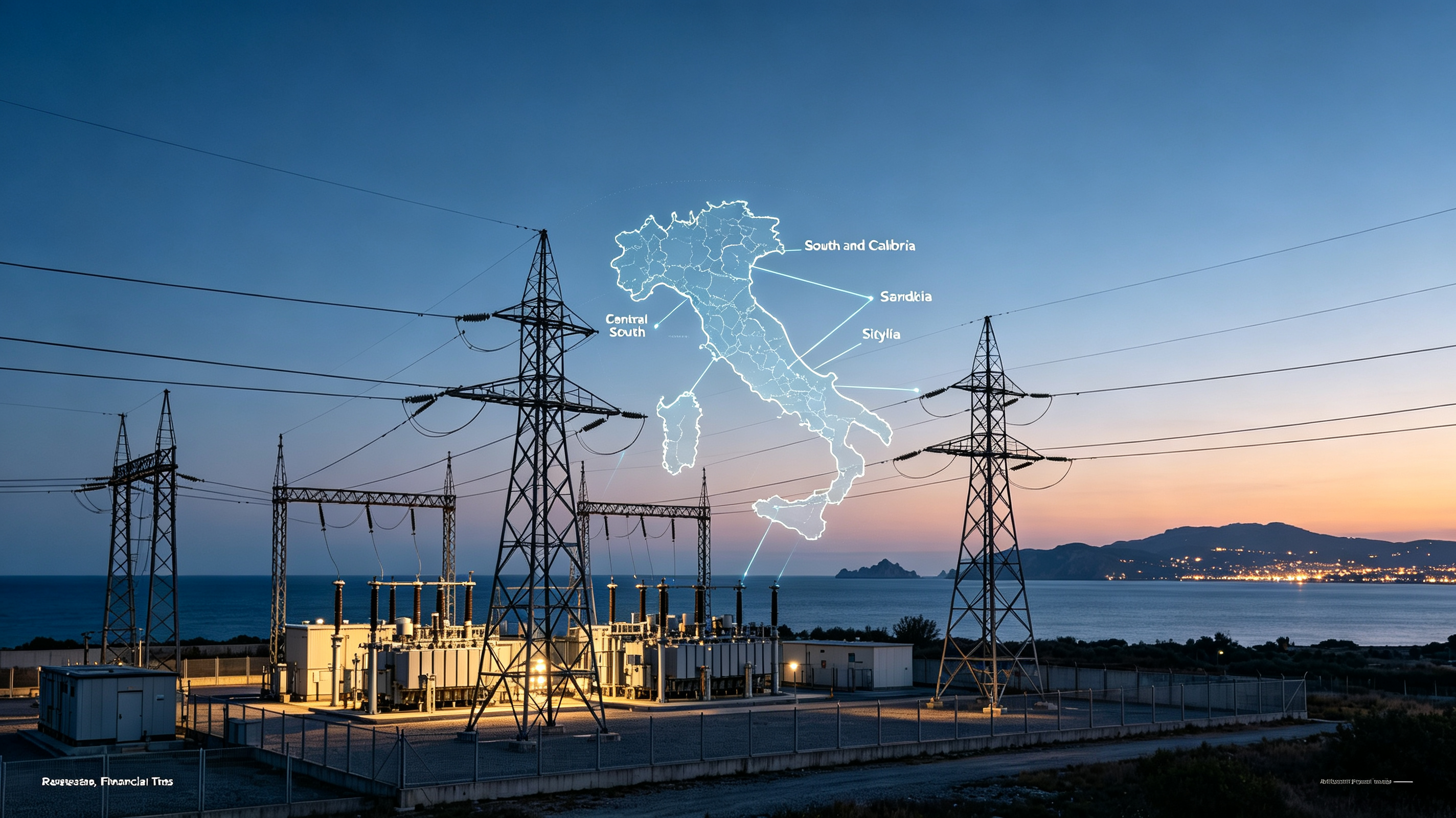
Italy Opens 16GWh Storage Auction Today as Second MACSE Round Expands by 60%
Italy will open its second MACSE energy storage auction on 24 November, procuring up to 16GWh of capacity from new projects scheduled for delivery in 2029. Compared with the first auction, procurement volume has increased by 60%, while the maximum permitted bid has been reduced from €37,000/MWh/year to €27,000/MWh/year. The results will provide a new indication of competition, regional deployment and current cost levels in Italy's energy storage market.

The Real Test Comes When the Grid Goes Down: 1,000 Witness MWh-Scale Diesel–Battery Microgrid Demonstration
A live MWh-scale demonstration at Sungrow GEPS 2026 showcased how battery storage, diesel generation and grid-forming technology can work together to deliver reliable power in off-grid applications. ENERGY PLANET joined the event to explore the technical highlights and their implications for future C&I energy storage projects.

Tesla Launches 7.4MW Powercore: Connecting Batteries Directly to the 34.5kV Grid and Medium Voltage to 800V Data Centres
Tesla has launched Powercore, a solid-state medium-voltage platform integrating transformer, bidirectional inverter and circuit-breaker functions. Rated at 7.4MW, it connects 800V–2,000V DC systems with 10kV–34.5kV AC networks, targeting battery storage, solar and 800V AI data centres. The first units are scheduled to operate in 2027, although Tesla has not disclosed pricing, customers or initial projects.
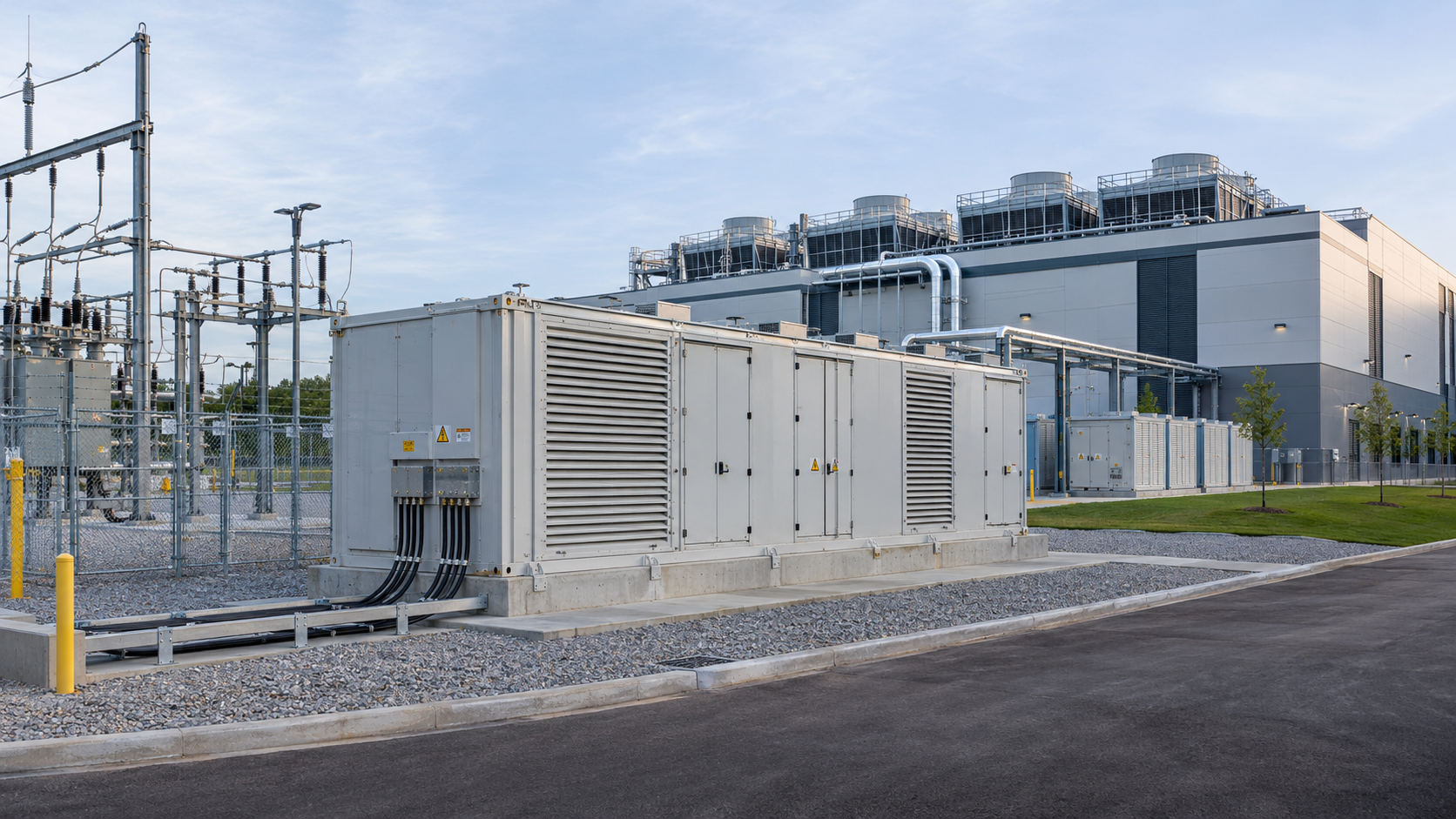
UPS Moves to the Grid Edge as Vertiv Launches 3 MVA Medium-Voltage System
Vertiv has launched the 3 MVA PowerNexus MV UPS, moving UPS functionality from the indoor low-voltage side to the outdoor 34.5kV grid connection point. Designed for new and expanding AI data centres, the system integrates fault ride-through, AI load smoothing, power-quality control and one-to-four-hour battery backup. Following a proof-of-concept demonstration in Bologna, commercial shipments are expected to begin in mid-2027.

Envision Gen 8 Selected for 442 MWh Grid Forming BESS in Germany Taking Partnership Close to 600 MWh
Envision Energy and German storage developer ju:niz Energy are advancing the 442 MWh Smareg 13 project in Bavaria. The four-hour, grid-forming development is planned next to the operational Smareg 12 site, while public records currently show a 100 MW/401 MWh configuration and a March 2028 target date.

CATL Delivers First 8-Hour EnerQB Systems for Quinbrook's 24GWh Australian Pipeline
CATL and Quinbrook Infrastructure Partners have completed production and delivery of the first EnerQB long-duration energy storage systems. Designed for eight-hour discharge, the initial units will undergo a 12-month trial at Stanwell Power Station in Queensland, Australia. Quinbrook has identified a potential 3GW/24GWh project pipeline, although wider deployment will depend on trial results, financing, grid connections and subsequent procurement.

1.24GWh! Sungrow Supplies Europe's Largest Operational Energy Storage Project
BW ESS’s Hams Hall project in the UK has officially brought its first phase online, with 350MW/1.243GWh of capacity, making it the largest operational battery storage project in Europe. Sungrow supplied the BESS, with Energy-IO and other partners involved in project delivery. The project also secured a 10-year optimisation agreement with EDF, debt financing from international banks and equity investment from AIP, highlighting the full value chain behind Europe’s GWh-scale storage projects, from equipment supply and project delivery to commercial operations and financing.

BNEF's Q4 Energy Storage Tier 1 List Shrinks 26% to 50 Manufacturers
BloombergNEF has named 50 manufacturers to its Q4 2026 Tier 1 Energy Storage list. Based on publicly available company disclosures, Energy Planet has confirmed 19 of the manufacturers and compiled historical inclusion records for 12 of them. While a single appearance shows that a supplier met the criteria for that quarter, repeat inclusion offers a stronger indication of its ability to maintain a pipeline of qualifying projects. Tier 1 remains a measure of market adoption, however, rather than a product-quality ranking, corporate credit rating or substitute for project-level technical and financial due diligence.