

Energy PlanetCompany
27 days ago · Energy Square ·
500 MW/1 GWh! Europe's Largest Operational Energy Storage Project Is Now Online
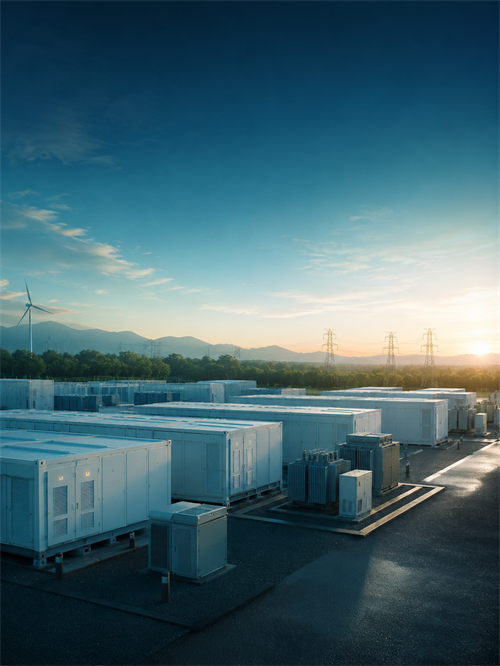
<p>On August 12, Danish infrastructure investment firm Copenhagen Infrastructure Partners (CIP) announced that the Coalburn 1 energy storage project in Scotland had officially entered commercial operation.</p><p>The project has a capacity of <span style="color:rgb(56, 158, 13)"><strong>500 MW/1 GWh</strong></span><span style="color:rgb(56, 158, 13)">.</span> According to CIP, Coalburn 1 has now become <span style="color:rgb(56, 158, 13)"><strong>the largest operational energy storage system in Europe</strong></span><span style="color:rgb(56, 158, 13)">,</span> and is directly connected to the UK transmission network. It is important to note that the key point behind "Europe's largest" is that the project is already operational. There are currently several larger energy storage projects in Europe that are still in the planning or construction stages, but Coalburn 1 has already officially entered commercial operation. What is also worth noting is that the project was built on the site of a former coal mine. Today, the operation of a GWh-scale energy storage system at the site has become a reflection of the region’s energy transition.</p><p><img src="https://energyplanet.oss-cn-shenzhen.aliyuncs.com/uploads/images/20260814100759_cf747396.png" alt="" loading="lazy" decoding="async" /></p><h2><strong>Another 2 GWh of Energy Storage Is Coming</strong></h2><p>Coalburn 1 is not CIP's only large-scale energy storage project in Scotland. According to CIP's latest disclosures, the company is currently advancing three transmission-connected energy storage projects in the region: <span style="color:rgb(56, 158, 13)"><strong>Coalburn 1, Coalburn 2, and Devilla</strong></span><span style="color:rgb(56, 158, 13)">. </span>In other words, the Coalburn 1 project that has now entered commercial operation is only the first 500 MW/1 GWh project. Once Coalburn 2 and Devilla are fully developed, they <span style="color:rgb(56, 158, 13)"><strong>will add another approximately 1 GW/2 GWh of energy storage capacity</strong></span><span style="color:rgb(56, 158, 13)">.</span></p><p>From a single 500 MW project to a 1.5 GW storage cluster made up of three projects, CIP's presence in the UK's large-scale energy storage market is no longer simply about building "Europe's largest project," but is gradually forming a GW-scale energy storage asset portfolio. In the past, the market focused more on how large a single project could become. Now, more and more infrastructure funds and energy investors are beginning to approach energy storage through a <strong>portfolio-based</strong> strategy.</p><h2><strong>Large Institutional Capital Is Also Moving Into Energy Storage Assets</strong></h2><p>Another noteworthy change behind Coalburn 1 is that <span style="color:rgb(56, 158, 13)"><strong>more and more large institutional investors are starting to invest directly in energy storage assets</strong></span><span style="color:rgb(56, 158, 13)">. </span>In April 2025, AXA IM Alts announced that it had acquired a <span style="color:rgb(56, 158, 13)"><strong>50% stake in Coalburn 1</strong></span> from CIP, officially entering the UK battery energy storage market.</p><p><em>AXA IM Alts: Essentially a large institutional investment platform focused on alternative asset investment and management.</em></p><p>This also shows that Coalburn 1 is no longer following a model in which the developer “develops and holds the project from start to finish.” Instead, large institutional investors have already been brought in to co-own the asset during the project’s construction and operation stages.</p><p>As projects continue to grow—from tens of MW to hundreds of MW and then to GW scale—the capital requirements are also rising rapidly. It is becoming increasingly difficult for developers to shoulder the entire burden themselves if the market is to continue expanding. As a result, long-term capital from infrastructure funds, insurance companies, and other institutional investors is gradually becoming an important <span style="color:rgb(56, 158, 13)"><strong>source of funding for the large-scale development of energy storage</strong></span><span style="color:rgb(56, 158, 13)">.</span></p><p>CIP also has a particularly interesting view on this. In its official project description, <span style="color:rgb(56, 158, 13)"><strong>CIP refers to large-scale battery energy storage as "a new asset class."</strong></span> CIP is no longer simply treating energy storage as a battery system. Instead, it wants to develop storage more like infrastructure assets such as wind farms and solar power plants—<span style="color:rgb(56, 158, 13)"><strong>assets that can be invested in and held for the long term, and operated over many years.</strong></span></p><p>But this also raises another question. If energy storage is truly going to become a long-term asset class, simply building the project is not enough. Investors also need to see <span style="color:rgb(56, 158, 13)"><strong>how the storage system will make money over the next decade or more.</strong></span></p><h2><strong>Stable Revenue Is Critical</strong></h2><p>According to information previously disclosed by AXA, Coalburn 1 already has a <span style="color:rgb(56, 158, 13)"><strong>10-year long-term agreement</strong></span>, as well as two UK Capacity Market contracts. One of the Capacity Market contracts runs for <span style="color:rgb(56, 158, 13)"><strong>15 years and covers 300 MW</strong></span>, while the other runs for <span style="color:rgb(56, 158, 13)"><strong>7 years and covers 75 MW</strong></span><span style="color:rgb(56, 158, 13)">.</span></p><p>Therefore, Coalburn 1's business model is not simply betting on daily electricity price spreads. Instead, it combines <span style="color:rgb(56, 158, 13)"><strong>long-term contracted revenue with market-based trading revenue</strong></span><span style="color:rgb(56, 158, 13)">,</span> providing the project with a relatively stable source of income.</p><p>This is particularly important for large-scale energy storage projects. The larger the investment, the more investors need to see a relatively clear long-term revenue outlook. If revenues depend entirely on short-term fluctuations in electricity prices, it is difficult for investors to determine how much the project could earn over the next decade or more. Mechanisms such as Capacity Market contracts and long-term agreements can help secure part of the project’s baseline revenue first. The remaining portion can then be generated through electricity market trading to pursue higher returns.</p><h2><strong>Someone Also Has to Manage When the Battery Charges and Discharges</strong></h2><p>Once the project is built, deciding when to charge and when to discharge is not something the project owner simply handles by watching electricity prices every day. According to information previously released by SSE, <span style="color:rgb(56, 158, 13)"><strong>SSE Energy Markets</strong></span> has secured a <span style="color:rgb(56, 158, 13)"><strong>10-year optimization contract</strong></span> for the Coalburn 500 MW energy storage project.</p><p>This means the battery is centrally optimized based on electricity prices, grid demand, and revenue opportunities across different electricity markets. When is it more profitable to charge? When is it more profitable to discharge? Should the battery participate in ancillary services?</p><p><em>SSE Energy Markets: It is not an independent energy storage company, but the energy trading and asset optimization business/division under UK energy group SSE plc. It can be understood as a team specialized in trading, dispatching, and revenue optimization for energy assets.</em></p><p>So for large-scale energy storage, what ultimately determines whether a project can make money is no longer just the battery itself. <span style="color:rgb(56, 158, 13)"><strong>Trading capabilities, forecasting capabilities, and dispatch capabilities are becoming increasingly important as well.</strong></span></p><p>Meanwhile, RES is responsible for the long-term asset management of the Coalburn project, including operations management, performance monitoring, and maintaining the long-term value of the asset.</p><p><em>RES: A global renewable energy company originally founded in the UK. It does not focus solely on energy storage, but covers the development, construction, operations, and asset management of renewable energy projects including wind, solar PV, and energy storage.</em></p><p>Looking at the project this way, the division of responsibilities behind a large-scale energy storage project is becoming increasingly clear. CIP is responsible for development and investment, bringing in long-term capital such as AXA to co-own the asset. SSE is responsible for entering electricity markets and optimizing trading, while RES is responsible for long-term asset management. Different companies each take responsibility for the part they are best at.</p><h2><strong>Final Thoughts</strong></h2><p>So, what really deserves attention to Coalburn 1 may not simply be the title of <span style="color:rgb(56, 158, 13)"><strong>"Europe's largest operational energy storage system."</strong></span><span style="color:rgb(56, 158, 13)"> </span>Once the 500 MW/1 GWh battery is actually running, the question is no longer simply <span style="color:rgb(56, 158, 13)"><strong>"Can it be built?"</strong></span> Instead, it becomes <span style="color:rgb(56, 158, 13)"><strong>"How will it be operated, how will it participate in the market, and how will it continue making money over the next decade or more?"</strong></span></p><p>Looking at Coalburn 1, the answer is becoming increasingly clear. <span style="color:rgb(56, 158, 13)"><strong>Someone develops the project, long-term capital comes in to hold the asset, professional teams are responsible for trading and dispatch, and another team handles ongoing operations. </strong></span>After all, the first half of the energy storage game is about building the battery. The second half is about making the battery actually make money.</p>
#BESS#EnergyMarkets#EnergyInfrastructure#BatteryStorage#RenewableEnergy#EnergyStorage#GridScaleStorage
Comments (0)
U
No comments yet. Be the first to comment!
Related Posts
No related posts
People You May Know
No suggestions
The Future of Clean Energy Starts Here
Explore innovative solutions in solar & energy storage.
