

Energy PlanetCompany
28 days ago · Energy Square ·
99.2% Availability: Retired EV Batteries Are Starting to Power AI Data Centers
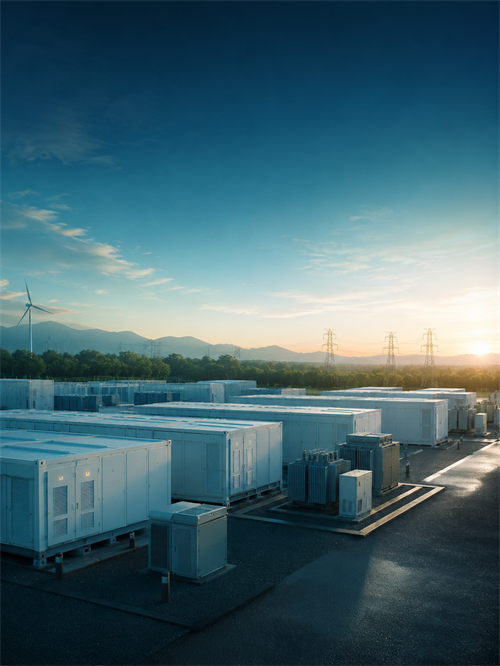
<p>Recently, U.S. AI infrastructure company Crusoe and battery materials and recycling company Redwood Materials announced an expanded partnership. What makes this interesting is that retired EV batteries are now genuinely entering the power supply scenario of AI data centers.</p><p>Redwood has built a microgrid at its Sparks, Nevada campus, which includes approximately 12 MW of on-site solar PV and 63MWh of battery energy storage. The system mainly supplies power to Crusoe's Spark modular AI data centers. What is particularly notable is that the 63 MWh energy storage system does not use conventional new batteries, but repurposed electric vehicle battery packs. Simply put, when EV batteries are retired from vehicles, if their remaining capacity and state of health still meet certain requirements, they can be used in stationary energy storage instead of being immediately dismantled and recycled.</p><p><img src="https://energyplanet.oss-cn-shenzhen.aliyuncs.com/uploads/images/20260813173359_9a19353b.png" alt="" loading="lazy" decoding="async" /></p><p>Redwood previously stated that the company receives more than 20 GWh of batteries every year, some of which still retain relatively high usable capacity after being retired from vehicles. These batteries are first tested and screened. Those in suitable condition continue to be used in energy storage systems, and only when they truly reach the end of their useful life are they dismantled to recover the materials inside. In this way, the lifecycle of an EV battery can be extended: first used in a vehicle, then used for stationary energy storage, and finally sent for material recycling.</p><p>The challenge is not that they are "old," but how to manage batteries with different conditions. However, using retired EV batteries for energy storage is not as simple as putting a bunch of old batteries together. Batteries retired from different vehicles can vary in brand, model, chemistry, age, and state of health. Some may still have plenty of life left, while others may have already experienced significant degradation.</p><p>To manage these batteries with different conditions, Redwood has developed a battery management technology called Pack Manager. The system can independently control different battery packs, adjusting their voltage, current, and load based on the condition of each individual battery pack, while an upper-level system manages all the batteries as a whole. In other words, batteries in better condition can take on more work, while those in poorer condition take on less of the load. This approach helps minimize the impact caused by inconsistencies between batteries in different conditions.</p><p><img src="https://energyplanet.oss-cn-shenzhen.aliyuncs.com/uploads/images/20260813173359_f03b9f90.png" alt="" loading="lazy" decoding="async" /></p><p>So for second-life energy storage, the real key is not simply "how much capacity does this battery have left," but rather: Can a group of old batteries in completely different conditions actually operate reliably when they are put together? Now, this system has also provided some real-world operating data.</p><p>• Crusoe says that after the microgrid, consisting of solar PV and repurposed EV batteries, had operated continuously for more than seven months, its operational availability reached 99.2%, with relatively little unplanned downtime during the period.</p><p>• Meanwhile, with the public grid serving as a backup power source, overall Crusoe Cloud availability reached 99.9%.</p><p>These two numbers do not measure the same thing. The 99.2% figure looks at how reliably the microgrid itself operates, while the 99.9% figure looks at whether Crusoe Cloud was able to continuously provide its services.</p><p>Because Crusoe Cloud also has the public grid as a backup, even if the microgrid experiences a brief period of unavailability, that does not necessarily mean AI computing services will be interrupted. But the 99.2% figure is still quite meaningful. At the very least, it shows that a microgrid made up of solar PV and repurposed EV batteries can operate continuously under real AI computing loads.</p><p>After obtaining this real-world operating data, Crusoe did not stop at the demonstration stage. Instead, it chose to continue expanding. The campus originally had only four Crusoe Spark modular data centers, and the company now plans to increase that number to 24, further expanding the overall deployment scale.</p><p>For a technology route that is still in the exploratory stage, moving from pilot validation to continued expansion is itself a very direct commercial signal. AI data centers could also become a new market for second-life batteries.</p><p>Behind this, there is also a connection to the increasingly prominent power challenges facing AI data centers. As AI infrastructure expands rapidly, electricity is becoming an increasingly important constraint on data center development.</p><p>For AI data centers that need to be built faster and faster, waiting for the grid to expand is clearly not the only option. As a result, more and more AI data centers are starting to find their own ways to address power needs, such as deploying on-site generation, solar PV, energy storage, and microgrids, rather than simply waiting for the public grid to gradually expand.</p><p>And the Crusoe-Redwood project provides another possible approach: in the future, energy storage systems supporting AI data centers may not necessarily need to rely entirely on newly manufactured batteries.</p><p>Of course, for second-life batteries to truly enter data center applications on a large scale, where reliability requirements are extremely high, there are still many issues to solve. For example, safety, how to assess remaining battery life, how to standardize battery management, and how to maintain the batteries after several years of operation are all challenges that cannot be avoided.</p><p>But the Crusoe-Redwood project shows that the value chain of retired EV batteries is being extended further. In the past, after an EV battery was retired from a vehicle, its next stop was often recycling. Now, there could be another stage in between: from powering vehicles to powering AI computing.The second life of EV batteries is truly beginning to open up.</p>
#EnergyStorage#BESS#SecondLifeBatteries#EVBattery#AIDC#EnergyTransition#BatteryReuse#CircularEconomy
Comments (0)
U
No comments yet. Be the first to comment!
Related Posts
No related posts
People You May Know
No suggestions
The Future of Clean Energy Starts Here
Explore innovative solutions in solar & energy storage.
