In 2025, REPT BATTERO achieved its first annual profit since its establishment. By the first half of 2026, the company had taken another step forward: in just six months, its net profit had already surpassed the total for the whole of last year.
According to its latest financial results, REPT BATTERO recorded revenue of RMB 14.916 billion in the first half of 2026, representing a 57.2% year-on-year increase. Gross profit reached RMB 1.980 billion, up 138.8% year on year, while net profit amounted to RMB 778 million. By comparison, REPT BATTERO's net profit for the full year of 2025 was RMB 681 million. In other words, from achieving its first annual profit since establishment to surpassing last year's full-year profit in only six months, REPT BATTERO has clearly accelerated the pace of its earnings growth.
What, then, is driving this shift from initial profitability to faster profit growth? A closer look at the changes REPT BATTERO has made over the past year shows that the answer does not lie in the sudden surge of a single business. Instead, the company is reshaping the way it grows.
Not a Sudden Surge, but a Different Approach to Growth
In 2025, REPT BATTERO achieved its first annual profit since its establishment and began entering a phase in which revenue and profit improved simultaneously. Of course, this improvement did not happen overnight. Behind it were a series of adjustments made by the company over the preceding year. In 2025, REPT BATTERO continued to advance internal reforms, reorganized the division of responsibilities between the group and its production bases, and adjusted its R&D, manufacturing, marketing, and sales systems.
Its business strategy also became clearer. The energy storage business continued expanding into overseas markets, while the power battery business focused more closely on platform-based products and core customers. At the same time, a notable change emerged on the sales side. In recent years, price competition in the lithium battery industry has been intense, with many companies repeatedly lowering prices to secure orders. REPT BATTERO, however, began strengthening customer screening and risk controls, established a mechanism linking product prices to raw material prices, and voluntarily gave up certain low-margin, high-risk orders. This did not mean the company had stopped pursuing scale. Rather, it had begun rebalancing the relationship between scale, profit, and risk.
If the keyword for 2025 was still "turning profitable," then the challenge facing REPT BATTERO in 2026 became: as the business continues to expand, can the company retain more of that growth as profit? Among the core businesses supporting this growth trajectory, energy storage continues to occupy an important position.

Energy Storage Continues to Grow, but the Story Is No Longer Limited to Residential Storage
The latest financial results show that energy storage battery shipments reached 27.2 GWh, up 43.9% year on year, while revenue from energy storage battery products increased by 81.5% year on year. When people think of REPT BATTERO, the first label that may come to mind is still "the world's No. 1 supplier of residential energy storage cells." That advantage has indeed continued.
According to data from SNE Research, GGII, and other institutions, REPT BATTERO ranked second globally in energy storage cell shipments in the first half of 2026, while retaining the No. 1 position globally in residential energy storage cell shipments. At the same time, REPT BATTERO has been included in BloombergNEF's Tier 1 list of energy storage suppliers for 11 consecutive quarters.
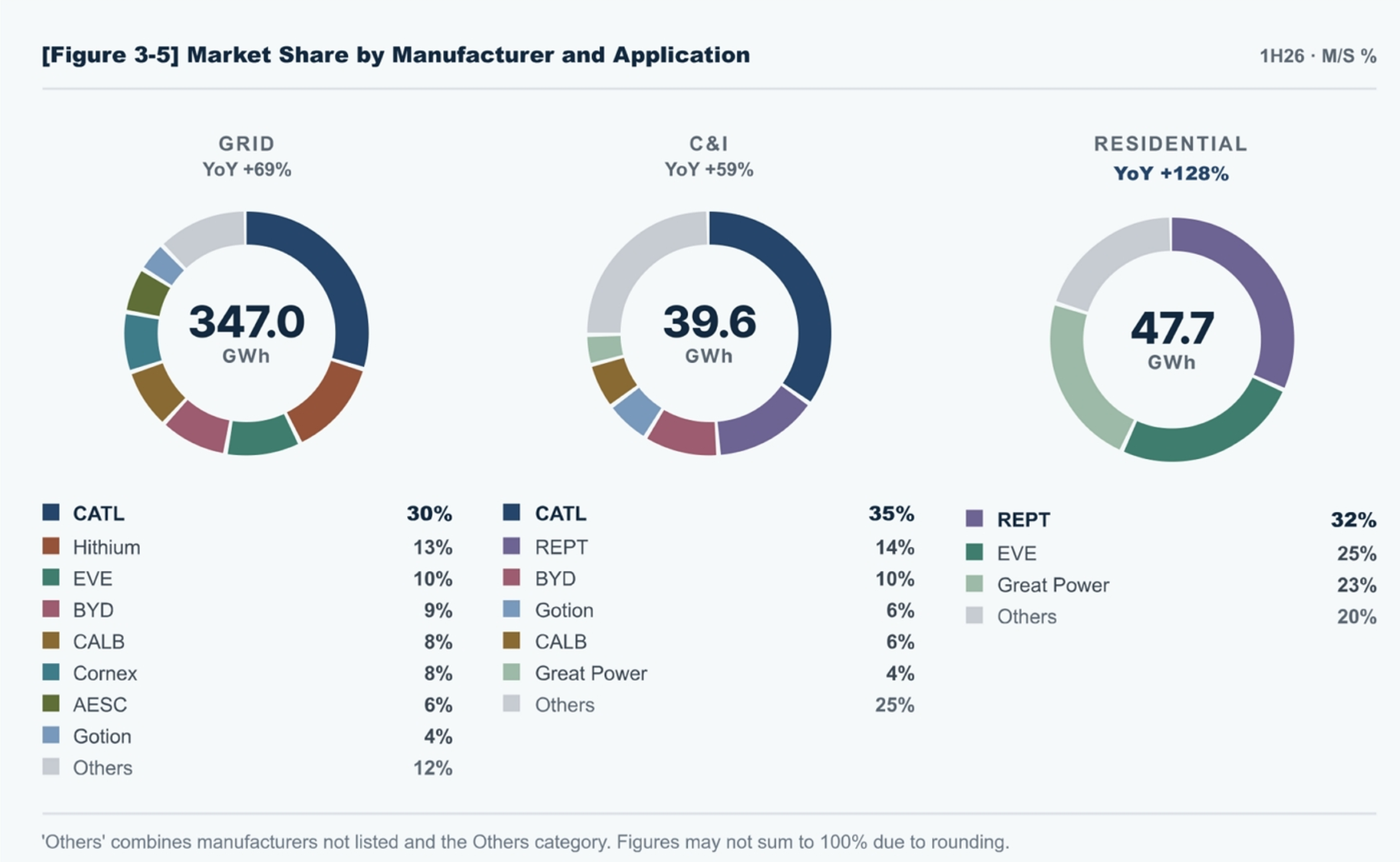
Residential energy storage has long been one of REPT BATTERO's strengths. As early as 2019, the company began developing 50Ah residential energy storage cells and was the first to define the industry standard for 50Ah residential storage cells. After years of development, the residential storage business has enabled the company to accumulate substantial product experience and establish a solid customer base.
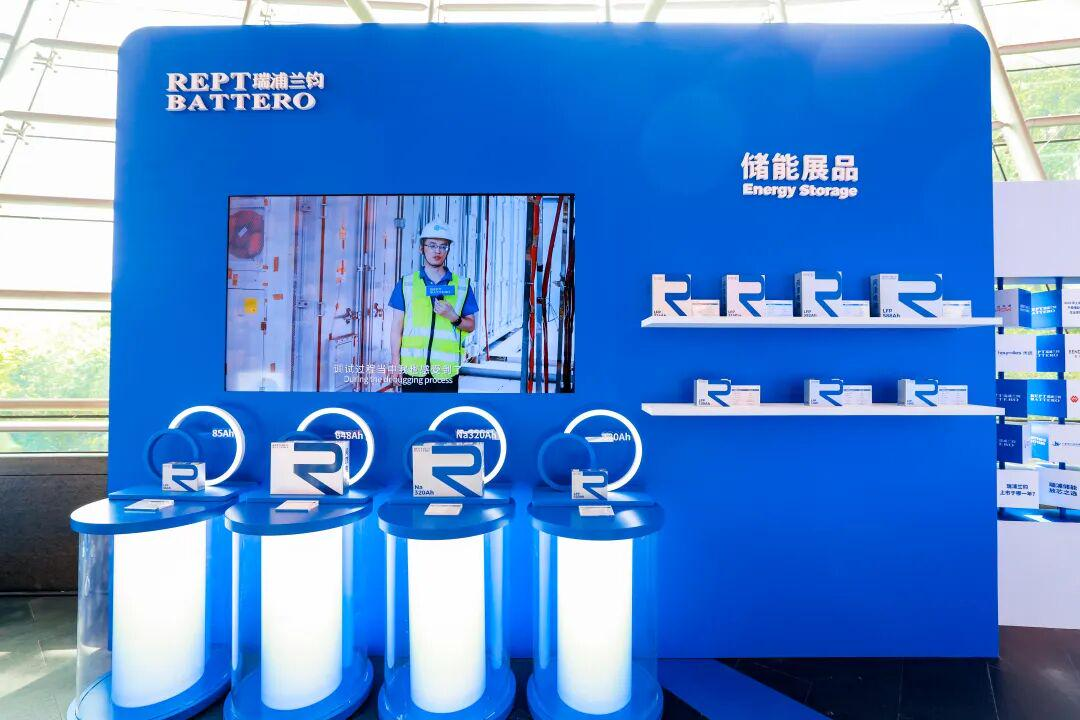
Maintaining its advantage in residential storage, however, does not mean that REPT BATTERO's energy storage business remains confined to its existing markets. In 2026, the company began developing products around emerging high-power-demand applications such as AI data centers, or AIDCs. Its product portfolio now includes the Powtrix® 6.9MWh energy storage system equipped with Wending® 648Ah cells, as well as Wending® 320Ah sodium-ion batteries.
AI data centers differ from ordinary electricity-consuming applications. Computing facilities must operate continuously for extended periods, and any power fluctuation or interruption affects much more than a single piece of equipment. AIDCs therefore require not only more electricity but also higher levels of reliability, operational efficiency, and continuous power supply from energy storage systems. The combination of 648Ah high-capacity cells and a 6.9MWh energy storage system represents REPT BATTERO's product preparation for this emerging market.
From residential storage to AIDCs, REPT BATTERO is gradually expanding its energy storage business from a relatively concentrated product market into a wider range of application scenarios. Product deployment, of course, is only the first step. What will truly matter next is whether these new applications can generate sustained orders and ultimately translate into revenue and profit. To understand where those orders may come from, it is necessary to examine another area in which REPT BATTERO is clearly accelerating: overseas markets.
Overseas Orders Grow as the Globalization Strategy Takes Shape
Overseas markets provide another key to understanding REPT BATTERO's latest growth. Beginning in 2025, the direct and indirect share of overseas orders in its energy storage business increased further, while the company entered into partnerships with a number of international companies.
- In March 2026, REPT BATTERO signed energy storage system supply agreements with seven European partners at an international renewable energy exhibition in Italy, with plans to deliver a combined 8.3 GWh of energy storage systems over the following two years.
- Earlier, REPT BATTERO signed a 3 GWh energy storage system supply agreement with Energy Vault for 2026, covering markets including Australia, the United States, and Europe.
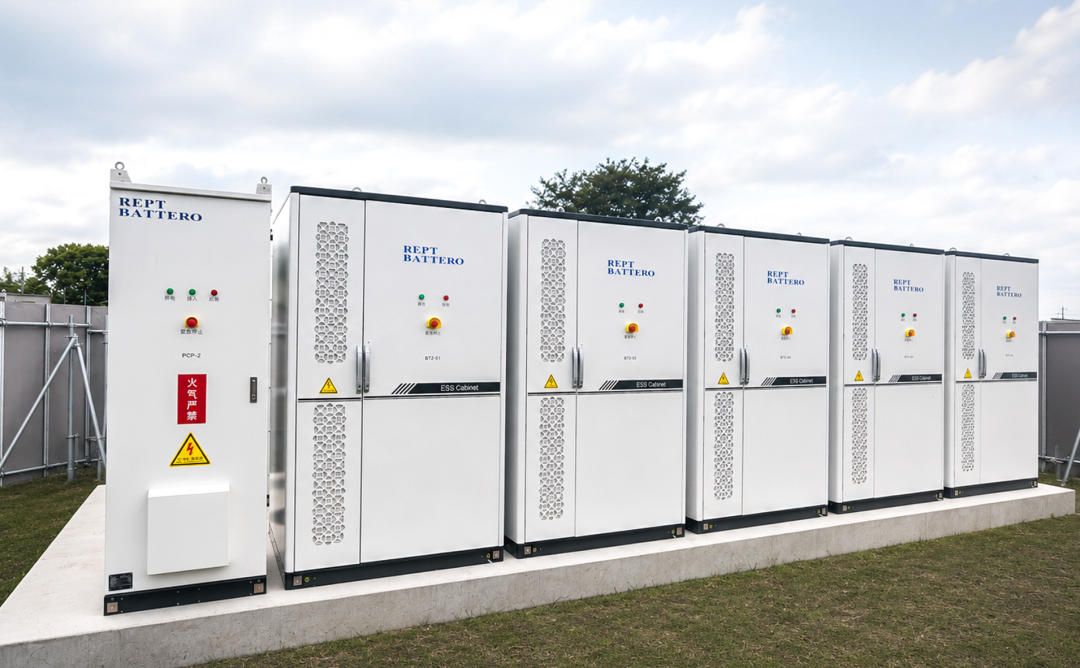
In Japan, REPT BATTERO also signed strategic cooperation agreements with Hanwa Co., Ltd. and another Japanese partner, with plans to deliver more than 1 GWh of energy storage systems to the Japanese market over the next two years. Beyond signing cooperation agreements, REPT BATTERO already has a project in commercial operation in Japan. Its independent grid-side energy storage project in Kanuma, Tochigi Prefecture, has completed grid connection, becoming the company's first formally operational independent grid-side storage project in Japan. The project has a capacity of 1.99 MW/8.35 MWh and uses 417kWh liquid-cooled outdoor DC energy storage cabinets supplied by REPT BATTERO as complete units. Moreover, REPT BATTERO's Japanese operations are no longer limited to establishing local teams and signing cooperation agreements. They have begun progressing into equipment delivery, grid-connection commissioning, and actual operation.
At a minimum, these partnerships show that REPT BATTERO's overseas business is gradually moving beyond the early stages of "building channels and finding customers" and entering a more concrete phase of orders and deliveries. Alongside the progress in orders and project implementation, the company is also advancing its overseas localization strategy. According to its interim financial report, REPT BATTERO has established subsidiaries in the United States, Germany, Australia, Japan, the United Kingdom, and Southeast Asia. These overseas entities help the company remain closer to local customers, understand market demand more promptly, and support project delivery and subsequent services.
In addition to its sales and service network, the company is gradually establishing overseas production capacity. REPT BATTERO is currently constructing a battery manufacturing base in Indonesia. The first phase has a planned annual capacity of 8 GWh, primarily serving power batteries, energy storage batteries, and related system products, and is already capable of commencing production. The company is also studying the possibility of establishing additional production capacity in other countries or regions in the future. On the one hand, these measures can strengthen its global brand influence and bring it closer to local customers; on the other, they can help diversify geopolitical risks.
From establishing overseas subsidiaries and securing orders to bringing projects into operation and building overseas production facilities, REPT BATTERO's globalization strategy is moving from "building the framework" toward "turning the framework into a real business." However, having orders, channels, and production capacity in place does not mean that overseas growth has been fully realized. The more important factors to watch will be order delivery progress, capacity utilization at the Indonesian base, and whether overseas operations can genuinely contribute revenue and profit.
Beyond Energy Storage, Power Battery Installations Enter the Global Top 10
Financial results show that power battery shipments reached 15.5 GWh, up 14.8% year on year, while revenue from power battery products increased by 29.8% year on year. Energy storage is an important foundation of REPT BATTERO's current business, but it is not the company's only source of growth. Its power battery business is also beginning to establish a stronger presence.
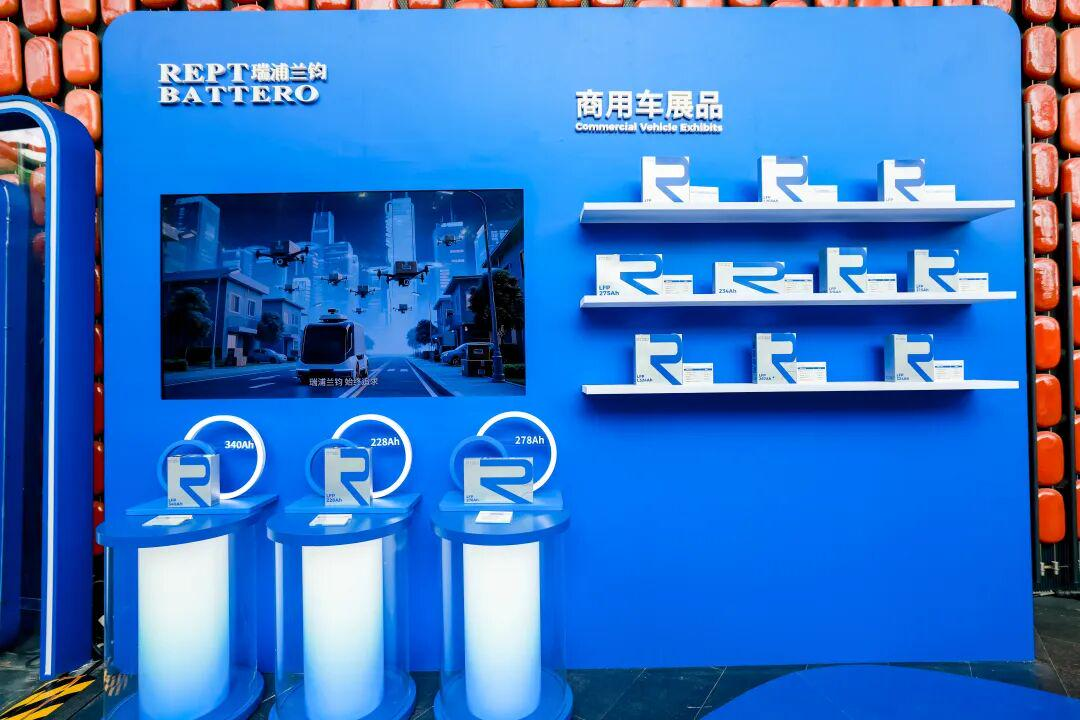
In the first half of 2026, REPT BATTERO ranked sixth nationwide in power battery installations. In June 2026, the company's power battery installations entered the global top 10. In 2025, REPT BATTERO had already ranked second nationwide in new-energy heavy-duty truck battery installations. Rather than competing comprehensively with leading manufacturers across the passenger vehicle market, REPT BATTERO has adopted a strategy more focused on new-energy heavy-duty trucks, commercial vehicles, PHEVs, and other specialized applications.
There is a strong product logic behind this strategy. The battery requirements of commercial vehicles are not entirely the same as those of ordinary passenger vehicles. For commercial operators, driving range is only one consideration. Battery weight, remaining payload capacity, charging time, the number of trips a vehicle can complete each day, and battery service life all directly affect operating costs. Commercial vehicles are therefore ultimately evaluated according to an "operational economics" calculation.
At this year's Brand Day, REPT BATTERO highlighted products including the Chenxing S Series and Chenxing D800 Pro. The underlying approach is to balance capacity, weight, dimensions, charging efficiency, and service life across different transportation scenarios. In mining applications, the company is also serving as the exclusive power system supplier for a project involving 100 unmanned battery-electric mining trucks.
Whether this business can become a stable second growth curve for REPT BATTERO will depend on continued expansion among core customers and whether the new-energy commercial vehicle market itself can sustain its growth. Judging from installation volumes and rankings in specialized markets, however, the power battery business is beginning to establish a more visible market presence.
From "Champion" to Long-Term Operations
Against this background, the theme of REPT BATTERO's 2026 Brand Day—"Champion's 'Cell' · A Moment for Dreams"—becomes easier to understand. "Champion" naturally refers in part to market rankings such as the company's position as the world's leading supplier of residential energy storage cells. But what REPT BATTERO seeks to communicate is not limited to holding first place at a particular moment.
Looking at the company's operational changes over the past year, it appears more interested in emphasizing whether, in an increasingly competitive industry with increasingly transparent prices, a company can gradually transform short-term rankings into long-term operating capabilities.
That is also why the second half of this year's Brand Day did not continue with an intensive series of product launches. Instead, the stage was given to young pianist and Brand Day Dream Ambassador Liu Hao. Liu has lived in a world without sight since childhood due to a visual impairment, but he has persisted in studying music and later attended the Peabody Institute of Johns Hopkins University and the New England Conservatory of Music in Boston.
By choosing such a figure as its Brand Day Dream Ambassador, REPT BATTERO clearly intended to communicate more than the outcome of becoming a "champion." It also sought to emphasize the long-term perseverance and continuous growth behind that result. This kind of brand messaging cannot, of course, directly explain the company's financial figures. But viewed in the context of REPT BATTERO's current stage of development, it echoes the company's operational transformation. In the past, observers may have evaluated REPT BATTERO mainly through residential storage rankings, shipment volumes, and orders. Now, the company wants to demonstrate whether it can ultimately transform these interim advantages into sustainable profitability.

Final Thoughts
From achieving its first annual profit since establishment to expecting its first-half net profit to surpass the total for the whole of last year, REPT BATTERO has completed a relatively clear turning point. Compared with the question of "how much the company earned in six months," the structural changes behind this latest period of growth are more worthy of attention.
Internally, the company has begun readjusting its organization and operating strategy. Instead of relying solely on low prices and order volumes to gain scale, it is placing greater emphasis on profit and risk. On the business side, its residential energy storage advantage continues, while new applications such as large-scale storage, AIDCs, and grid services are broadening its addressable markets. Overseas operations are moving from the early construction of sales networks toward orders, delivery, and localized production. At the same time, the power battery business continues to advance in specialized markets such as new-energy heavy-duty trucks, commercial vehicles, and PHEVs.
Taken together, what REPT BATTERO is doing now is not simply "making revenue bigger." What it is really trying to solve is how to transform a lithium battery company that has achieved profitability from a one-time turnaround story into a business capable of sustained growth. Its performance in the first half of 2026 has provided a promising start.